Finance · Markets
Seoul Markets Tumble as Tech Selloff Ripples Across Asia
Korean equities shed 3.66 percent in early trading as investors brace for Nvidia earnings amid global chip sector volatility
KEY TAKEAWAYS
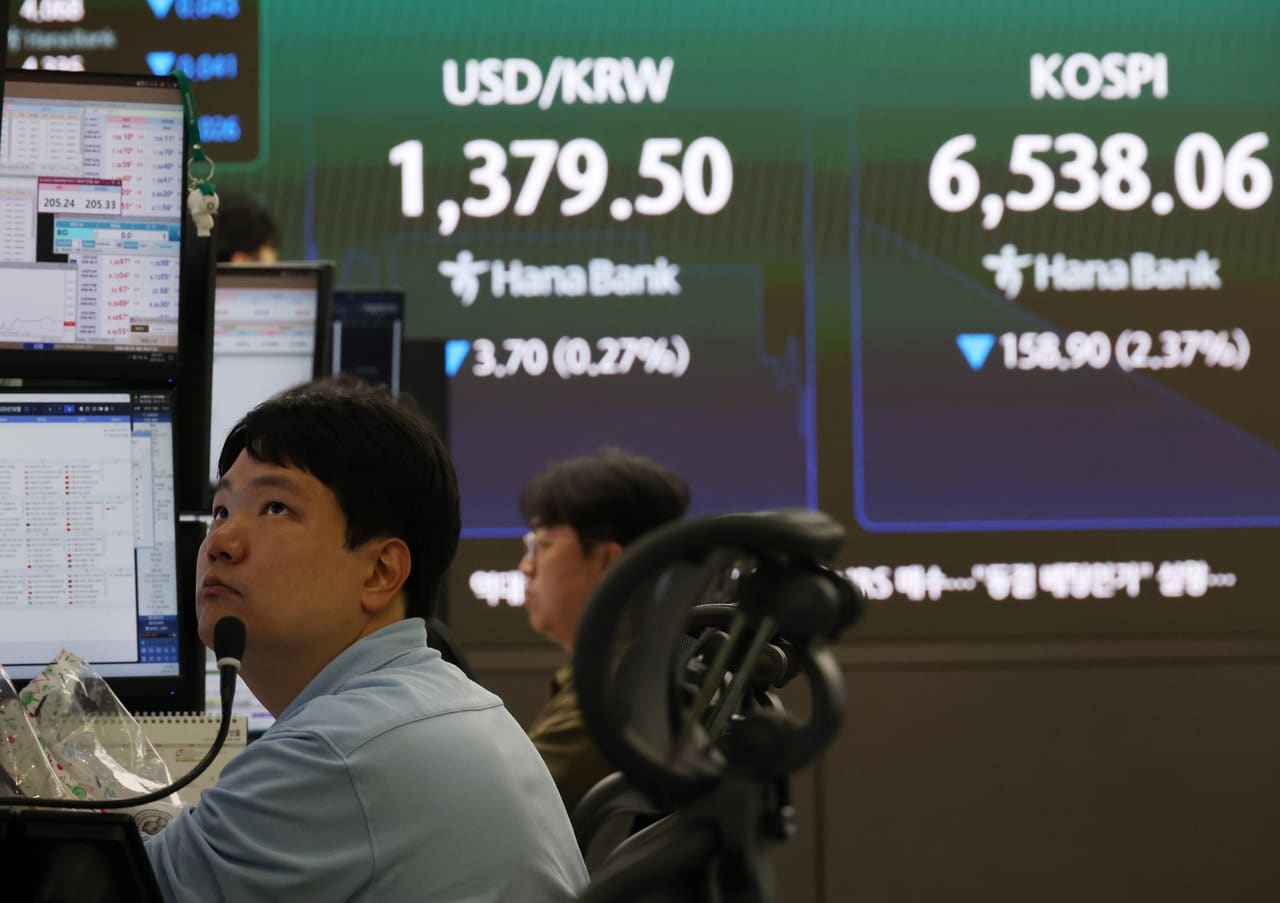
- ·Seoul's Kospi index fell 3.66 percent to 6,452.12 points in early trading, extending Monday's 3 percent decline driven by chipmaker losses.
- ·Investor caution centers on upcoming Nvidia earnings, with the US chip giant's results serving as a demand bellwether for Korea's semiconductor exporters.
- ·Korean chip stocks face pressure from concerns about inventory cycles and pricing dynamics as markets await signals on AI infrastructure spending.
Sharp Opening Decline
Seoul equities opened deep in the red Tuesday morning, with the Korea Composite Stock Price Index shedding 244.84 points to reach 6,452.12 by 9:15 a.m. local time. The 3.66 percent drop followed an initial 2.4 percent decline at the opening bell, reflecting continued pressure on technology names across Asian markets.
The selloff extended Monday's session, which saw the Kospi fall more than 3 percent as chipmakers bore the brunt of investor retreat. The consecutive sessions of heavy losses underscore growing nervousness in regional equity markets as participants await key corporate results from the United States.
Nvidia Earnings in Focus
Market participants cited caution ahead of earnings from Nvidia, the US chip giant whose quarterly results have increasingly moved semiconductor stocks worldwide. The Santa Clara-based company's performance serves as a bellwether for artificial intelligence demand and broader technology spending, making its financial disclosures closely watched events for investors holding exposure to the chip supply chain.
Korean semiconductor manufacturers occupy critical positions in that supply chain, producing memory chips and other components that feed into data center infrastructure and consumer electronics. Any signal from Nvidia about demand trends or inventory levels tends to reverberate quickly through Seoul-listed equities.
Regional Context
The weakness in Seoul mirrors broader uncertainty across Asian technology hubs. Overnight losses in US tech shares set a downbeat tone for regional bourses, with investors pulling back from high-valuation names that had rallied earlier in the year on optimism around AI-driven growth.
Korea's export-dependent economy makes its equity market particularly sensitive to shifts in global technology demand. Semiconductor exports account for a significant portion of the country's overseas sales, and any indication of cooling orders or pricing pressure can trigger swift repricing of local stocks.
The scale of Tuesday's morning decline suggests institutional investors are reducing risk ahead of potential volatility. Trading volumes typically spike during periods of uncertainty, as portfolio managers adjust positions in anticipation of new information that could reshape near-term outlooks.
Chip Sector Under Pressure
Korean chipmakers have faced mounting headwinds in recent sessions. Monday's sharp drop reflected broader sector weakness, with memory chip producers particularly vulnerable to concerns about inventory cycles and pricing dynamics in key end markets.
The industry operates on thin margins during periods of oversupply, and any hint of demand softness can compress profitability forecasts. Investors holding large positions in semiconductor names have shown willingness to exit quickly when uncertainty rises, amplifying intraday price swings.
Beyond company-specific factors, macroeconomic variables continue to influence sentiment. Interest rate expectations, currency movements, and geopolitical considerations all feed into risk appetite for technology equities, which tend to exhibit higher volatility than defensive sectors.
What Comes Next
Market observers expect continued choppiness until Nvidia reports results and provides forward guidance. The US company's commentary on data center demand, AI chip supply constraints, and customer order patterns will likely shape trading in Seoul and other Asian markets for the remainder of the week.
If Nvidia delivers strong numbers and an upbeat outlook, Korean chip stocks could stage a recovery as investors regain confidence in the sustainability of AI infrastructure buildouts. Conversely, any disappointment or cautious guidance would risk extending the current selloff and potentially dragging the Kospi below recent support levels.
The broader question facing investors is whether the recent weakness represents a temporary pause in a longer-term rally or the beginning of a more sustained correction. Korean equities have posted strong gains over the past year, and valuations in certain technology segments had stretched to levels that left little room for negative surprises.
For now, the market appears content to wait on the sidelines, with risk-off sentiment dominating early trading. Whether that caution proves warranted will depend largely on signals emerging from the US in the coming days.
RELATED STORIES
Korean Stocks Retreat as Nvidia Earnings Loom
Cheng Wei-Lun · 2 min
SK hynix Unveils $28.7 Billion Share Buyback as Memory Sector Braces for Volatility
Cheng Wei-Lun · 3 min

Seoul's Leveraged ETF Experiment Leaves Retail Investors Nursing Psychiatric Wounds
Jun-ho Seo · 4 min
Seoul's Semiconductor Surge Fuels Debate Over Central Bank Tightening
Cheng Wei-Lun · 3 min
Spot something wrong? Email editor@briefasia.com. We log every correction publicly.