Asia · Trade
Multinationals Navigate New Wave of Chinese Manufacturing Dominance
Subsidized capacity and weak domestic demand drive surge in low-cost exports from advanced sectors, reshaping global competition
KEY TAKEAWAYS
- ·Chinese overcapacity in electric vehicles, batteries, and solar panels floods global markets due to state subsidies and weak domestic demand, disrupting international trade patterns.
- ·Multinationals adopt middle-path strategies, diversifying production to Vietnam, India, and Southeast Asia while maintaining Chinese operations where cost advantages remain decisive.
- ·Trade barriers and industrial subsidies proliferate across advanced economies, forcing companies to navigate fragmented regulatory environments and optimize footprints across multiple jurisdictions.
A Second Industrial Disruption
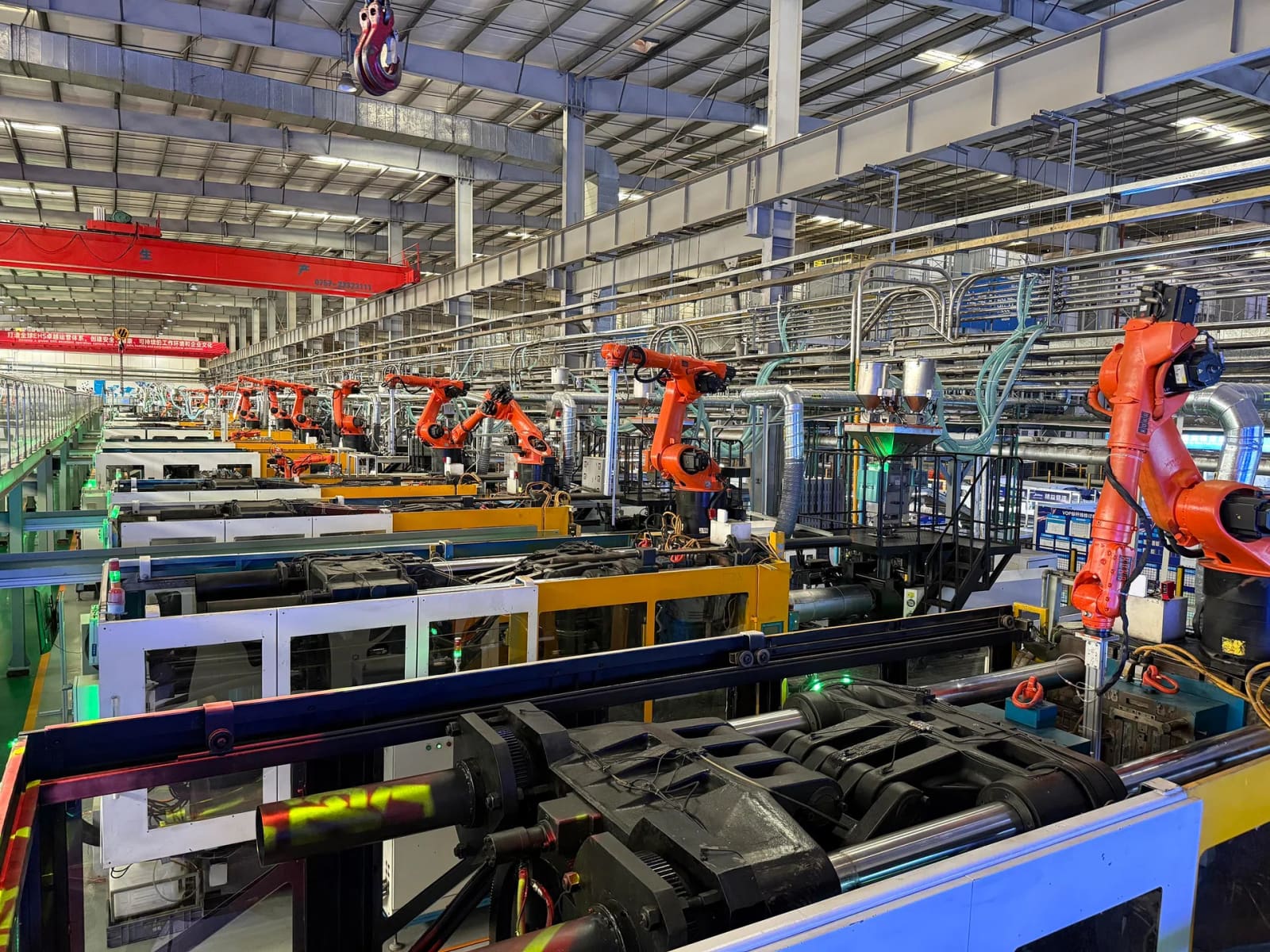
Multinational corporations face a fresh challenge that extends beyond market entry tactics. The current disruption stems from China's industrial overcapacity in advanced manufacturing sectors, particularly electric vehicles, battery technology, and solar panel production. This wave differs fundamentally from earlier adjustments companies made to compete within Chinese borders.
The dynamic reshapes competitive landscapes across continents. Heavily subsidized production facilities, combined with sluggish consumer demand domestically, have pushed a flood of competitively priced goods into international markets. The result touches global trade patterns, competitive positioning, and industrial policy frameworks from Brussels to Washington.
Roots of the Current Shift
China's manufacturing prowess has migrated up the value chain. Where previous decades saw labor-intensive goods dominate export flows, today's challenge centers on technology-intensive products. Electric vehicle makers, battery manufacturers, and solar equipment producers operate with scale advantages and government backing that few competitors can match.
Domestic consumption has not kept pace with production capacity. Factories built to serve both local and international markets now depend more heavily on exports as Chinese consumers pull back. This mismatch creates pricing pressure that reverberates through global supply chains.
Industrial policy plays a central role. State support for strategic sectors has enabled rapid capacity expansion, often outstripping organic demand growth. The strategic calculus behind these investments prioritizes technological leadership and industrial self-sufficiency, not immediate market equilibrium.
Strategic Responses Take Shape
Global companies must recalibrate their approaches. Complete decoupling from Chinese supply chains proves impractical for most sectors, given the depth of integration built over decades. Yet full dependence carries risks that boards and shareholders increasingly scrutinize.
A middle path emerges in practice. Firms diversify production locations while maintaining Chinese operations where scale and cost advantages remain decisive. Vietnam, India, and Southeast Asian manufacturing hubs attract investment, though none yet replicate China's combination of infrastructure, supplier ecosystems, and skilled labor.
Product segmentation offers another lever. Companies increasingly separate China-for-China operations from global production networks, reducing cross-border dependencies while preserving market access. This approach requires duplication of capabilities and higher structural costs, trade-offs that executives weigh against supply chain resilience.
Policy Environments Harden
Trade barriers rise in response. The United States, European Union, and other economies deploy tariffs, anti-subsidy investigations, and domestic content requirements to shield local industries. These measures reshape cost structures and market access calculations for companies operating across borders.
Industrial policy has returned to favor in advanced economies. Subsidies for domestic semiconductor production, electric vehicle manufacturing, and renewable energy projects mirror tactics long employed in China. The resulting competition for investment and market share intensifies pressure on companies to optimize footprints across multiple jurisdictions.
Regulatory complexity multiplies. Firms navigate diverging standards, compliance regimes, and political sensitivities that vary by market. The era of seamless global integration faces structural headwinds as governments reassert industrial priorities.
The Asia Dimension
Regional economies absorb the impact unevenly. Japan and South Korea, with established positions in automotive and electronics sectors, confront direct competition in categories they once dominated. Southeast Asian nations pursue investment attraction strategies, positioning themselves as alternative manufacturing bases.
Singapore's role as a regional hub faces new tests. Financial services, logistics, and headquarters functions remain resilient, but manufacturing-linked activities migrate to lower-cost locations. The city-state's strategic response emphasizes high-value activities and connectivity, betting on sophistication rather than scale.
India emerges as a focal point for diversification strategies. Its market size, demographic trajectory, and policy incentives attract companies seeking alternatives to China-centric models. Infrastructure gaps and regulatory complexity remain obstacles, yet momentum builds.
Competitive Dynamics Evolve
Chinese companies extend their international reach. Firms like BYD and Midea no longer compete solely on cost; they bring technological capability, brand recognition, and localization strategies to markets worldwide. This shift challenges incumbent multinationals on dimensions beyond price.
Market share battles intensify in sectors where Chinese producers have achieved scale. Solar panels, lithium-ion batteries, and affordable electric vehicles exemplify categories where Chinese firms set global benchmarks for cost and production volume. Competitors must innovate on performance, service, or specialized applications to maintain differentiation.
Partnership models gain traction. Joint ventures, licensing agreements, and technology collaborations allow companies to access Chinese innovation and manufacturing prowess while managing political and operational risks. These arrangements require careful structuring to balance value capture with intellectual property protection.
Forward Implications
The current disruption will persist for years, not quarters. Structural factors driving Chinese export intensity show no signs of rapid resolution. Domestic demand recovery depends on policy shifts and consumer confidence that remain uncertain. Capacity in strategic sectors will continue seeking outlets in international markets.
Companies that adapt their operating models stand to navigate this environment more effectively. Flexibility in sourcing, production footprints distributed across multiple geographies, and product portfolios tailored to regional requirements become competitive advantages. Organizational structures must support this complexity without sacrificing efficiency.
The interplay between commercial strategy and geopolitical positioning grows more intricate. Executives increasingly factor political risk, supply chain security, and stakeholder expectations into decisions once driven primarily by cost and market access. This expanded calculus reshapes investment priorities and resource allocation across global enterprises.
RELATED STORIES

Thailand Urged to Tie EV Investment to Local Supply Chain Development
Priyanka V. Rao · 3 min

China's $1.2 Trillion Trade Surplus Threatens Indonesian Rupiah and Industry
Rajesh K. Iyer · 3 min
Chinese Manufacturers Command Over 70% of Global LCD TV Panel Market
Cheng Wei-Lun · 2 min

China Builds Alternative Supply Chain Standards for Global Trade
Cheng Wei-Lun · 3 min
Spot something wrong? Email editor@briefasia.com. We log every correction publicly.