Asia · Trade
China's $1.2 Trillion Trade Surplus Threatens Indonesian Rupiah and Industry
Beijing's industrial overcapacity and surging exports are reshaping Southeast Asian economies through currency pressure and price competition, not military confrontation
KEY TAKEAWAYS
- ·China's 2025 trade surplus approached $1.2 trillion with the country controlling 30 percent of global industrial output, projected to reach 45 percent by 2030
- ·Nearly 30 percent of Chinese industrial firms operate at losses, sustained by provincial fiscal dependency, creating persistent overcapacity in automotive and solar sectors
- ·Indonesian rupiah faces structural pressure as Chinese export surge and commodity demand slowdown create currency depreciation and domestic market flooding
The Economic Front Line
Great-power rivalry is hitting Southeast Asia through balance sheets before battleships. China's 2025 trade surplus approached $1.2 trillion, a figure that translates directly into pressure on regional currencies, domestic manufacturers and commodity exporters across the Association of Southeast Asian Nations.
The scale is unprecedented. China now controls roughly 30 percent of global industrial output and is projected to reach 45 percent by 2030. That concentration creates friction with basic economic arithmetic: global GDP growth sits at 3.1 percent for 2026, while Chinese export surplus growth exceeded 20 percent year-on-year.
For Indonesia, the transmission mechanism runs through the rupiah, export competitiveness and domestic market flooding. The geoeconomic conflict reshapes trade flows and capital allocation without a single naval vessel crossing into contested waters.
Overcapacity as Strategy
The root of China's export surge lies in structural overcapacity sustained by fiscal dependency. Nearly 30 percent of Chinese industrial firms operate at a loss, rising to 34 percent in sectors prioritized under the Made in China 2025 industrial policy.
These enterprises survive because provincial governments rely on their tax contributions. Shifting the economy toward household consumption would eliminate local revenue streams overnight, ensuring that reforms remain incomplete.
The result is production capacity detached from market demand. China maintains 55 million units of automotive manufacturing capacity in a global market of 90 million vehicles annually. Solar panel production capacity stands at double the world's total annual installations.
A producer operating at this scale sets global prices rather than responding to them. Indonesian manufacturers face competition not from more efficient firms but from state-supported overcapacity dumping products below cost.
Currency and Commodity Pressure
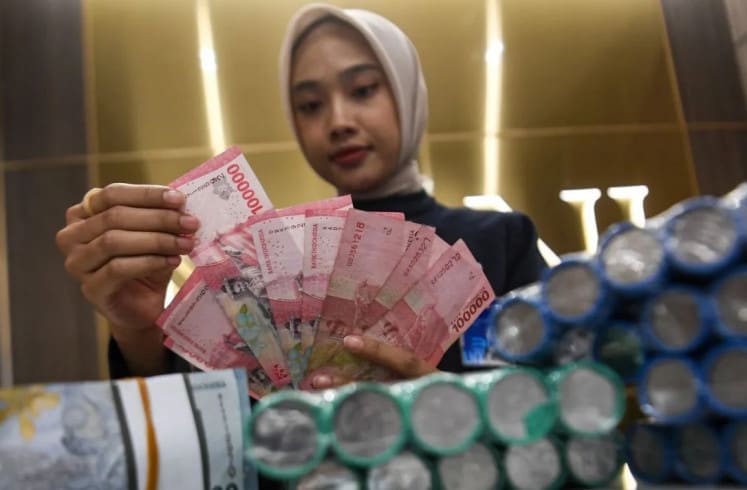
The surplus mechanics create direct pressure on emerging market currencies. China's export flood requires offsetting capital inflows or currency depreciation elsewhere in the system. Indonesia experienced this through rupiah weakness in late 2025, despite stable domestic fundamentals.
Commodity exporters face a double bind. Chinese industrial slowdown reduces demand for raw materials, depressing prices for Indonesian coal, palm oil and minerals. Simultaneously, Chinese manufactured goods flood Indonesian markets at prices local producers cannot match.
The automotive and electronics sectors illustrate the dynamic. Indonesian assembly plants compete against Chinese exports priced below production cost, supported by provincial subsidies and cheap state credit. Domestic content requirements and tariffs provide limited protection when the price gap exceeds 30 percent.
The Multipolarity Timeline
Academic frameworks place the return of great-power competition around 2017, when China and Russia consolidated their positions. The current phase differs from Cold War bipolarity in structure and constraint.
China has not fought a major war since 1979 and lacks the Soviet Union's institutional memory of devastation. It operates with fewer alliance commitments to constrain decision-making. Territorial claims over Taiwan and maritime zones in the South China Sea carry nationalist weight beyond strategic calculation.
East Asia also lacks the rigid buffer zones that stabilized Cold War Europe. Naval incidents remain possible in ways that land war across the Iron Curtain never was. Yet the immediate battleground is economic adjustment, not military crisis.
Indonesia's Adjustment Challenge
Indonesian policymakers face limited options within this structure. Currency intervention burns through reserves without addressing the underlying surplus. Tariffs invite retaliation and raise costs for consumers and downstream manufacturers.
Diversifying export markets offers partial relief but cannot fully offset Chinese demand shifts. Japan, South Korea and the European Union face the same surplus pressure, limiting their appetite for Indonesian imports.
The structural challenge is that China's overcapacity is fiscal, not cyclical. Provincial governments cannot afford to shut down loss-making enterprises. Beijing cannot force consumption-led growth without triggering local revenue collapse.
That creates a persistent export push regardless of global demand conditions. Indonesian manufacturers and currency managers must adjust to a new baseline where Chinese overcapacity is a permanent feature, not a temporary shock.
What Comes Next
The next phase depends on how quickly other economies absorb or reject Chinese surplus capacity. The United States and European Union are already implementing targeted tariffs and investment screens. Southeast Asian nations face pressure to choose between access to Chinese capital and protection for domestic industry.
Indonesia's response will likely combine selective barriers in strategic sectors with continued openness in others. The rupiah will remain under pressure as long as China's surplus persists at current levels.
The broader question is whether this economic adjustment can remain contained or whether it accelerates toward the kind of crisis that forces sudden policy shifts. For now, the conflict is measured in basis points and market share, not military escalation. But the economic pressure is real, immediate and reshaping the region's industrial landscape.
RELATED STORIES
Indonesian Investment Climbs as Trade War Reshapes Asian Capital Flows
Siti Nuraini · 5 min

Pacific Patrol Intercepts Four Fishing Boats in Regional Crackdown
Priyanka V. Rao · 3 min

Indonesia Cuts State Funding for Nusantara as Private Investors Take Lead
Siti Nuraini · 3 min

Indonesia Pushes for EU Trade Deal Signing Ahead of Year-End Tariff Cliff
Priyanka V. Rao · 3 min
Spot something wrong? Email editor@briefasia.com. We log every correction publicly.