Asia · Trade
Indonesian Investment Climbs as Trade War Reshapes Asian Capital Flows
Foreign direct investment from Greater China surged to $11.5 billion in the first half of 2026, driven by manufacturers seeking alternatives to tariff-exposed production bases
KEY TAKEAWAYS
- ·Combined investment from mainland China and Hong Kong hit $11.5 billion in the first half of 2026, nearly three times the $4.1 billion recorded in the same period of 2025.
- ·Capital-intensive sectors including data centers and industrial processing are drawing the most interest as firms pursue diversification away from tariff-exposed production bases.
- ·Infrastructure constraints in power and water supply, along with permitting timelines and regulatory consistency, will determine whether Indonesia can sustain current investment momentum.
Manufacturing Pivot Accelerates
Jakarta is experiencing an investment surge tied directly to supply chain realignment across Asia. Combined capital inflows from mainland China and Hong Kong reached $11.5 billion during the first six months of 2026, according to data from Indonesia's Investment Coordinating Board. That figure represents nearly triple the $4.1 billion recorded in the corresponding period of 2025.
Mainland Chinese investment alone climbed to $3.9 billion in the first half of this year, more than doubling the $1.8 billion deployed a year earlier. Hong Kong commitments jumped even more sharply, rising from $2.3 billion to $7.6 billion over the same window.
The acceleration reflects a broader regional shift as companies pursue what strategists call a diversification strategy away from concentrated manufacturing footprints. Deputy Industry Minister Faisol Riza described the trend as a direct consequence of geopolitical friction, noting that Jakarta is signing contracts for facilities not yet constructed. Capital-intensive sectors and data infrastructure are drawing particular interest, he told reporters on August 13.
Beyond Electronics
While China has served as a relocation source for some time, the current wave differs in composition and urgency. Indonesian officials see the influx aligning with national priorities around downstream processing and industrial deepening. Chinese firms are evaluating projects that extend beyond traditional assembly work, including dimethyl ether gasification plants and waste-to-energy facilities managed through state asset fund Danantara. At least six such projects involve Chinese participation.
India is emerging as a parallel source of capital. Indian manufacturers view Indonesia both as a gateway to Southeast Asian consumers and as an export platform that sidesteps tariff barriers facing shipments originating in South Asia. The dual motivation mirrors the logic driving Chinese firms, though Indian commitments remain smaller in absolute terms.
The investment pattern underscores a recalibration of regional production networks. Companies that once concentrated assembly and component manufacturing in a single jurisdiction are now spreading operations across multiple countries to manage political risk and tariff exposure. Indonesia, with its large domestic market and proximity to major shipping lanes, sits at the intersection of these strategic calculations.
Infrastructure and Absorptive Capacity
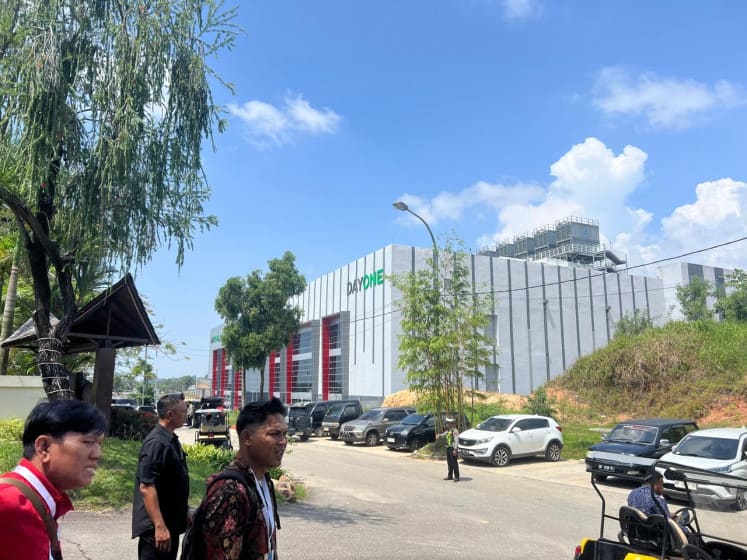
The surge in commitments raises practical questions about Indonesia's ability to absorb capital at this pace. Batam, a free-trade zone in the Riau Islands, has attracted at least sixteen data center projects in various stages of development. Yet the island faces constraints in clean water supply and electricity generation, challenges that could limit the speed at which facilities come online.
Similar bottlenecks exist in other industrial zones. Land acquisition, permitting timelines, and workforce training all require coordination among central and regional authorities. The government has prioritized regulatory streamlining, but implementation remains uneven across provinces.
Energy infrastructure presents a particular challenge. Data centers and heavy manufacturing require reliable baseload power, and Indonesia's grid still depends heavily on coal. The country is adding renewable capacity, but the pace of deployment lags behind the growth in industrial demand. Investors have signaled willingness to finance captive power plants, though that approach adds cost and complexity.
Tariff Architecture and Timing
Washington's tariff escalation has evolved through multiple phases, creating uncertainty for companies planning multi-year capital commitments. The most recent round of measures imposed additional levies on goods containing components manufactured in China, even if final assembly occurs elsewhere. That policy complicates the calculus for firms considering partial relocation.
Indonesian officials are seeking clarification on how Washington will treat exports from Indonesia that incorporate Chinese inputs. The outcome of those discussions will shape the attractiveness of Indonesia as a production base for goods destined for the United States market. Similar conversations are underway with European regulators, who are crafting their own frameworks around supply chain transparency and forced labor.
Jakarta has also proposed preferential arrangements with Washington, hoping to secure better tariff treatment in exchange for commitments on labor standards and environmental safeguards. Those negotiations remain in early stages, and it is unclear whether the current U.S. administration will prioritize bilateral trade agreements over broader multilateral frameworks.
Regional Competition
Indonesia is not the only Southeast Asian economy benefiting from supply chain shifts. Vietnam has attracted substantial investment in electronics and textiles, while Malaysia is drawing semiconductor packaging and test facilities. Thailand remains a hub for automotive production and is expanding its role in electric vehicle supply chains.
Each country offers distinct advantages. Vietnam's existing trade agreements provide preferential access to multiple markets. Malaysia's established semiconductor ecosystem reduces startup costs for chipmakers. Thailand's automotive supply base allows for rapid scaling of new vehicle programs.
Indonesia's competitive edge lies in market size and resource endowment. With a population exceeding 270 million, the country offers both a large consumer base and a deep labor pool. Nickel, copper, and bauxite deposits position Indonesia as a potential supplier of raw materials for battery and electronics production, though downstream processing capacity remains limited.
Policy Levers and Execution Risk
The Indonesian government has deployed a mix of incentives to attract investment, including tax holidays, import duty exemptions, and expedited permitting for strategic projects. Officials have also imposed export restrictions on unprocessed minerals, aiming to force domestic processing and capture more value from the country's resource base.
That policy has produced mixed results. Nickel processing capacity has expanded significantly, driven by Chinese investment in smelters and integrated battery material plants. But other minerals have seen slower development, in part because processing economics remain challenging without access to low-cost energy.
Execution risk extends beyond infrastructure. Regulatory consistency matters to investors planning long-term commitments, and Indonesia has a history of policy reversals that complicate planning. Recent changes to tax incentives and environmental permitting have created uncertainty, even as officials work to project stability.
Labor policy also factors into investment decisions. Indonesia's minimum wage varies by region, and enforcement of labor standards is inconsistent. Some investors view that flexibility as an advantage, while others worry about reputational risk and potential supply chain audits by downstream buyers.
Forward Indicators
The sustainability of current investment trends will depend on several factors. Tariff policy in Washington remains fluid, and any de-escalation could slow the pace of supply chain diversification. Chinese domestic stimulus, if substantial, might reduce the urgency for manufacturers to relocate capacity.
Infrastructure development timelines in Indonesia will also shape outcomes. Projects announced today typically require two to three years before reaching full production, and delays are common. The gap between signed contracts and operational facilities will determine whether Indonesia can translate current momentum into sustained industrial growth.
Indian investment bears watching as a potential second wave. If Indian firms follow through on early-stage commitments, Indonesia could diversify its investor base beyond Greater China, reducing concentration risk and broadening the range of sectors receiving capital. That outcome would align with Jakarta's goal of building a more resilient industrial base less vulnerable to shifts in any single bilateral relationship.
The current window reflects both opportunity and risk. Indonesia has a chance to capture investment that might otherwise flow to regional competitors, but success requires navigating infrastructure constraints, policy consistency, and geopolitical uncertainty. The next twelve months will clarify whether recent gains represent a durable shift or a temporary surge driven by immediate tariff pressures.
RELATED STORIES
Pacific Patrol Intercepts Four Fishing Boats in Regional Crackdown
Priyanka V. Rao · 3 min
Jardine C&C Exits Singapore and Malaysia Auto Markets in $208M Deal
Priyanka V. Rao · 3 min
Indonesia's Mineral Exchange Launch Faces Liquidity and Governance Hurdles
Siti Nuraini · 4 min
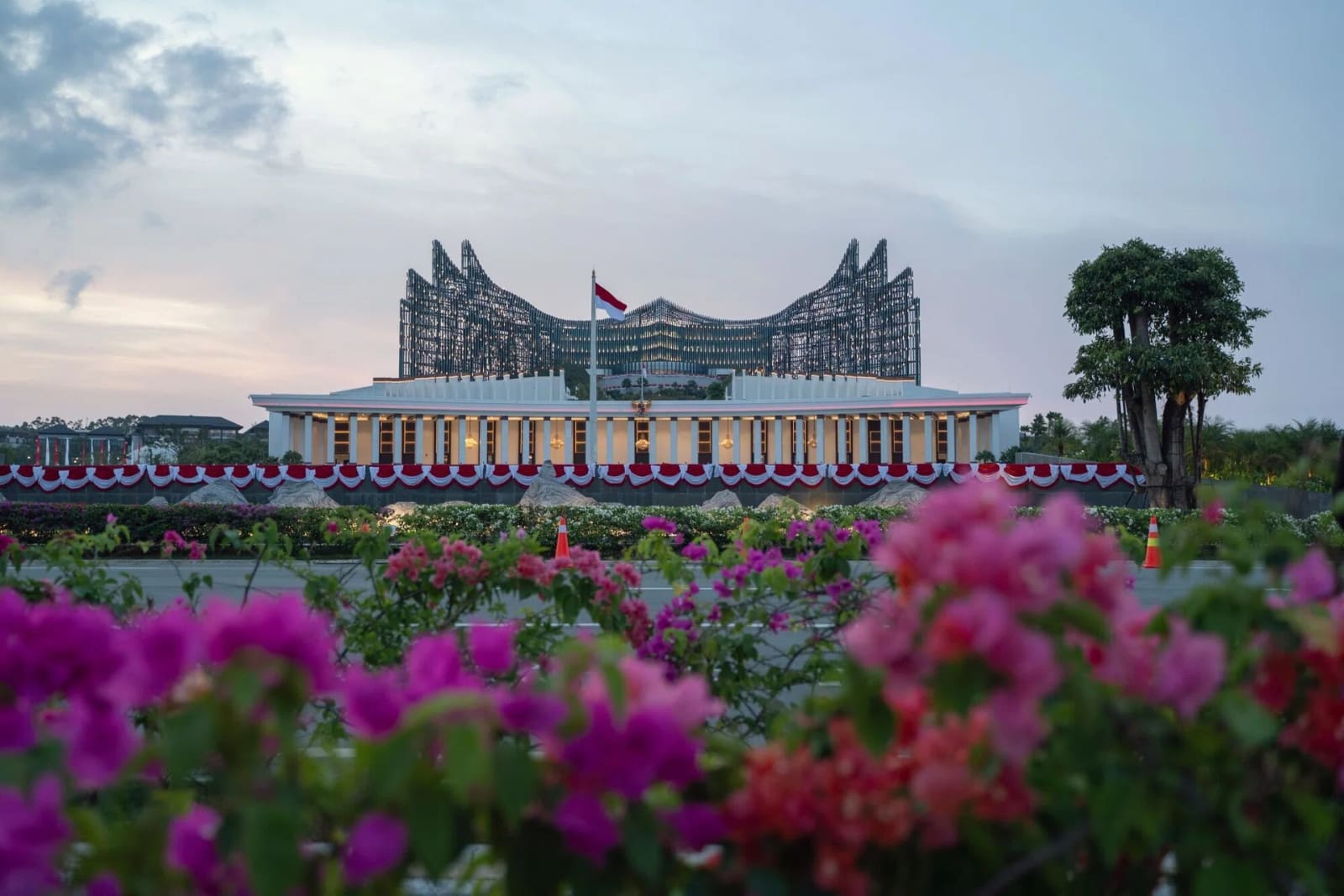
Indonesia Cuts State Funding for Nusantara as Private Investors Take Lead
Siti Nuraini · 3 min
Spot something wrong? Email editor@briefasia.com. We log every correction publicly.