Asia · Trade
Malaysian Rubber Prices Climb on China Restocking and Supply Risks
Industry anticipates tighter supply conditions as weather concerns and Chinese demand converge to lift natural rubber benchmarks.
KEY TAKEAWAYS
- ·Malaysia's SMR 20 rubber grade rose 38 sen to 947.0 sen per kilogram last week, driven by Chinese restocking and higher crude oil prices.
- ·El Niño weather patterns threaten production disruptions across Southeast Asian rubber-growing regions, potentially tightening supply in coming months.
- ·EU deforestation rules are pushing Malaysian glove makers to prioritize sustainably sourced rubber with verified supply chain traceability.
Price Momentum Builds
Malaysia's natural rubber market posted gains last week, with the benchmark Standard Malaysian Rubber 20 grade rising 38 sen to close at 947.0 sen per kilogram on a Friday-to-Friday comparison, according to the Malaysian Rubber Board. Latex in bulk slipped nine sen to 679.5 sen per kilogram over the same period.
The divergence reflects shifting dynamics in downstream segments. While solid rubber grades benefit from restocking activity, latex demand remains softer amid seasonal adjustments in dipped-goods manufacturing.
China Demand and Crude Oil Lift Outlook
Industry analysts expect the upward trajectory to continue into the coming week, driven by two factors: renewed buying interest from Chinese processors and firmer crude oil prices that typically support synthetic rubber costs and, by extension, natural rubber parity.
Denis Low, an industry analyst, noted that reports of substantial dry rubber replenishment orders from China could provide additional momentum if volumes materialize at expected levels. Higher petroleum prices also tend to narrow the cost gap between natural and synthetic alternatives, making tree-based latex more competitive.
China, the world's largest rubber consumer, recently announced additional fiscal policy measures aimed at supporting economic growth. These stimulus steps are expected to bolster demand across manufacturing sectors, including automotive and industrial goods that rely heavily on elastomer inputs.
Supply Constraints Loom
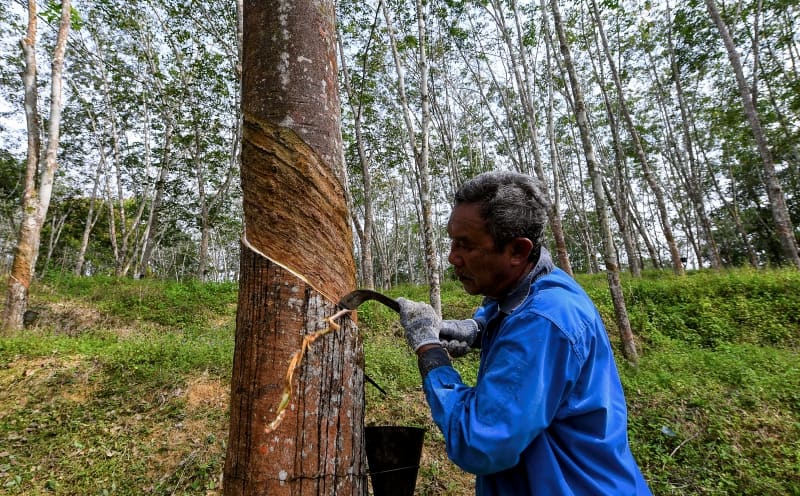
On the supply side, concerns are mounting over potential disruptions linked to El Niño weather patterns. According to the Malaysian Rubber Glove Manufacturers Association, adverse conditions could constrain production across major rubber-growing countries in Southeast Asia, where the bulk of global natural rubber originates.
Margma highlighted that demand for premium and sustainably sourced material is also strengthening. Malaysian glove manufacturers are placing greater emphasis on traceability and sustainability to comply with the European Union Deforestation Regulation, which took effect earlier this year and requires documented proof that commodities are not linked to deforestation.
This regulatory shift is reshaping procurement strategies. Buyers are increasingly willing to pay a premium for certified material with transparent supply chains, creating a bifurcated market where sustainability credentials command price differentiation.
Balanced Market with Volatility Wildcards
Despite the bullish signals, supply and demand fundamentals remain relatively balanced in the near term. Low cautioned that foreign exchange volatility and adverse weather in key producing regions could introduce price swings. The Malaysian ringgit's movement against the US dollar directly affects export competitiveness, while unexpected rainfall or prolonged dry spells can disrupt tapping schedules.
Malaysia accounts for a modest but significant share of global natural rubber output, with Thailand and Indonesia dominating production volumes. Price signals from Kuala Lumpur often reflect broader regional trends, making the Malaysian Rubber Board's reference prices a closely watched indicator for traders across Asia.
Regional Context
Southeast Asia's rubber sector is navigating a complex environment. On one hand, post-pandemic demand recovery in key end markets has supported prices. On the other, labor shortages in tapping operations and aging tree stocks in some regions have capped output growth.
The interplay between Chinese industrial activity and Southeast Asian supply conditions will likely determine price direction in the months ahead. Beijing's fiscal stimulus could accelerate rubber consumption in tire manufacturing and construction materials, while climate-related supply disruptions would tighten available volumes and push prices higher.
For now, the Malaysian market is reflecting cautious optimism. Traders are watching Chinese order flows and weather forecasts closely, aware that either factor could shift the balance quickly. The coming weeks will test whether current price levels can hold as restocking demand meets seasonal production rhythms.
RELATED STORIES

Chinese Manufacturers in Malaysia Struggle to Build Local Teams
Cheng Wei-Lun · 4 min

Australia's Rare Earth Push Faces Cost Test as Industry Eyes China Alternative
Aiko Nakamura · 4 min

Sunway Construction Wins $257 Million Contract From US Tech Multinational
Cheng Wei-Lun · 3 min
Malaysia's NCT and RHB Partner to Expand SME Access to Capital
Priyanka V. Rao · 3 min
Spot something wrong? Email editor@briefasia.com. We log every correction publicly.