Asia · Business
Chinese Manufacturers in Malaysia Struggle to Build Local Teams
High expatriate costs and retention challenges push firms into a staffing trap that undercuts long-term productivity
KEY TAKEAWAYS
- ·China invested MYR58 billion in Malaysia during 2025, tied with Singapore as the largest foreign capital source, concentrated in solar, semiconductors, electric vehicles, and data centres.
- ·Chinese manufacturers cite skills shortages, cultural mismatches on working hours, and high staff turnover as barriers, leading firms to limit training and rely on costly expatriate postings averaging USD84,000 per year.
- ·Malaysia's Graduate Pass for Chinese nationals expires end-2026 and new 2027 succession rules require firms to prepare local replacements, pushing both investors and policymakers to build durable talent pipelines.
A Record Year, A Persistent Friction
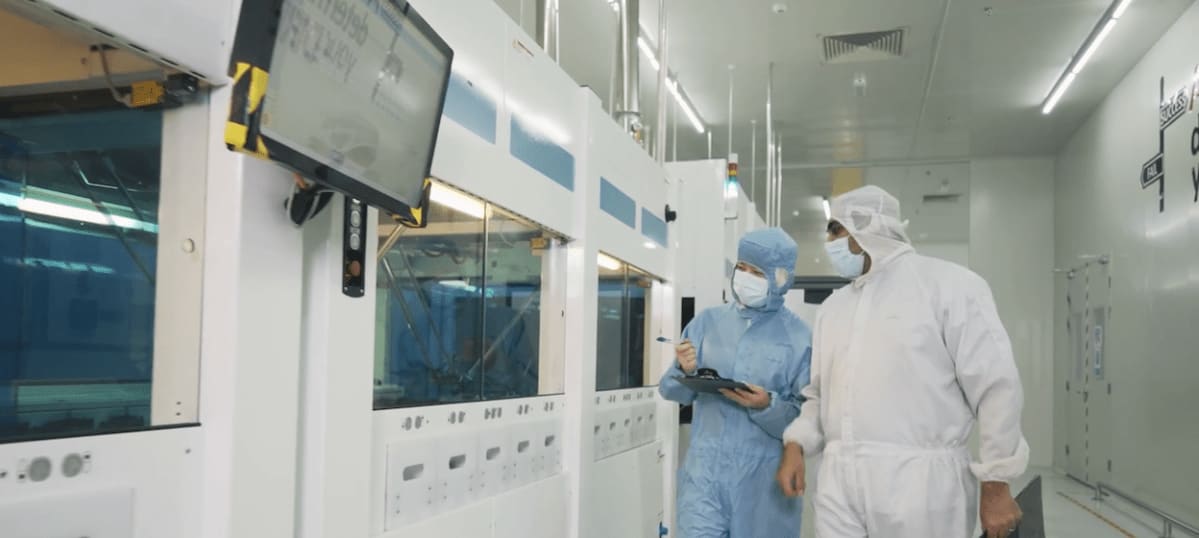
Malaysia recorded MYR426.7 billion in approved investments during 2025, with China accounting for MYR58 billion and emerging as one of the two largest sources of capital inflow alongside Singapore. Unlike earlier waves of assembly-line projects, the current surge concentrates on engineering-heavy sectors: solar module production, chip packaging, electric-vehicle components, and data infrastructure.
That shift means demand has pivoted from factory-floor workers to technicians and graduate engineers. Yet field interviews with Chinese plant managers conducted in mid-2025 and follow-up conversations at Shenzhen headquarters in May reveal a persistent staffing friction that companies have yet to resolve.
Three Obstacles to Hiring Malaysian Talent
Operations managers identify a trio of barriers when building domestic teams. The first is a shortage of process-specific expertise. Precision manufacturing and electronics assembly require technicians familiar with tight tolerances and specialised equipment, a gap that mirrors Malaysia's documented scarcity of advanced-skill workers.
The second friction centres on workplace expectations. Chinese executives, accustomed to extended production cycles and flexible hours, report surprise when Malaysian employees decline overtime shifts despite pay premiums reaching twice the standard hourly rate. One manager noted that the legal framework governing dismissal, particularly provisions in the Industrial Relations Act 1967 that grant employees access to formal dispute resolution, has prompted some firms to adopt conservative hiring practices.
The third and most significant barrier concerns staff development. Multiple interviewees described training investment as "making wedding clothes for others," a Chinese idiom for benefiting a competitor. Firms report spending months upskilling a technician only to watch the individual accept an offer from a rival or, more commonly, cross the Causeway to Singapore. Lacking the employer brand that established multinationals command, newer Chinese entrants respond by limiting training to immediate operational needs and reserving advanced technical knowledge for headquarters staff.
The cumulative effect is systematic under-investment in local capability.
The Graduate Pass Gap
On paper, a solution exists. Malaysia educates thousands of Chinese nationals each year, producing graduates fluent in both corporate norms and local business conditions. The Graduate Pass introduced in December 2023 allows eligible degree holders to remain for twelve months and work part-time in designated sectors. Chinese and Indian nationals were later included on a case-by-case basis, requiring a conduct letter and a Malaysian sponsor.
Yet the programme expires on 31 December 2026, and few firms are willing to anchor recruitment pipelines to a temporary scheme. Converting to an Employment Pass presents another hurdle: the Immigration Department requires a degree, at least three years of relevant experience, and salary thresholds that were raised effective 1 June 2026. Fresh graduates cannot meet those criteria.
The Expatriate Trap
Faced with scarce local talent and uncertain visa pathways, Chinese firms default to posting staff from headquarters. The annual cost of a single expatriate assignment runs approximately RMB600,000 (USD84,000), covering salary multiples, tax equalisation, housing, schooling, medical insurance, and flights. For mid-tier manufacturers operating on thin margins, a dozen such postings represent a material drain.
Cost is only half the problem. Interviewees describe an "island effect," in which Chinese managers form a distinct organisational layer separate from Malaysian colleagues in remuneration, social networks, and decision-making authority. Because assignments are temporary and succession planning remains rare, technical expertise departs when the expatriate does.
Starting 1 January 2027, employers sponsoring certain Employment Pass categories must prepare Malaysian successors through structured training, mentoring, and knowledge-transfer programmes. Expatriate tenure is also capped under revised salary rules.
Pathways Out
Firms intending to operate in Malaysia beyond the medium term must address the three reservations rather than circumvent them. On skills, the more durable approach is building talent pipelines through scholarships, joint laboratories, internship placements, and co-designed curricula with Malaysian polytechnics and universities.
On workplace culture, the adjustment burden falls on the investor. Cross-cultural competence should be a core qualification for posted staff, ensuring expatriates arrive equipped to develop local capability rather than replicate Shenzhen factory routines.
Training presents a collective-action problem. No single firm can afford to train technicians who will leave for competitors. Chinese chambers of commerce are positioned to organise industry training funds or shared training centres, ensuring that when technicians move, they remain within the group that funded their development.
The Policy Half
Malaysia holds the other half of the solution. The succession requirement scheduled for 2027 will only deliver results if audited against outcomes rather than paperwork. That means verifying the presence of Malaysian successors, completed training modules, demonstrated transfers of responsibility, and measurable progress toward localisation.
The Graduate Pass arrangement for Chinese and Indian nationals should be converted into a permanent, rules-based framework before the current extension lapses at year-end. The programme requires minimal public expenditure and retains graduates Malaysia has already educated. It does not replace local hiring; it enables it by providing firms with bilingual, bicultural staff who can bridge headquarters and local teams.
Chinese capital has arrived in Malaysia at record scale. Whether it translates into durable industrial capability depends on whether firms and policymakers can close the staffing gap before it calcifies into a structural constraint.
RELATED STORIES

Malaysia Shields Proton Despite Geely's Stake in Automaker
Priyanka V. Rao · 3 min

Malaysia Faces Compliance Squeeze After US Flags Transshipment Risk
Priyanka V. Rao · 3 min

Malaysia's Political Flux Tests Investor Appetite Amid Foreign Outflows
Priyanka V. Rao · 2 min
Telekom Malaysia Eyes Role in National Submarine Cable Project
Priyanka V. Rao · 3 min
Spot something wrong? Email editor@briefasia.com. We log every correction publicly.