Asia · Politics
Malaysia's Political Flux Tests Investor Appetite Amid Foreign Outflows
Federal and state election uncertainties compound foreign selling pressure, with RM3.73 billion pulled from equities year-to-date as benchmark index consolidates.
KEY TAKEAWAYS
- ·Foreign investors have withdrawn RM3.73 billion from Malaysian equities year-to-date, with RM1.25 billion exiting in August alone.
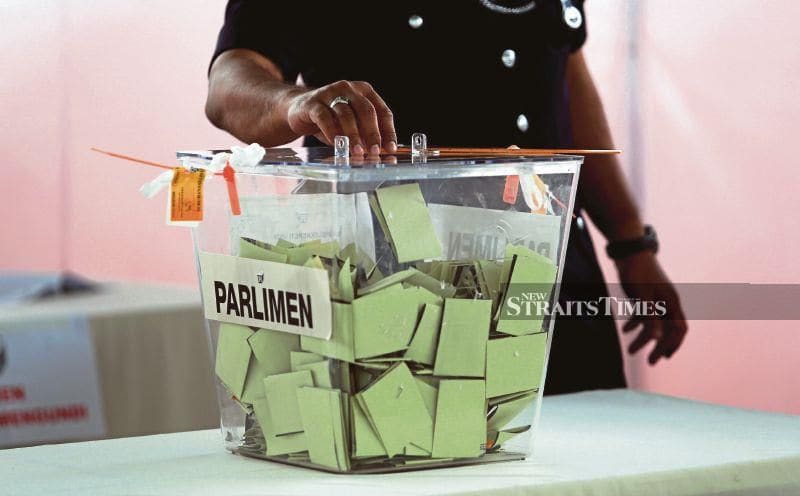
- ·State elections in Melaka and Sarawak are due by early 2027, and the next federal election must be held by December 2027, fueling political uncertainty.
- ·The FTSE Bursa Malaysia KLCI consolidated near 1,725 after a 95-point rally, with a break below 1,720 signaling downside risk toward 1,700.
Risk-Off Sentiment Takes Hold
Malaysia's stock market faces a period of caution as investors weigh political transitions alongside persistent foreign selling. Despite strong second-quarter economic expansion of six per cent, the benchmark FTSE Bursa Malaysia KLCI closed at 1,725.9 on Monday, slipping 1.5 points in a session marked by geopolitical jitters and earnings season volatility.
Hong Leong Investment Bank noted that political risks have intensified even after the Democratic Action Party voted decisively to maintain its position in the federal government. While that outcome points to policy continuity, recent state-level results suggest a more complex picture. Barisan Nasional's commanding win in Johor and strong performances by both BN and Perikatan Nasional in Negri Sembilan signal shifting voter dynamics across the peninsula.
The calendar adds to the uncertainty. Melaka's current legislative term concludes in December, Sarawak's in February 2027, and the 16th General Election must be held by December 2027. The possibility of closer cooperation between BN and PN further complicates forecasts, leaving portfolio managers with few clear signposts.
Foreign Funds Exit at Pace
Foreign institutional investors have been net sellers for ten of the past eleven trading sessions, according to Hong Leong Investment Bank. Monday alone saw RM190 million in net outflows, pushing the five-session total to RM761 million and the month-to-date figure to RM1.25 billion. Year-to-date, foreign investors have withdrawn RM3.73 billion from Malaysian equities.
Local institutions stepped in as buyers on Monday, recording net purchases of RM145 million, while retail investors added RM45 million. The divergence underscores a two-tier market in which domestic participants are absorbing supply that overseas funds are eager to shed.
The index has entered what Hong Leong Investment Bank describes as a near-term consolidation after climbing 95 points from its June 29 low of 1,655 to a peak of 1,750 on August 6. Seven of the subsequent eight sessions have posted declines, and momentum indicators have weakened. A break below 1,720 would open the door to 1,700, while a sustained move above 1,730 and 1,750 would signal renewed upward momentum.
Headwinds Multiply
The political overhang is compounded by external pressures. Escalating tensions in the Middle East have raised energy-price concerns and contributed to a broader risk-off tone across emerging markets. At home, August marks the peak of corporate results season, a period that typically brings heightened volatility as earnings either validate or challenge valuations.
Malaysia's six per cent second-quarter GDP growth beat consensus forecasts and offered a counterpoint to the bearish sentiment. Yet investors have so far treated the data as backward-looking, focusing instead on the absence of fresh catalysts and the accumulation of near-term uncertainties.
What Comes Next
With elections looming at both state and federal levels, market participants are likely to remain selective. Trading ranges are expected to persist until clarity emerges on coalition dynamics and the electoral calendar. Foreign outflows may moderate if global risk appetite improves or if domestic political signals stabilize, but the current trajectory points to continued caution.
For now, the interplay between political uncertainty, external shocks, and domestic liquidity will dictate the pace and direction of Malaysia's equity market. Investors are watching for any decisive shift in coalition alignments or any surprise acceleration of the electoral timetable, either of which could force a reassessment of positioning.
RELATED STORIES
Malaysia Faces Compliance Squeeze After US Flags Transshipment Risk
Priyanka V. Rao · 3 min

Malaysia's EPF Posts 48% Jump in Investment Income on Equity Rally
Priyanka V. Rao · 3 min
Malaysia's Money Supply Growth Hits Pandemic-Era Pace as Producer Prices Surge
Priyanka V. Rao · 3 min

Malaysia's Economy Gains Momentum on AI Spending and Consumer Strength
Priyanka V. Rao · 5 min
Spot something wrong? Email editor@briefasia.com. We log every correction publicly.