Asia · Politics
Taiwan's National Security Council Expands Role in Defense Strategy
Presidential agency now steers resilience reforms and conducts high-level diplomacy as cross-strait tensions escalate
KEY TAKEAWAYS
- ·Taiwan's National Security Council now coordinates defense modernization, resilience programs, and diplomatic engagement as Beijing intensifies pressure on the island.
- ·The agency steers whole-of-society defense initiatives including revised telecom rules for satellite operators and enhanced realism in annual Han Kuang military exercises.
- ·Joseph Wu, the NSC's secretary-general, serves as a primary interlocutor for security dialogue with the United States, Japan, and other Indo-Pacific partners.
From Shadow Agency to Strategic Coordinator
Taiwan's National Security Council has undergone a transformation that few outside the Presidential Office fully recognize. Originally established during the island's authoritarian era and long criticized as a parallel power structure, the NSC is now functioning as the central coordinating body for Taiwan's response to escalating pressure from Beijing.
The agency's expanded mandate encompasses defense modernization, societal resilience programs, and critical diplomatic engagement. This shift reflects Taipei's recognition that cross-strait competition requires unified strategy across traditionally siloed government departments.
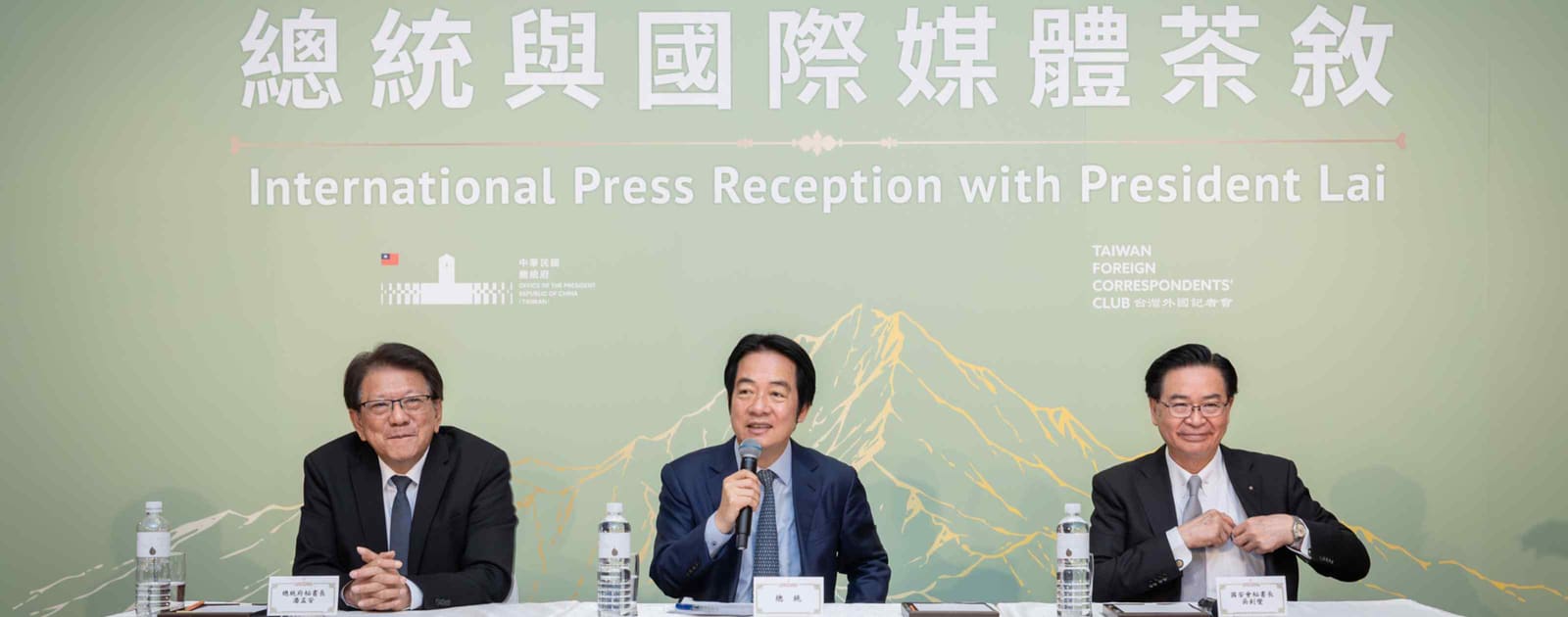
Joseph Wu, the NSC's secretary-general, has emerged as a key architect of this approach. His portfolio extends beyond traditional security briefings to include coordination with military planners, economic ministries, and civil defense authorities. Wu accompanies President Lai Ching-te at diplomatic events and foreign press briefings, signaling the council's elevated status in Taiwan's governance structure.
Coordinating Defense and Resilience
The NSC's operational focus now spans multiple domains. It oversees integration between conventional military preparedness and whole-of-society resilience measures, an approach Taiwan terms "total defense." This framework aims to harden critical infrastructure, supply chains, and information systems against potential disruption.
Recent policy initiatives under NSC coordination include revised telecommunications regulations that ease entry for foreign satellite operators. These changes, designed to maintain connectivity during crisis scenarios, reflect the council's mandate to address hybrid threats that blur military and civilian boundaries.
The agency also plays a steering role in annual defense exercises. Taiwan's Han Kuang drills have incorporated new elements testing internet throttling scenarios and enhanced realism in invasion response protocols. The NSC's involvement ensures these exercises align with broader strategic objectives rather than remaining purely military training events.
Diplomatic Dimension
Beyond defense, the NSC has become a diplomatic instrument. Wu's participation in bilateral discussions and multilateral forums positions the council as Taiwan's primary channel for security dialogue with partners concerned about regional stability.
This diplomatic function carries particular weight as Taiwan navigates great-power competition. The United States, Japan, and other Indo-Pacific nations view Taiwan's security architecture with keen interest, and the NSC serves as their primary interlocutor on matters ranging from export controls to military cooperation.
The council's expanded role also addresses coordination challenges inherent in Taiwan's multi-party democracy. With defense spending proposals reaching record levels and resilience programs touching every ministry, the NSC provides a mechanism for aligning policy across agencies that often compete for budget and authority.
Historical Context
The National Security Council's evolution carries irony. Established during Taiwan's martial law period as an instrument of centralized control, the agency was widely seen as unaccountable and opaque. Democratic reforms in the 1990s and 2000s raised questions about its continued relevance in a system with robust civilian institutions.
Yet the current security environment has rehabilitated the NSC's reputation. Cross-strait military imbalances, cyber threats, and economic coercion campaigns demand coordinated responses that Taiwan's legislature and individual ministries struggle to deliver on their own. The council's proximity to the president allows rapid decision-making without the friction of inter-agency turf battles.
Regional Implications
Taiwan's approach to security governance resonates beyond its shores. Other democracies facing hybrid threats watch how Taipei integrates civilian and military preparedness under unified strategic direction. The NSC model, with its whole-of-government mandate, offers lessons for nations grappling with adversaries who exploit seams between defense, economic, and information domains.
As cross-strait tensions remain elevated, the National Security Council's profile will likely continue growing. Its ability to coordinate complex, multi-domain responses while maintaining democratic accountability will shape not only Taiwan's resilience but also regional perceptions of how small democracies can navigate pressure from larger authoritarian neighbors.
The council's quiet expansion reflects a broader shift in Taiwan's strategic culture from reactive defense planning to proactive, integrated statecraft. Whether this model proves sustainable under stress remains the critical test ahead.
RELATED STORIES

Taiwan Suppliers Face Delivery Delays as Beijing Slows Critical Materials Clearances
Cheng Wei-Lun · 3 min
Taiwan Think Tank Warns of China's National Push in Physical AI and Robotics
Cheng Wei-Lun · 3 min

Taiwan Consumer Confidence Falls Amid Record Growth Forecasts
Cheng Wei-Lun · 2 min
Delta Electronics Thailand Hits $100 Billion Market Cap Milestone
Priyanka V. Rao · 4 min
Spot something wrong? Email editor@briefasia.com. We log every correction publicly.