Technology · AI
Taiwan Think Tank Warns of China's National Push in Physical AI and Robotics
DSET report highlights Beijing's coordinated strategy to dominate advanced robotics despite gaps in critical component technologies
KEY TAKEAWAYS
- ·Taipei-based think tank DSET reports that China is launching a coordinated national effort to dominate physical AI and advanced robotics, similar to its earlier strategies in electric vehicles and drones.
- ·China is pursuing this push despite current weaknesses in cutting-edge chips, advanced sensors, and precision machine tools, relying on scale and rapid iteration to offset component gaps.
- ·The strategy poses competitive pressure on established robotics suppliers in Japan, South Korea, and Taiwan, while potentially accelerating automation access for manufacturers across Southeast and South Asia.
A Familiar Playbook Returns
China is deploying a coordinated national strategy to capture leadership in physical AI and advanced robotics, according to a recent assessment from DSET, a prominent think tank based in Taipei. The effort mirrors Beijing's earlier campaigns that reshaped global markets for electric vehicles and consumer drones, raising the prospect of another supply chain disruption across Asia and beyond.
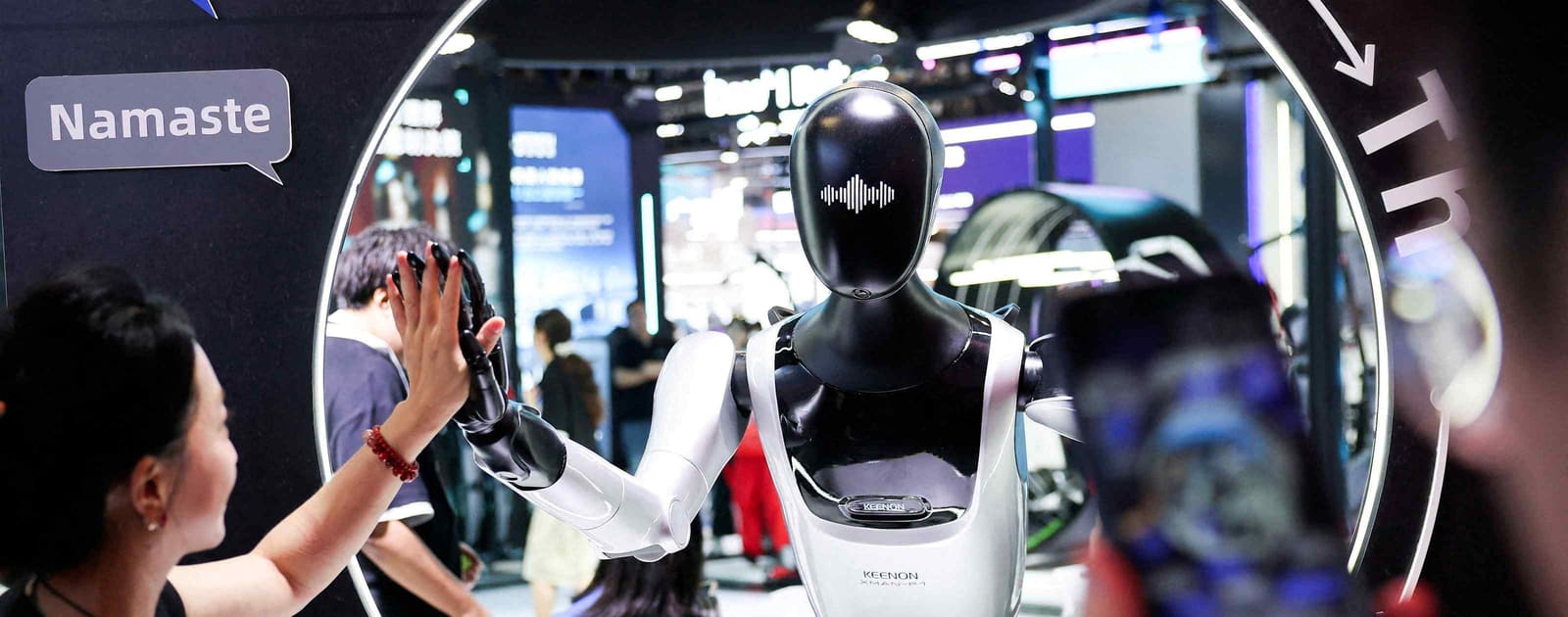
Physical AI refers to artificial intelligence systems embedded in robots and autonomous machines that interact with the physical world. The field is gaining momentum as companies race to build humanoid robots, warehouse automation systems, and intelligent manufacturing platforms. DSET's analysis suggests that China's government is treating this domain as a strategic priority, channeling resources and policy support similar to what propelled Chinese firms to dominance in battery EVs and commercial drones over the past decade.
The Technology Gap That May Not Matter
Despite acknowledged weaknesses in foundational technologies including cutting-edge semiconductors, advanced sensors, and precision machine tools, China appears undeterred in its robotics ambitions. DSET's report points to a whole-of-nation approach that leverages scale, subsidies, and rapid iteration to compensate for component shortfalls.
This strategy has precedent. Chinese drone manufacturers captured global market share even while relying on imported chips and camera modules, competing instead on software integration, cost efficiency, and speed to market. The robotics push follows a similar logic: build volume and ecosystem advantages while component technology gradually catches up through domestic development or alternative sourcing.
The assessment arrives as several Chinese robotics firms accelerate production plans. Companies such as Unitree Robotics have signaled capacity expansions and are preparing capital raises to fund scaling efforts. Unitree recently drew backing from investors including entities linked to state oil interests and AI firms, underscoring the blend of private entrepreneurship and state-aligned capital that characterizes Beijing's industrial policy.
Regional Implications for the Supply Chain
For Asia's manufacturing hubs, the implications are twofold. On one hand, accessible and affordable robotics platforms could lower automation barriers for small and mid-sized manufacturers across Southeast Asia and South Asia, potentially accelerating productivity gains. On the other, established robotics suppliers in Japan, South Korea, and Taiwan face intensifying competition in segments where precision and reliability have historically commanded premium pricing.
Japan has already signaled its intent to defend and expand its position in factory robotics, with government initiatives aimed at embedding AI capabilities into industrial automation systems. South Korea's robotics sector, anchored by conglomerates with deep electronics and semiconductor expertise, is likewise investing in next-generation platforms. Taiwan's role remains concentrated in the component layer, particularly motors, controllers, and vision systems, but the island's firms are watching China's moves closely given the potential for margin compression.
The Uncertain Timeline
While DSET's report frames the issue as an emerging challenge, the timeline for a robotics "shock" comparable to EVs or drones remains open to debate. Physical AI systems face technical hurdles that software-centric AI does not, including real-time decision-making in unpredictable environments, energy efficiency, and safety certification. Some industry observers, including executives at Chinese robotics firms, have cautioned that a breakthrough moment for general-purpose robots may still be years away.
Nevertheless, the groundwork is being laid. China's approach typically involves building infrastructure and capacity ahead of demand, tolerating early losses in exchange for strategic positioning. If that pattern holds, the next few years will see expanding production lines, aggressive export pricing, and growing market share in lower-end robotics applications, with gradual movement upmarket as technology matures.
What Comes Next
The DSET assessment serves as a signal to policymakers and industry leaders across the region. Physical AI and robotics represent a convergence of hardware, software, and manufacturing scale, areas where China has demonstrated the ability to mobilize resources quickly. Whether this translates into outright dominance will depend on how other nations respond, including export controls on critical components, domestic support for robotics ecosystems, and collaboration frameworks within Asia.
For now, the competition is taking shape in factory floors, warehouses, and research labs from Shenzhen to Tokyo to Bangalore. The question is not whether China will be a major player in robotics, but whether the rest of Asia can maintain competitive positions in a market that Beijing has clearly identified as the next industrial frontier.
RELATED STORIES

Phantom Blade Zero Demo Draws Eight Million Views as Pre-Orders Open
Cheng Wei-Lun · 2 min

Tencent's Hy3 AI Model Sees 68x Usage Surge as Company Readies Hy4 Release
Cheng Wei-Lun · 3 min

Honor Unveils Gimbal-Equipped Smartphone With System-Level AI Agent
Cheng Wei-Lun · 3 min

DeepSeek Ships V4 Pro API With Million-Token Context and Response Streaming
Cheng Wei-Lun · 4 min
Spot something wrong? Email editor@briefasia.com. We log every correction publicly.