Asia · Business
Delta Electronics Thailand Hits $100 Billion Market Cap Milestone
The Bangpoo Industrial Estate operation became Thailand's first listed company to reach the valuation threshold, powered by nearly 22,000 employees and ties to its Taiwan parent
KEY TAKEAWAYS
- ·Delta Electronics (Thailand) became Thailand's first listed company to reach a $100 billion market capitalization, employing nearly 22,000 people at its Samut Prakan facility.
- ·The stock subsequently tumbled nearly 30 percent, wiping out approximately $12 billion in value amid broader Thai economic concerns and second-quarter GDP growth slowing to 1.9 percent.
- ·The company benefits from Taiwan parent investment and exposure to structural demand in electric vehicles, data centers, and industrial automation across Southeast Asia.
A Southeast Asian Manufacturing Giant Emerges
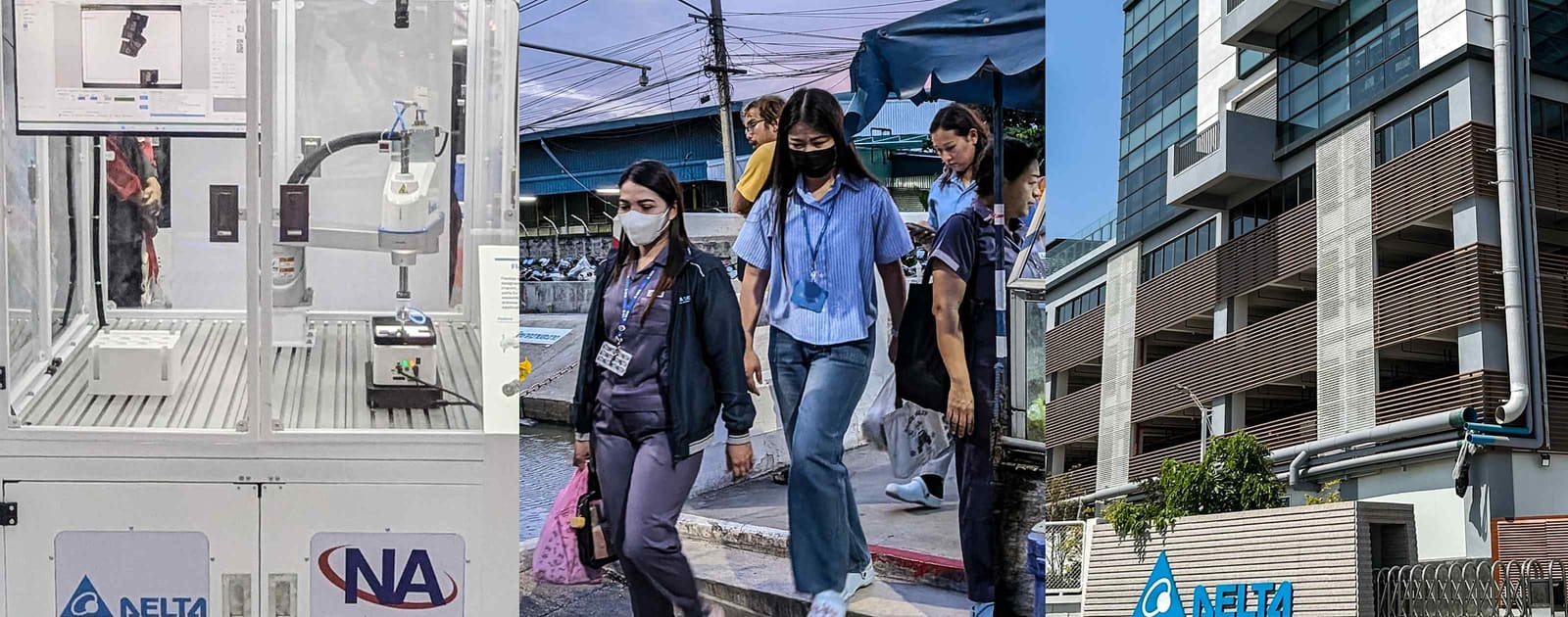
The evening shift change at the Bangpoo Industrial Estate tells its own story. At 7 p.m., thousands of workers pour through the gates of Delta Electronics (Thailand), mostly women, greeted by street vendors selling snacks in the humid air just outside Bangkok. The scene reflects the scale of an operation that has quietly become Thailand's most valuable listed company.
Delta Electronics (Thailand) recently became the first Thai-listed company to reach a market capitalization of $100 billion, according to the company. The subsidiary of Taiwan-based Delta Electronics employs nearly 22,000 people at its Samut Prakan province facility, positioning it as a cornerstone of Thailand's industrial economy.
The milestone comes as Taiwan's electronics manufacturers deepen their Southeast Asian footprint, diversifying production away from concentrated China exposure while capitalizing on Thailand's established manufacturing infrastructure and supply chain networks.
The Taiwan Connection Pays Dividends
Delta Electronics (Thailand) benefits from its parent company's global reach in power and thermal management solutions, a sector experiencing sustained demand as data centers, electric vehicles, and renewable energy systems proliferate across Asia. The Thai unit manufactures components critical to these growth markets, including power supplies, industrial automation equipment, and cooling systems.
Taiwan-based Delta Electronics has ramped up investment in Thailand alongside other major Taiwanese firms such as Foxconn, which have collectively poured billions into expanding Southeast Asian production capacity over the past three years. The strategy reflects both geopolitical risk management and proximity to ASEAN's growing consumer and industrial markets.
Thailand offers Taiwanese manufacturers a stable regulatory environment, a mature supplier ecosystem, and competitive labor costs compared to coastal China. The Bangpoo Industrial Estate, where Delta's main facility sits, hosts dozens of electronics and automotive component makers, creating cluster effects that reduce logistics costs and speed time-to-market.
Volatility Tests Investor Confidence
The celebration of the $100 billion threshold was short-lived. Delta Thailand's stock tumbled nearly 30 percent in recent trading, erasing approximately $12 billion in market capitalization. The sharp correction reflects broader concerns about Thai economic momentum and profit-taking after a rapid valuation climb.
Thailand's second-quarter GDP growth slowed to 1.9 percent, weighed down by energy sector headwinds and softer tourism revenues than anticipated. The deceleration has prompted questions about domestic demand and export competitiveness, though corporate profits across Southeast Asia have shown resilience despite external pressures including U.S. tariff policy under the Trump administration.
Regional equity markets have experienced uneven performance. Taiwan's stock market, heavily weighted toward TSMC and other semiconductor names, has demonstrated relative stability even amid Middle East tensions that typically trigger risk-off sentiment. Chip price increases have spread as Asian chipmakers plan a record $136 billion in capital expenditure, a trend that should support suppliers like Delta Thailand over the medium term.
Industrial Diversification as Buffer
Delta Thailand's workforce and production capacity position it to serve multiple end markets, reducing reliance on any single sector. The company supplies components to automotive manufacturers transitioning to electric powertrains, a shift accelerating across ASEAN as governments introduce incentives and Chinese EV makers establish local partnerships.
One Thai automotive executive recently warned that domestic firms must collaborate with Chinese EV manufacturers or risk obsolescence, underscoring the strategic importance of supply chain integration. Delta Thailand's product portfolio aligns with this transition, offering power electronics essential to EV charging infrastructure and battery management systems.
The company also serves the data center buildout sweeping the region. Singapore, Bangkok, and Jakarta are competing to attract hyperscale facilities, driving demand for high-efficiency power supplies and cooling solutions. Delta's thermal management expertise positions it as a preferred supplier as operators prioritize energy efficiency to control operating costs and meet carbon reduction targets.
What the Volatility Signals
The 30 percent share price drop, while dramatic, does not necessarily reflect fundamental deterioration. Thai equities have experienced heightened volatility as foreign portfolio flows shift in response to interest rate differentials and currency movements. The baht has weakened against the dollar, making Thai exports more competitive but also raising import costs for manufacturers reliant on components priced in hard currency.
Delta Thailand's valuation had likely outpaced near-term earnings visibility, prompting a technical correction. The company's long-term prospects remain tied to structural trends favoring electrification, automation, and digital infrastructure, all areas where Asian demand continues to outpace global averages.
Investors will watch whether the Thai government introduces stimulus measures to revive GDP growth and whether Delta Thailand can sustain order momentum as global electronics demand moderates from pandemic-era peaks. The company's ability to leverage its parent's R&D and customer relationships will determine whether it can defend margins in an increasingly competitive landscape.
For now, the Bangpoo facility continues its three-shift rhythm, a physical embodiment of Thailand's integration into regional electronics supply chains and the complex calculus facing investors in Asia's industrial heartland.
RELATED STORIES

Thailand Must Prioritize Speed and Focus to Compete for Global Investment
Priyanka V. Rao · 3 min

Thailand Posts Slowest Growth Among Southeast Asia's Six Largest Economies
Cheng Wei-Lun · 2 min

Thailand Targets Four Strategic Priorities Amid Global Trade Volatility
Priyanka V. Rao · 3 min
Thailand Named in US Transshipment Risk Report Alongside 40 Countries
Priyanka V. Rao · 4 min
Spot something wrong? Email editor@briefasia.com. We log every correction publicly.