Finance · Markets
State Funds Exit Kweichow Moutai as Baijiu Giant Faces 40% Stock Decline
Central Huijin and China Securities Finance dropped from top-10 shareholder list as profits slip and valuation pressure mounts

KEY TAKEAWAYS
- ·Central Huijin Investment and China Securities Finance exited Kweichow Moutai's top-10 shareholder list by end of June, removing state capital support as shares fell over 40% from their 2021 peak.
- ·Kweichow Moutai reported a 1.95% profit decline in the first half, pressured by anti-corruption measures curbing banquet spending and younger consumers favoring alternatives to baijiu.
- ·The national team's exit signals Beijing is redirecting stabilization funds toward semiconductors and advanced manufacturing, leaving legacy consumer stocks without official buying backstops.
State Capital Retreats from Baijiu Bellwether
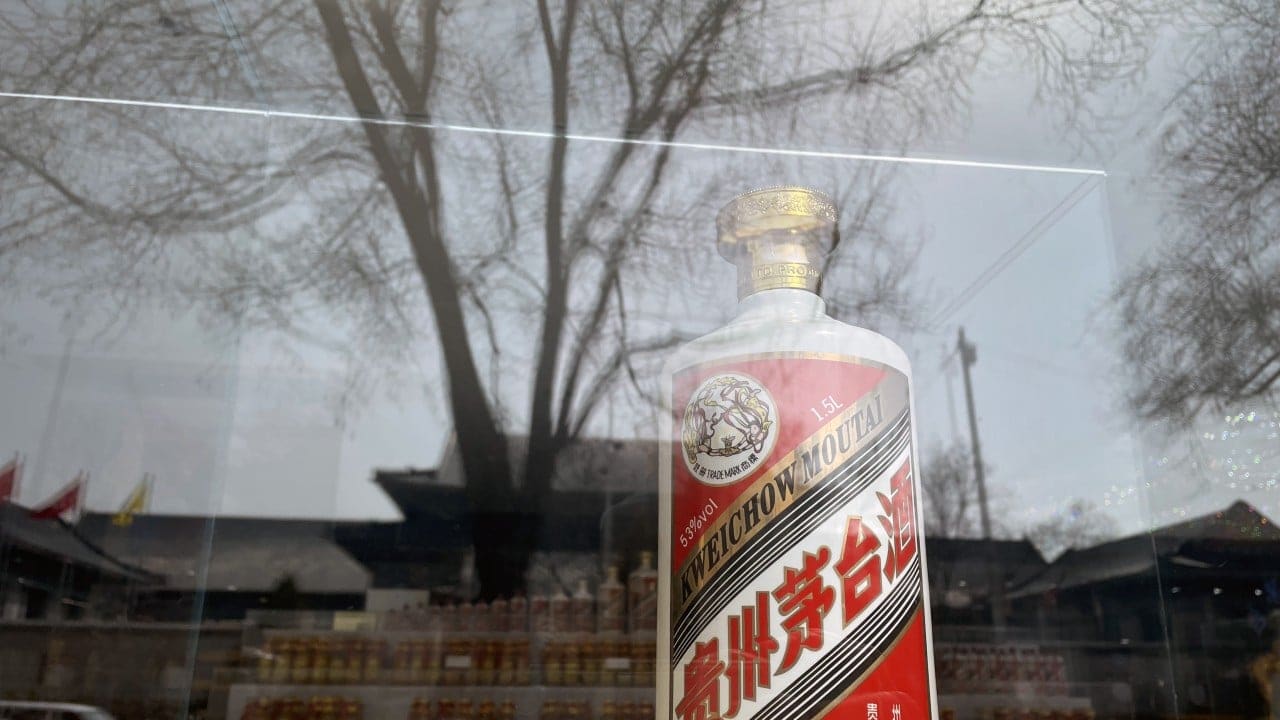
China's state-backed investment arms have quietly exited their positions in Kweichow Moutai, the country's largest baijiu distiller, marking a significant shift in official capital allocation as the stock struggles through a multi-year downturn. Central Huijin Investment, the domestic investment vehicle of China Investment Corporation, and China Securities Finance disappeared from the company's top-10 shareholder list by the end of June, according to Kweichow Moutai's first-half earnings report.
The withdrawal comes as Kweichow Moutai grapples with deteriorating fundamentals. The Guizhou-based distiller reported a 1.95% decline in profits during the first half of the year, a rare earnings contraction for a company that spent the better part of two decades as a growth darling among Chinese consumer stocks.
Shares of Kweichow Moutai have fallen more than 40% from their peak five years ago, erasing hundreds of billions of yuan in market capitalization. The stock, once a proxy for China's aspirational consumer class and a staple holding in portfolios from Hong Kong to Singapore, now trades at valuations that reflect mounting concerns about demand elasticity in the premium spirits segment.
The National Team's Shifting Priorities
Central Huijin and China Securities Finance are collectively known as the "national team" in mainland markets, a group of state entities tasked with stabilizing equity markets during periods of volatility. Their presence in a company's shareholder registry typically signals official confidence and can provide a floor under share prices during sell-offs.
The decision to exit Kweichow Moutai suggests a recalibration of where Beijing wants its stabilization capital deployed. Over the past 18 months, the national team has redirected funds toward semiconductor manufacturers, electric vehicle supply chains, and other sectors aligned with industrial policy priorities outlined in the 14th Five-Year Plan.
Kweichow Moutai, by contrast, sits outside those strategic categories. The company produces high-end baijiu, a clear grain spirit consumed primarily at business banquets and official functions. While culturally significant, the product plays no direct role in supply chain security or technological self-reliance, the twin pillars of current economic policy.
Valuation Pressure and Demand Headwinds
The stock's protracted decline reflects more than just a shift in state capital preferences. Kweichow Moutai faces structural headwinds that have compressed both revenue growth and margin expansion. Anti-corruption campaigns have curtailed lavish spending on government banquets, a core distribution channel for premium baijiu. Economic uncertainty has prompted corporate clients to rein in entertainment budgets, further denting demand.
At the same time, younger Chinese consumers show less affinity for baijiu than previous generations, preferring wine, craft beer, and imported spirits. This demographic shift threatens long-term volume growth, even as Kweichow Moutai attempts to reposition certain product lines for a younger audience.
The first-half profit decline, though modest, breaks a streak of consistent earnings growth that underpinned the stock's premium valuation. Investors who once paid 40 times forward earnings for exposure to China's consumption upgrade story now question whether that multiple remains justified.
Implications for State Market Intervention
The exit of Central Huijin and China Securities Finance from Kweichow Moutai's shareholder base offers a window into how Beijing is rethinking market stabilization. Rather than propping up blue-chip incumbents indiscriminately, state funds appear to be concentrating firepower on sectors deemed critical to national competitiveness.
This targeted approach aligns with policy signals from the State Council and the China Securities Regulatory Commission, both of which have emphasized directing capital toward "hard technology" and advanced manufacturing. Consumer discretionary stocks, unless tied to domestic substitution themes, are receiving less official support.
For Kweichow Moutai, the absence of national team buying removes a backstop that previously cushioned the stock during market turbulence. Institutional investors in Hong Kong and Singapore, who hold significant positions through Stock Connect channels, will now need to rely solely on company fundamentals to justify continued exposure.
What Comes Next
Kweichow Moutai's management has signaled plans to expand distribution in lower-tier cities and develop new product formats aimed at younger drinkers. Whether these initiatives can offset weakness in traditional channels remains unclear. The company's pricing power, historically a key competitive advantage, faces tests as consumers become more price-sensitive.
Meanwhile, the reallocation of state capital toward strategic sectors is likely to continue. Central Huijin and China Securities Finance have increased stakes in domestic chip designers, battery material suppliers, and industrial robotics firms over the past year, a pattern that suggests the national team's mandate has evolved beyond simple market stabilization.
For investors tracking capital flows across Asia's largest equity market, the Kweichow Moutai exit serves as a clear signal: state money is moving out of legacy consumption plays and into the infrastructure of economic transformation. Whether private capital follows that lead will determine which sectors command premium valuations in the years ahead.
RELATED STORIES
China's E Fund Shifts $3.1 Billion From Consumer Stocks to AI
Cheng Wei-Lun · 3 min

JD.com Squeezes More Profit from Shrinking Revenue
Cheng Wei-Lun · 4 min

Hong Kong Moves to Expand Treasury Centre Tax Breaks
Cheng Wei-Lun · 2 min
State Investors Step In as AI Valuations Shake Chinese Markets
Cheng Wei-Lun · 3 min
Spot something wrong? Email editor@briefasia.com. We log every correction publicly.