Asia · Trade
Thailand Named in US Transshipment Risk Report Alongside 40 Countries
White House alleges potential Chinese tariff evasion through third-country routing costs US $19-26 billion annually in lost revenue
KEY TAKEAWAYS
- ·The White House identified Thailand and over 40 countries as transshipment risks, alleging $19-26 billion in annual US tariff revenue losses from Chinese goods rerouting.
- ·Thailand is placed in Tier 2 alongside Indonesia, Malaysia, and Vietnam for significant integration into China-linked supply chains and manufacturing platforms.
- ·Thai industry officials maintain confidence in export resilience, citing strict 40 percent local sourcing rules and US reliance on Thai electronics and IT imports.
The Allegation
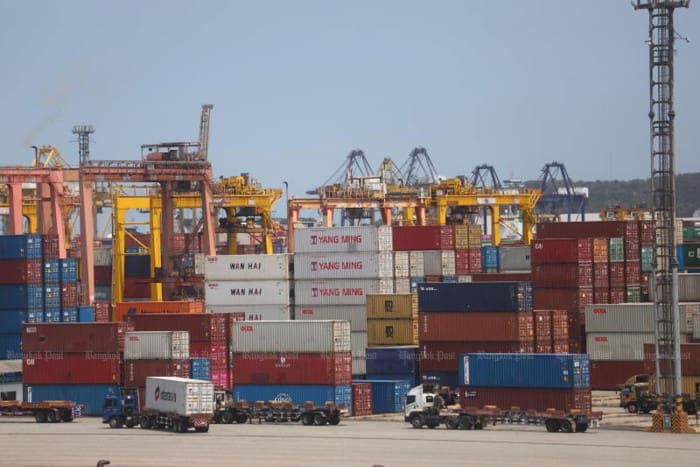
The White House has placed Thailand on a list of countries it believes facilitate Chinese tariff evasion through transshipment, a practice where goods are rerouted through third countries to benefit from lower US tariff rates. The administration released a report titled "The Great Transshipment Scam," alleging that more than 40 countries are associated with elevated illegal transshipment risk, potentially costing the United States $19-26 billion in lost tariff revenue each year.
The report categorizes nations into three tiers based on risk profiles. Thailand falls into Tier 2, alongside Indonesia, Malaysia, and Vietnam. According to the White House, these four ASEAN countries exhibit significant illegal transshipment volumes due to their deep integration into China-linked supply chains, sourcing inputs, manufacturing platforms, logistics systems, or regional routing channels.
The report notes that these nations have become major platforms for electronics, machinery, plastics, footwear, apparel, components, and other industrial goods that incorporate China-origin inputs. As China's direct share of US goods imports declined after tariffs were imposed during Trump's first term in 2018, the combined share supplied by identified transshipment countries increased significantly, the administration claims.
The Three-Tier Framework
Tier 1 includes large, industrialized economies such as India, Japan, South Korea, Taiwan, Canada, Mexico, Israel, and the European Union. These are places where potential tariff-evading Chinese transshipment risks are mixed into otherwise massive, legal trade flows.
Tier 2 countries are characterized by diversified scale leaders with significant economic integration with China. The report singles out the four ASEAN nations for their close integration into China-adjacent manufacturing networks.
Tier 3, the largest tier in terms of country count, includes smaller economies with lower absolute illegal transshipment volumes but specific weak-link advantages such as low-cost labor, free zones, port or border access, bonded warehousing, niche assembly capacity, preferential US access, or limited customs enforcement capacity.
The report links foreign transshipment-risk corridors to US industrial regions producing similar goods, including integrated circuits, pumps, compressors, plastics, aluminum products, and motor components. Based on $75 billion in annual transshipment, the White House estimates this could result in 450,000 US jobs being displaced and an annual GDP reduction of $113-150 billion.
Enforcement and Detection
White House trade adviser Peter Navarro said the administration is working with US Customs and Border Protection on an artificial intelligence-enabled "detective border" to help assess whether a shipment involves transshipped goods. This system will utilize data such as shipment records, routing histories, and other tools, Navarro said.
The report indicates that transshipments have soared to a value of $303 billion, representing what the administration calls a sizable tax revenue loss. As a result, the White House considers the report a warning shot for countries mentioned in it to investigate their domestic supply chains.
Thailand's Response
Nattaporn Triratanasirikul, deputy managing director of the Kasikorn Research Center, characterized the report as a warning for countries mentioned to take action to address the issue. She noted that the US will monitor Thailand and other named countries to ensure proper rules of origin are in place.
"Though the US doesn't indicate what action it would take against these countries, the report is a warning for nations to probe their supply chains, improving traceability to minimize being used by China for tax evasion," Nattaporn said.
She suggested that Thailand can continue to welcome direct investments from China, but additional measures should verify clear rules of origin and manufacturing activities occurring in Thailand for exports to the US and other markets. She added that the government should also prepare information to explain Thailand's status against US claims.
"This report will likely be used in US trade negotiations with Thailand. Our policymakers must address this issue cautiously," Nattaporn said.
Industry Maintains Confidence
The Federation of Thai Industries remains confident that exports will remain resilient despite Washington's monitoring of transshipped goods. FTI vice-chairman Sommat Khunseth said the US will continue to rely on essential imports from Thailand, particularly in sectors such as IT and electronics, where American firms also invest locally and re-export products back to the US.
Khunseth noted that Thailand enforces strict regulations requiring foreign investors to source at least 40 percent of raw materials locally, ensuring transparency in supply chains. Montri Mahaplerkpong, another FTI vice-chairman, acknowledged that some raw materials in Thailand's value chain originate from China but stressed this is not classified as transshipment.
"As a business operator, it makes sense to buy raw materials wherever they are cheapest, but if more than 40 percent comes from China and the product is declared as Thai-made, that is not acceptable," Montri said.
He suggested Washington focus on regulating "Chinese content" in products rather than broadly targeting countries. While short-term impacts on exports are possible, Montri said American consumers are likely to bear the brunt as Thailand's exports are vital. Neighboring nations such as Malaysia, Indonesia, and Vietnam face similar monitoring.
The report represents the latest front in ongoing US-China trade tensions, with Southeast Asian manufacturing hubs caught in the crossfire as Washington seeks to close what it views as loopholes in its tariff regime.
RELATED STORIES
Asian Routes Become Conduit for Billions in Tariff Evasion
Cheng Wei-Lun · 3 min

Chinese Luxury Brands Test Southeast Asian Waters
Cheng Wei-Lun · 3 min
Thailand Regulator Drafts 20 Measures to Curb Retail Power Over Suppliers
Priyanka V. Rao · 3 min
Indonesia's Food Exports Reach $6.25 Billion, Fourth in ASEAN Behind Thailand and Vietnam
Siti Nuraini · 3 min
Spot something wrong? Email editor@briefasia.com. We log every correction publicly.