Technology · Dev
Chinese Manufacturers Command Over 70% of Global LCD TV Panel Market
China's share in LCD monitor panels surpassed 70% in the first half of 2026 as consolidation accelerates across the display industry
KEY TAKEAWAYS
- ·Chinese manufacturers hold over 70% of the global LCD TV panel market and are nearing 80%, while their monitor panel share crossed 70% in the first half of 2026.
- ·Heavy capital investment in generation-10.5 and generation-11 fabs gives Chinese producers cost advantages, allowing them to absorb pricing cycles that pushed Japanese, Korean, and Taiwanese competitors to exit or pivot.
- ·The consolidation increases downstream brands' dependence on a handful of Chinese suppliers and shifts the industry's center of gravity, with implications for regional supply chains and component makers.
Market Dominance Solidifies
Chinese manufacturers have cemented their position in the global LCD panel industry, maintaining control over more than 70% of the TV panel market with momentum toward 80%. The concentration marks a decisive shift in an industry that once saw Japanese, South Korean, and Taiwanese firms competing on more equal footing.
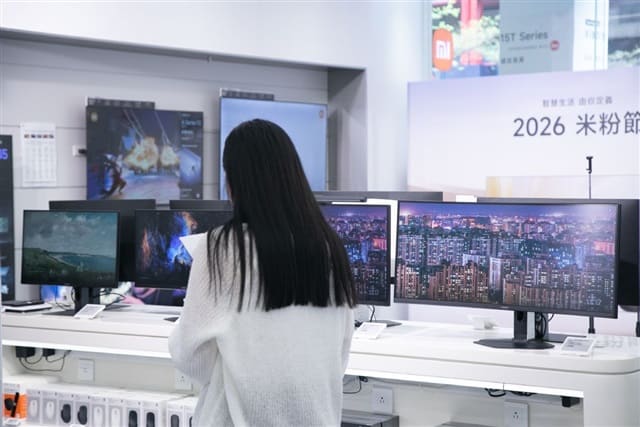
The dominance extends beyond television displays. In the first half of 2026, Chinese producers crossed the 70% threshold in LCD monitor panels, matching the grip they already hold in TV screens. The parallel expansion across both segments underscores a broader pattern: the world's display supply chains are consolidating in China at an accelerating pace.
Capacity and Scale Advantages
China's lead rests on years of heavy capital investment in fabrication plants, known as fabs, combined with government support for domestic panel makers. BOE Technology Group, China Star Optoelectronics Technology (CSOT), and other mainland firms have built generation-10.5 and generation-11 fabs capable of cutting larger substrates more efficiently than older lines. These facilities can produce 65-inch and 75-inch panels at lower cost per unit, a critical advantage as global TV sizes trend upward.
The scale also allows Chinese manufacturers to absorb cyclical downturns in panel pricing, a volatility that has pushed competitors in Japan, South Korea, and Taiwan to exit or scale back LCD production. LG Display and Samsung Display have both shifted investment toward OLED and next-generation technologies, ceding LCD volume to Chinese rivals.
Monitor Panel Momentum
The monitor segment tells a similar story. Chinese panel makers have ramped output for desktop and gaming monitors, where demand remains robust despite broader PC market stagnation. High-refresh-rate panels for esports and productivity monitors for hybrid work have driven steady orders, and Chinese fabs have responded with aggressive pricing and shorter lead times.
Taiwanese panel makers, once leaders in monitor displays, now face margin pressure and capacity constraints. AU Optronics and Innolux have pivoted toward specialty applications, including automotive displays and industrial panels, leaving the high-volume monitor market increasingly to Chinese competitors.
Implications for the Supply Chain
The concentration carries consequences for downstream brands and regional supply chains. TV manufacturers in Southeast Asia, Latin America, and Europe now source the majority of their panels from a handful of Chinese suppliers, reducing bargaining power and increasing exposure to supply disruptions or policy shifts in China.
For component suppliers - backlights, driver ICs, polarizers - the shift means aligning production and logistics around Chinese panel fabs. Some suppliers have relocated or expanded operations in mainland China to stay competitive, further deepening the industry's center of gravity there.
What Comes Next
The trajectory suggests Chinese manufacturers will continue to gain share, particularly as they invest in next-generation technologies alongside LCD. BOE and CSOT are both ramping OLED capacity for smartphones and premium TVs, while exploring mini-LED and micro-LED backlighting to extend the competitiveness of LCD in premium segments.
Whether the remaining non-Chinese players can carve out defensible niches in high-margin specialty displays, or whether consolidation will push the industry toward near-total Chinese dominance, remains the central question for the next phase of the global display market.
RELATED STORIES

Google Plans Full Exit From China Manufacturing for Pixel Devices by 2027
Cheng Wei-Lun · 3 min

Nvidia's Madison Huang Tours Asia Robotics Hubs in Seoul and Beijing
Cheng Wei-Lun · 3 min
Tsinghua Unigroup Cuts Ties With Collapsed Dongguan Semiconductor Project
Cheng Wei-Lun · 3 min

AMEC Reports 300% Profit Jump as China Chipmaker Bets $520M on Expansion
Cheng Wei-Lun · 3 min
Spot something wrong? Email editor@briefasia.com. We log every correction publicly.