Finance · Markets
Seoul's Leveraged ETF Experiment Leaves Retail Investors Nursing Psychiatric Wounds
A government push to modernize Korea's capital markets turned into a $38.7 billion lesson in the risks of democratizing complex derivatives
KEY TAKEAWAYS
- ·South Korea approved single-stock leveraged ETFs in late May with minimal safeguards, triggering a retail trading frenzy that cost investors an estimated $38.7 billion by late July.
- ·Margin loan balances for KOSPI stocks hit a record 29.8 trillion won in late June before the index fell 30 per cent from its June 19 peak, driving a surge in psychiatric cases.
- ·The volatility may delay Seoul's push for MSCI developed-market status, as foreign investors question whether governance reforms can stabilize a market dominated by leveraged retail speculation.
A Reform Turned Crisis
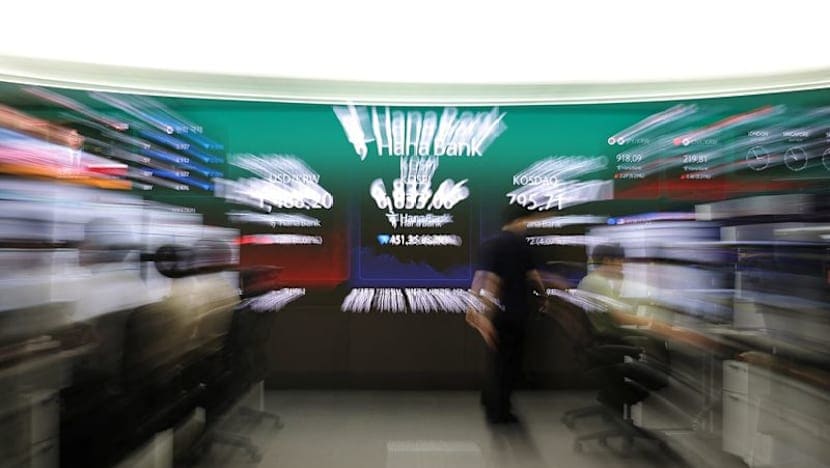
When Seoul approved single-stock leveraged exchange-traded funds this spring, policymakers envisioned a modern capital market that would narrow the valuation gap with global peers. What materialized instead was a retail trading disaster that has erased $38.7 billion in household wealth and sent demand for psychiatric care soaring.
The Korea Composite Stock Price Index has shed 30 per cent since peaking on June 19, a decline that has inflicted both financial and psychological damage on the millions of domestic investors who piled into complex derivatives products they barely understood. The rout has become a political liability for President Lee Jae Myung's administration and raised uncomfortable questions about whether a country with such volatile retail behavior can graduate to developed-market status in global equity indices.
Jeon Suk-jae, who runs an investment-focused YouTube channel with 3.7 million subscribers, watched the mood in his comment sections flip from jubilation to despair as the index cratered. The shift mirrored a broader national reckoning: many Koreans who entered the market during the rally now face losses severe enough to drive them out of equities for years, according to Jeon.
Regulatory Green Light
The story begins in January, when officials in the presidential Blue House began pressing for the introduction of products already available to Korean traders on overseas exchanges. Kim Yong-beom, the presidential chief of staff for policy, argued that restrictions on domestic platforms made little sense when the same instruments traded freely on Nasdaq.
By late May, regulators had signed off on single-stock leveraged ETFs that use derivatives to amplify the daily moves of individual equities. The Financial Services Commission said it comprehensively examined risk factors at each review stage, though no standardized risk assessment procedure existed. The only investor safeguards were a one-hour training module and a 10 million won minimum account balance.
The timing appeared fortuitous. Samsung Electronics and SK Hynix had both crossed $1 trillion in market capitalization on the back of a global artificial intelligence boom, and analysts were forecasting a once-in-a-generation earnings cycle for Korean memory chipmakers. Sales of domestic stock investment books more than tripled in the first half of the year, according to online bookseller Yes24.
Margin Mania
Retail investors, known colloquially as "ants" for their swarming trading patterns, rushed into leveraged positions. Margin loan balances for KOSPI stocks climbed roughly 75 per cent from January to a record 29.8 trillion won by late June, data from the Korea Financial Investment Association shows.
Kwon Soon-kuk, a 34-year-old investor, saw his portfolio gain as much as 66 per cent at the market's height. He told reporters that leverage felt like the only viable path to wealth in a country grappling with its widest-ever income inequality. Park Jung-jae, an economics professor at Yonsei University, traced the herd mentality to earlier economic shocks that had hardened a fear of missing out among younger Koreans.
The new ETFs launched just as the KOSPI breached 8,000 points, having more than doubled from October levels. Because the funds must continuously trade shares and derivatives to maintain their leverage ratios, they amplified intraday volatility. The effect was magnified by the fact that Samsung and SK Hynix together represent over half the index's total weight.
The Unwind
Sentiment cracked in early July. The VKOSPI volatility gauge, sometimes called the Korean fear index, spiked to 97.99, the highest reading since the metric's inception in 2009. A client note from Citi on July 28 estimated that retail investors had lost $38.7 billion on leveraged ETF positions.
Chun Wang, a director of multi-asset strategies at Leuthold Group, drew a parallel to "Squid Game," the Netflix drama in which desperate contestants gamble everything on high-stakes challenges. In an August 7 research note, he described Korea's retail market as a series of speculative episodes in which ordinary people chase life-changing payouts and end up with nothing.
Psychiatric Fallout
The human cost has been stark. Park Jongsuk, a Seoul-based psychiatrist who specializes in investment-related distress, said his daily patient load jumped from seven or eight last year to an average of eleven since June. Police in Busan arrested a man in his twenties on suspicion of attempted murder after he allegedly stabbed a financial YouTuber he blamed for his trading losses.
Dalbo Park, a retiree in his eighties who has invested in Korean equities for three decades, lost 35 per cent of his portfolio in the selloff. He said the experience was unlike anything he had seen before and vowed never to buy KOSPI stocks again.
Political and Market Consequences
Lawmakers have issued public apologies, and regulators have tightened restrictions on individual access to leveraged products. Yet confidence remains fragile. Some Korean investors have redirected capital back to U.S. markets, where appetite for American leveraged ETFs remains robust, according to the Korea Securities Depository.
The turmoil may also complicate the Lee administration's flagship goal of securing an upgrade to MSCI's developed-market index. Huh Jae-hwan, an analyst at Eugene Investment Securities in Seoul, noted that while corporate governance reforms are still viewed favorably by foreign investors, the surge in volatility will make it harder to attract long-term capital before those measures take full effect.
Despite the 30 per cent decline, the KOSPI still trades more than double its October level. But for a generation of retail traders, the rally that was supposed to democratize the AI windfall has instead delivered a lesson in the dangers of financial complexity without adequate guardrails.
RELATED STORIES
Seoul Stocks Climb on Chipmaker Shareholder Return Expectations
Cheng Wei-Lun · 2 min
Bank of Korea Signals Cautious Approach to Future Rate Decisions
Cheng Wei-Lun · 3 min
Seoul's Semiconductor Surge Fuels Debate Over Central Bank Tightening
Cheng Wei-Lun · 3 min
Samsung SDI Sells $3.2 Billion Display Unit Stake to Fund Battery Expansion
Jun-ho Seo · 3 min
Spot something wrong? Email editor@briefasia.com. We log every correction publicly.