Asia · Business
Samsung's Vietnam Factories Ship Half a Trillion Dollars in Mobile Phones Since 2009
The South Korean electronics giant has turned two northern Vietnamese provinces into a cornerstone of its global smartphone supply chain, exporting $500 billion in devices over 17 years.
KEY TAKEAWAYS
- ·Samsung Electronics has exported $500 billion in mobile phones from two factories in northern Vietnam since operations began in 2009, with cumulative investment reaching $24 billion.
- ·Prime Minister Le Minh Hung is pressing Samsung to transform Vietnam from a manufacturing hub into a center for R&D, semiconductors, and AI, prioritizing high-value projects with domestic supplier linkages.
- ·Samsung CEO Roh Tae Moon committed to expanding R&D investment and workforce training, positioning Vietnam as a strategic partner beyond assembly operations.
A Manufacturing Anchor in the North
Samsung Electronics has shipped $500 billion worth of mobile phones from Vietnam since establishing operations in the country in 2009, cementing the Southeast Asian nation's position as a critical node in the company's global manufacturing network. The milestone underscores how deeply Vietnam has embedded itself in consumer electronics supply chains over the past two decades.
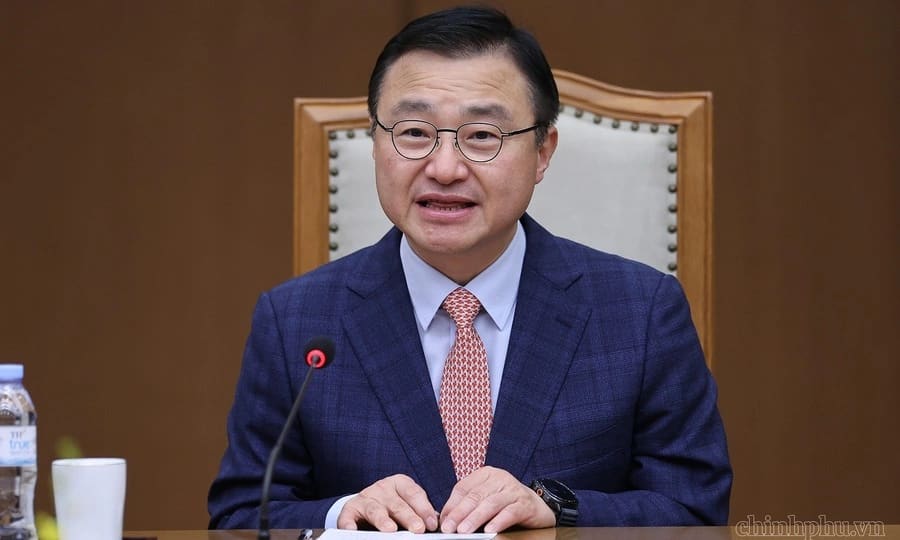
The devices originated from two facilities in Bac Ninh and Thai Nguyen provinces, both located in Vietnam's industrialized northern corridor. Roh Tae Moon, CEO of Samsung Electronics Vietnam, disclosed the figure during a meeting with Prime Minister Le Minh Hung in Hanoi on August 27. Samsung's cumulative investment in Vietnam stands at $24 billion as of the end of 2025, making it one of the largest foreign capital commitments in the country.
Roh highlighted the recent launch of the Galaxy Fold 8 in early August, noting strong reception across international markets. The foldable device represents Samsung's latest push in premium smartphone segments, where margin pressures have intensified amid slowing global demand.
Hanoi's Pivot from Assembly to Innovation
Prime Minister Hung used the meeting to articulate a shift in Vietnam's foreign investment strategy. The government now prioritizes projects that deliver high added value, foster linkages with domestic suppliers, and generate technology spillovers into the local economy. Hung framed the objective bluntly: Vietnam must evolve from a manufacturing hub into a center for technology, research and development, and innovation.
The directive reflects broader anxiety in Hanoi about the limits of an assembly-driven growth model. While Vietnam has attracted substantial foreign direct investment in electronics, much of the value capture remains offshore. Local suppliers often lack the technical capacity or capital to meet the quality standards required by multinational clients, limiting their participation in higher-margin segments of the value chain.
Hung outlined specific areas where Vietnam seeks deeper collaboration with South Korea: semiconductors, artificial intelligence, data centers, R&D infrastructure, and digital transformation. He pressed Samsung to expand factory capacity while simultaneously increasing R&D spending, partnering with Vietnamese universities and research institutes, and training engineers and technical specialists.
Supplier Development as Strategic Imperative
A key request from the prime minister centered on supplier development. Hung urged Samsung to cultivate more Vietnamese vendors and help them achieve the quality benchmarks necessary to enter production chains not only in Vietnam but also in South Korea and other Samsung markets globally. This would mark a departure from the current pattern, where most tier-one and tier-two suppliers in Vietnam's electronics sector remain foreign-owned.
Roh responded by characterizing Vietnam as more than a manufacturing base, describing it instead as a strategic partner in research and advanced technology development. He committed to increasing R&D investment and supporting high-tech workforce training. The Samsung R&D Center in Hanoi will expand partnerships with universities, allocate additional resources for training programs, and work to strengthen local technological capabilities, according to Roh.
The Semiconductor Imperative
The emphasis on semiconductors is particularly significant. Vietnam has ambitions to move upstream in the chip value chain, but it currently lacks the ecosystem of specialized suppliers, skilled labor, and capital equipment expertise that countries like Taiwan, South Korea, and Singapore have built over decades. Attracting a company with Samsung's semiconductor manufacturing experience could accelerate that timeline, though the capital intensity and technical complexity of chip fabs present formidable barriers.
Samsung's Vietnamese operations have historically focused on final assembly of smartphones and consumer electronics, with limited exposure to semiconductor fabrication or advanced packaging. Any shift toward chip-related activities would require substantial new investment and infrastructure development, particularly in power supply, water treatment, and cleanroom facilities.
What Comes Next
Vietnam's leverage in negotiations with Samsung rests partly on the company's existing $24 billion stake and the operational efficiencies it has achieved in Bac Ninh and Thai Nguyen. Relocating production at scale would be costly and time-consuming. Yet Samsung also faces competitive pressure from Chinese manufacturers and the need to diversify supply chains in response to geopolitical risk.
The $500 billion export milestone offers a clear data point on the scale of Samsung's Vietnamese footprint. Whether that presence deepens to include the R&D intensity and supplier linkages Hanoi envisions will depend on regulatory incentives, infrastructure development, and the pace at which Vietnamese firms can absorb and deploy advanced manufacturing capabilities. For now, the conversation has moved from whether Vietnam matters to Samsung's global strategy to what role it will play in the next phase of that strategy.
RELATED STORIES
Vietnam Draws $7.5 Billion From Singapore in Seven Months
Priyanka V. Rao · 3 min

Vietnam Urged to Move Up Value Chain in ASEAN Digital Economy Push
Tran Quoc Bao · 3 min
Southeast Asian Factories Adopt Proximity Planning to Retain Workers and Investors
Lim Hui Ying · 3 min
Vietnam Plans National Construction Materials Database to Coordinate Regional Supply
Tran Quoc Bao · 3 min
Spot something wrong? Email editor@briefasia.com. We log every correction publicly.