Real Estate · Land
Da Nang Airport Begins $379 Million Terminal Expansion in August 2027
Vietnam's central gateway will increase capacity to 14 million passengers annually as tourist demand accelerates across the region
KEY TAKEAWAYS
- ·Da Nang International Airport will begin a $379 million Terminal 1 expansion in August 2027, targeting 14 million annual passengers by 2029.
- ·The project includes six additional aircraft parking positions and upgraded infrastructure to handle peak travel demand in central Vietnam.
- ·ACV and Da Nang authorities will coordinate on construction timelines to avoid disrupting operations while meeting 2029 completion deadlines.
Construction Timeline Set
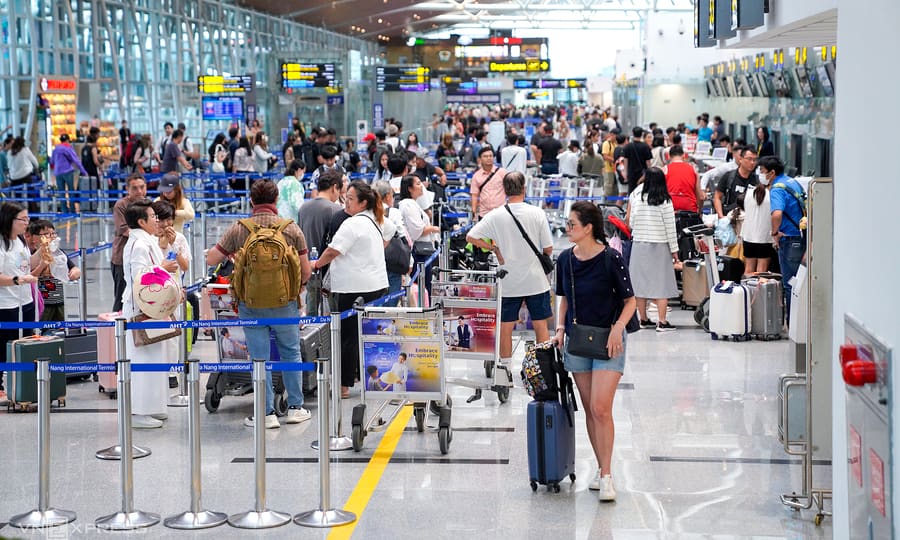
Da Nang International Airport will launch a VND 9.9 trillion ($379 million) expansion of Terminal 1 in August 2027, according to the Airports Corporation of Vietnam and Da Nang municipal authorities. The project, announced at a ceremony on Thursday, targets completion of the expanded section by January 2029, with renovation of the existing terminal finishing by August 2029.
The expansion aims to lift the terminal's annual throughput to 14 million passengers, split between 10 million domestic and 4 million international travelers. A parallel apron expansion will add six Code C aircraft parking positions, addressing congestion during peak travel periods.
Nguyen Duc Hung, acting general director of ACV, described the initiative as a cornerstone of comprehensive infrastructure investment at the airport. The corporation will coordinate with local authorities to meet construction deadlines while maintaining quality and safety benchmarks.
Scope and Infrastructure Components
The renovation encompasses Terminal 1's core facilities alongside auxiliary infrastructure. Key elements include an upgraded elevated access road, a new technical building, and a multi-story car park integrated with commercial services. The project also covers traffic systems, parking areas, landscaping, and a wastewater treatment station.
Supporting infrastructure extends to electricity grids, lighting, water supply, drainage networks, and waste collection systems. These additions are designed to handle rising passenger volumes and aircraft movements as central Vietnam positions itself as a regional tourism hub.
The first phase of the apron expansion is completing procedural reviews and will provide additional hardstand capacity for narrow-body aircraft, a category that dominates domestic and short-haul international routes in Southeast Asia.
Regional Gateway Under Pressure
Da Nang serves as the primary air link for central Vietnam and the Central Highlands, connecting cities such as Hue, Hoi An, and Da Lat to domestic and international markets. Le Quang Nam, vice chairman of the Da Nang People's Committee, characterized the airport as strategic transport infrastructure whose upgrade is urgent given accelerating demand from tourism, business, and commerce.
The expansion reflects broader investment patterns across Asia's secondary cities, where airport capacity has lagged behind passenger growth. Vietnam's aviation market has rebounded sharply since pandemic lows, with domestic travel volumes in 2025 surpassing pre-2020 levels at several airports.
Da Nang's location midway along Vietnam's coast makes it a gateway for beach resorts, UNESCO World Heritage sites, and manufacturing zones in the central region. The city has attracted foreign direct investment in hospitality and logistics, sectors that depend on reliable air connectivity.
Capacity Constraints and Economic Impact
The current terminal configuration has strained to accommodate seasonal peaks, particularly during Lunar New Year and summer holidays when Vietnamese diaspora and domestic tourists converge on central destinations. Six additional aircraft positions will reduce turnaround delays and enable airlines to schedule higher frequencies on profitable routes.
ACV emphasized that the project will create operational headroom for air transport development, a priority as low-cost carriers expand networks linking Vietnam to Northeast and Southeast Asian cities. The corporation manages 22 airports nationwide and has earmarked capital for expansions at several facilities beyond Da Nang.
Local authorities view the terminal upgrade as a catalyst for tourism revenue and investment attraction. Da Nang recorded sustained growth in visitor arrivals before the pandemic, driven by Chinese, South Korean, and Japanese tourists. The city is now targeting high-spending travelers from Europe and North America, segments that require modern airport facilities and streamlined immigration processing.
The renovation timeline positions Da Nang to capture traffic as regional competition for tourist spending intensifies. Neighboring countries including Thailand, Cambodia, and Laos are also upgrading airport infrastructure, creating pressure on Vietnamese cities to deliver comparable passenger experiences.
Execution Challenges Ahead
ACV acknowledged the need to balance construction activity with ongoing airport operations, a challenge that has delayed projects at other Vietnamese airports. The corporation will need to phase work to avoid disrupting flight schedules, particularly during high-traffic periods when airlines maximize revenue.
Funding for the expansion comes from ACV's capital budget and airport revenue streams, including passenger service charges and commercial concessions. The corporation has historically relied on retained earnings rather than external debt for infrastructure projects, a strategy that limits financial risk but can constrain project scale.
Da Nang authorities have pledged coordination on permitting and land clearance, administrative steps that have slowed infrastructure rollouts in Vietnam. Timely approvals will be critical to meeting the August 2027 groundbreaking target and the 2029 completion deadlines.
The project's success will hinge on execution discipline and the ability to manage contractor performance, areas where Vietnamese infrastructure initiatives have faced scrutiny. ACV's emphasis on quality and safety standards signals awareness of reputational risks tied to public infrastructure delivery.
As the region's aviation sector enters a phase of capacity expansion, Da Nang's terminal upgrade represents a test case for Vietnam's ability to modernize secondary gateways and sustain competitiveness in the Southeast Asian travel market.
RELATED STORIES
Southeast Asian Factories Adopt Proximity Planning to Retain Workers and Investors
Lim Hui Ying · 3 min
Phu Quoc Prepares $5 Billion Infrastructure Push for 2027 APEC Summit
Tran Quoc Bao · 3 min
Chinese Brands Capture Vietnam's $92 Million Robot Vacuum Market
Siti Nuraini · 3 min
Vietnam's Offshore Oil Find Tests Hanoi's Will Against Beijing
Priyanka V. Rao · 5 min
Spot something wrong? Email editor@briefasia.com. We log every correction publicly.