Asia · Business
Phu Quoc Prepares $5 Billion Infrastructure Push for 2027 APEC Summit
Vietnam's island destination launches construction surge ahead of hosting global leaders, eyeing Danang's transformation model
KEY TAKEAWAYS
- ·Vietnam is investing over $5 billion in airports, hotels, and convention centers on Phu Quoc Island before the November 2027 APEC summit.
- ·The infrastructure push aims to replicate Danang's economic transformation after it hosted the 2017 APEC gathering.
- ·Construction includes airport expansion, international hotel properties, and a convention center designed to attract business events beyond the summit.
Construction Boom on Pearl Island
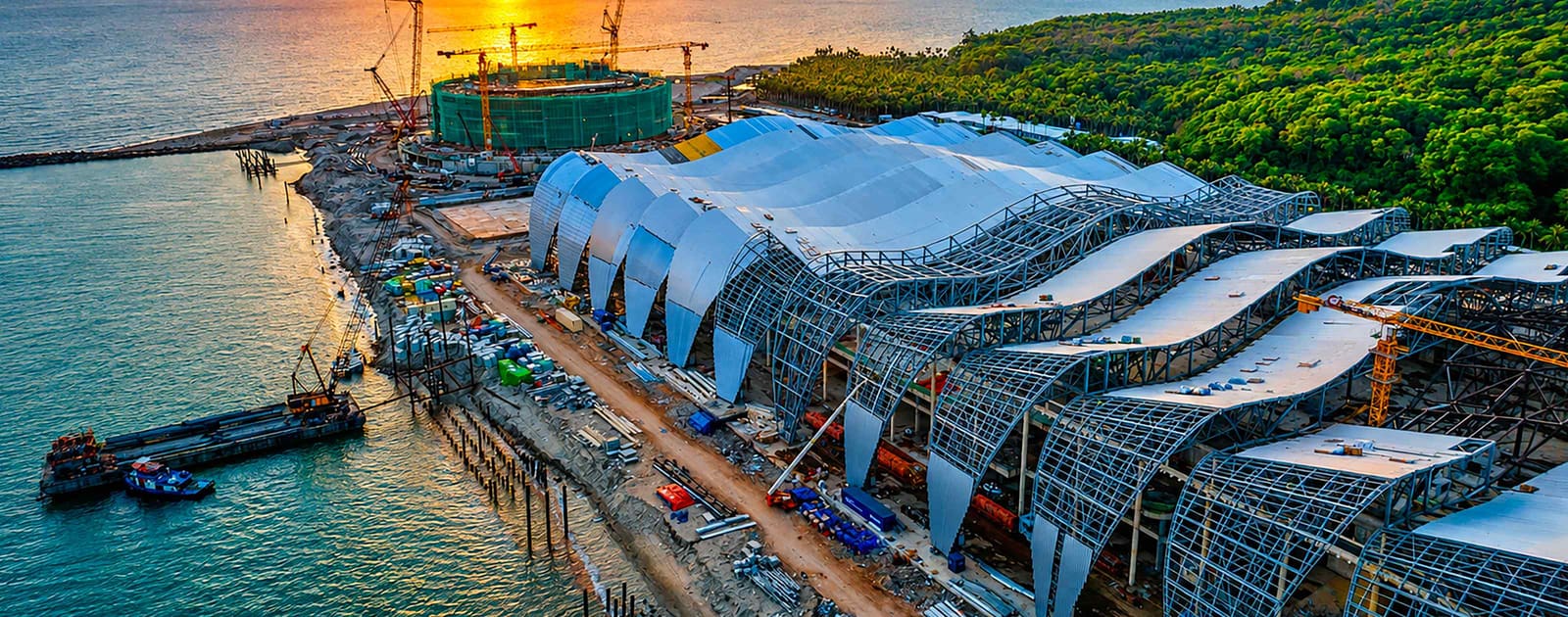
Phu Quoc Island is undergoing a rapid transformation, with construction cranes and heavy machinery reshaping the Vietnamese tourism destination ahead of a major international event. The island, commonly known as Vietnam's "pearl island," will host the Asia-Pacific Economic Cooperation summit in November 2027, prompting a surge in infrastructure development.
Vietnam has committed more than $5 billion to upgrade airports, hotels, and event venues across the island. Sun Group is constructing a new convention center and performing arts center specifically designed to accommodate the summit, which will bring together leaders from 21 Pacific Rim economies.
Following the Danang Blueprint
The investment strategy reflects Vietnam's attempt to replicate the economic success Danang achieved after hosting the 2017 APEC summit. That central coast city saw sustained growth in foreign investment, tourism arrivals, and international recognition following its turn in the global spotlight.
Phu Quoc's location in the Gulf of Thailand positions it as a natural tourism gateway, yet infrastructure gaps have historically limited its appeal to high-spending international visitors. The current construction push aims to close that gap before the world's economic and political elite arrive.
The summit will mark Vietnam's second time hosting APEC, following the 2017 gathering in Danang. The government views major international events as catalysts for long-term economic development rather than short-term showcases.
Infrastructure Priorities
Airport expansion forms a central pillar of the investment program. Phu Quoc International Airport is being upgraded to handle increased passenger volumes and accommodate long-haul international flights. The facility currently serves primarily domestic routes and regional connections.
Hotel capacity is expanding rapidly, with several international chains breaking ground on properties designed to meet global standards. The hospitality buildout targets not only summit delegates but also the anticipated increase in leisure and business travelers following the event.
The convention infrastructure under construction will provide Vietnam with a new venue for international conferences and trade events beyond APEC. Officials are planning for the facilities to generate revenue and attract business gatherings in subsequent years.
Broader Economic Strategy
The Phu Quoc investment sits within Vietnam's larger push to attract global capital for infrastructure development. The country has outlined plans requiring $1.5 trillion in infrastructure spending over the coming decade, with international partnerships playing a key role.
Southeast Asian tourism patterns are also shifting. Regional travelers are increasingly staying local rather than venturing to Middle Eastern destinations amid geopolitical uncertainty. Vietnam stands to benefit from this reallocation of travel spending.
The government has simultaneously launched an International Financial Center initiative spanning Ho Chi Minh City and Hanoi, signaling ambitions to position Vietnam as a financial hub alongside its manufacturing strengths.
Regional Context
Phu Quoc faces competition from established island destinations across Southeast Asia. Bali remains the dominant draw in the region, while Thailand's resort islands maintain strong brand recognition. Vietnam's challenge lies in differentiating Phu Quoc while matching the service standards travelers expect.
A new airline focused on Phu Quoc routes is part of the strategy to increase connectivity. Sun Group, the conglomerate behind much of the island's development, is backing the carrier as part of its broader investment in the destination.
The 2027 timeline leaves limited room for delays. Construction projects of this scale typically face challenges ranging from permitting issues to supply chain disruptions. Vietnam's ability to deliver functional, world-class facilities within 18 months will test both project management capabilities and contractor capacity.
The APEC summit represents both opportunity and risk. A successful event could indeed catalyze Phu Quoc's emergence as a premier Asian destination. Execution failures, by contrast, would be broadcast to a global audience.
RELATED STORIES
Vietnam Mobilizes $38 Billion Public Investment to Fuel Economic Expansion
Tran Quoc Bao · 3 min
Vietnam Plans National Construction Materials Database to Coordinate Regional Supply
Tran Quoc Bao · 3 min
Vietnam Faces Productivity Challenge as Capital-Led Growth Model Stalls
Priyanka V. Rao · 3 min
Hanoi Unveils Private Sector Support Package to Anchor Long-Term Growth
Tran Quoc Bao · 3 min
Spot something wrong? Email editor@briefasia.com. We log every correction publicly.