Asia · Business
Vietnam Plans National Construction Materials Database to Coordinate Regional Supply
Government aims to map mining reserves and extraction capacity across provinces as infrastructure demand accelerates
KEY TAKEAWAYS
- ·Vietnam's government has instructed the Ministry of Agriculture and Environment to develop a national database mapping construction material reserves, extraction capacity, and regional demand.
- ·The system aims to improve coordination of supply chains across provinces as infrastructure investment accelerates and material bottlenecks emerge.
- ·Implementation will require alignment across multiple ministries and provincial governments, with no disclosed timeline for deployment.
A Supply Chain Under Pressure
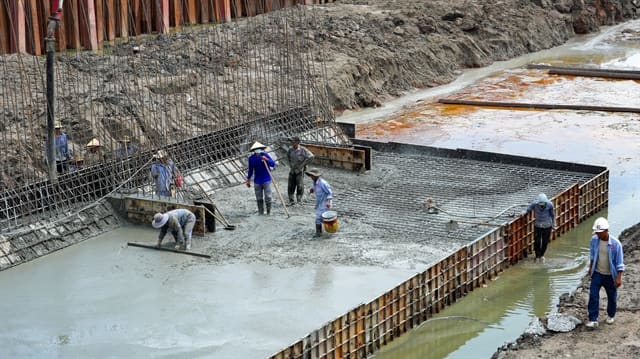
Vietnam's construction sector is navigating a fundamental challenge: matching material supply with the pace of infrastructure expansion. The government has now instructed officials to build a comprehensive national database that will track mining reserves, extraction capabilities, and regional demand patterns for construction materials.
Permanent Deputy Prime Minister Phạm Gia Túc directed the Ministry of Agriculture and Environment to develop the system, which will consolidate information on mining sites, available reserves, production capacity, consumption forecasts, and the potential for inter-provincial supply coordination.
The initiative reflects a practical response to bottlenecks that have surfaced as Vietnam pursues ambitious infrastructure projects. Without centralized visibility into where materials are extracted, how much capacity exists, and which regions face shortages, coordination across provinces remains fragmented. Local authorities often lack real-time insight into neighboring supply sources, leading to inefficiencies and price volatility.
Why Centralized Data Matters
Construction material supply chains in Vietnam have historically operated through decentralized networks. Cement plants, sand quarries, and stone mines are scattered across provinces, each governed by local regulations and planning cycles. When a major highway project or urban development accelerates demand in one region, procurement teams must navigate a patchwork of local suppliers with limited transparency on availability or pricing.
A national database would change that dynamic. By mapping reserves and extraction capacity at the national level, planners could identify surplus capacity in one province and redirect it to areas experiencing shortages. The system would also support demand forecasting, allowing ministries to anticipate material needs tied to upcoming infrastructure programs and adjust extraction permits accordingly.
The focus on inter-provincial coordination is particularly relevant for large-scale projects spanning multiple regions. High-speed rail corridors, expressway networks, and port expansions require sustained material flows over years. A unified data platform could streamline procurement, reduce logistical friction, and potentially lower costs by optimizing transport routes.
The Broader Infrastructure Context
Vietnam's infrastructure pipeline has expanded significantly in recent years. The government has committed to building thousands of kilometers of highways, upgrading seaports, and expanding urban transit systems. Public investment in infrastructure reached record levels in 2025, and construction activity is expected to remain robust through the end of the decade.
This surge has placed strain on domestic supply chains. Sand extraction, a critical input for concrete, has faced environmental restrictions in several provinces, tightening availability. Cement production, while substantial, is concentrated in specific regions, creating logistical challenges for projects in remote areas. Stone quarries operate under varying environmental compliance standards, complicating efforts to scale production quickly.
The proposed database would provide the Ministry of Agriculture and Environment with a tool to balance economic development goals against environmental constraints. By tracking extraction rates and remaining reserves, authorities could set more informed quotas and avoid over-exploitation of resources in sensitive areas.
What Comes Next
The development timeline and technical specifications for the database have not been disclosed. Key questions remain around data collection protocols, how frequently information will be updated, and whether the system will be accessible to private sector contractors or limited to government agencies.
Implementation will require coordination across multiple ministries and provincial governments. The Ministry of Natural Resources and Environment oversees mining permits, while the Ministry of Construction regulates building standards and procurement. Provincial departments of industry and trade manage local supply chains. Aligning these entities around a shared data platform will be a test of bureaucratic coordination.
If executed effectively, the database could serve as a model for other sectors facing similar supply chain visibility challenges. Vietnam's manufacturing and export industries rely on complex logistics networks, and centralized data systems could enhance efficiency across the economy.
For now, the construction sector waits to see how quickly the government can move from directive to deployment. The pressure on material supply is not easing, and infrastructure timelines remain tight.
RELATED STORIES
Vietnam Exporters Face Packaging Overhaul as EU Rules Take Hold
Priyanka V. Rao · 3 min
Vietnam Mobilizes $38 Billion Public Investment to Fuel Economic Expansion
Tran Quoc Bao · 3 min

Hebei and Vietnam Target Deeper Agricultural Supply Chain Integration
Cheng Wei-Lun · 3 min

Vietnam Faces Productivity Challenge as Capital-Led Growth Model Stalls
Priyanka V. Rao · 3 min
Spot something wrong? Email editor@briefasia.com. We log every correction publicly.