Technology · Dev
China Drafts National Liquid-Cooling Standard as AI Racks Near 1MW Power Draw
New infrastructure guidelines arrive as Nvidia's next-generation platforms push thermal and electrical limits in data centers across Asia
KEY TAKEAWAYS
- ·China has published its first national liquid-cooling standard as AI server racks approach one megawatt of power consumption, far exceeding traditional server loads of 5 to 15 kilowatts.
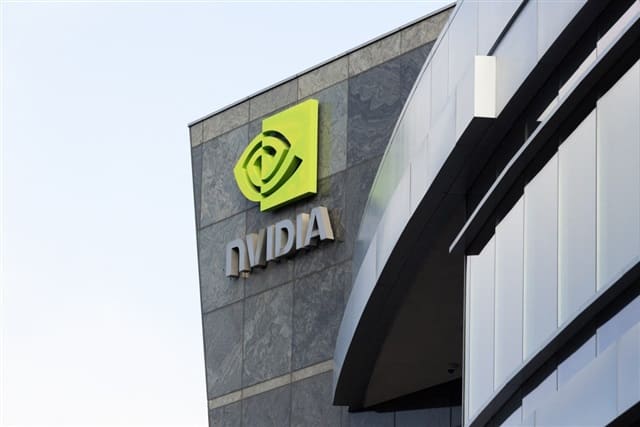
- ·Nvidia's Vera Rubin generation is driving infrastructure upgrades across cooling, power delivery, and data center design due to higher heat density and electrical demands.
- ·The national standard may accelerate procurement and deployment across Asia-Pacific, where facility operators face capacity constraints and regulatory fragmentation in adopting liquid-cooled systems.
Infrastructure Catches Up to Silicon
China has rolled out its first national standard for liquid-cooling technology in data centers, a response to AI server racks that now approach one megawatt of power consumption. The timing reflects a broader infrastructure challenge: GPU advances have outpaced the cooling and power systems that keep them running.
The new standard addresses thermal management requirements for high-density computing environments, where traditional air-cooling systems can no longer handle the heat output. Nvidia's upcoming Vera Rubin generation of accelerators is driving rack-level power consumption to levels that require parallel upgrades across cooling architecture, electrical distribution, and physical data center design.
The One-Megawatt Threshold
A single AI rack drawing close to one megawatt represents a sharp departure from conventional server infrastructure. For context, typical enterprise server racks consume between 5 and 15 kilowatts. The leap to near-megawatt levels compresses heat density to a point where air circulation alone cannot maintain safe operating temperatures.
Liquid cooling, which circulates coolant directly to heat-generating components, offers higher thermal transfer efficiency. The technology is not new, but widespread adoption in commercial data centers has been slow due to cost, complexity, and the absence of unified standards. China's move to codify national guidelines suggests the country views standardized liquid cooling as essential to maintaining competitiveness in AI infrastructure.
Regional Infrastructure Race
The standard arrives as data center operators across Asia face capacity constraints. Facilities built for traditional workloads now struggle to accommodate AI training clusters, which demand not only higher power density but also low-latency networking and redundant cooling loops.
Singapore, Tokyo, and Seoul have all seen data center developers propose liquid-cooled designs in the past year, but regulatory fragmentation and supply chain gaps have slowed deployment. China's national standard could accelerate procurement cycles by giving equipment suppliers and facility designers a common reference framework.
Beyond GPUs
The infrastructure bottleneck extends beyond cooling. Power delivery systems must handle surge loads and maintain voltage stability across hundreds of accelerators. Data center operators are re-evaluating transformer capacity, backup power configurations, and grid interconnection agreements.
Nvidia's Vera Rubin generation, expected to ship in volume in the coming quarters, integrates more compute cores and higher-bandwidth memory than its predecessors. Each incremental performance gain translates directly into watts dissipated as heat. The result is a design challenge that spans silicon, mechanical engineering, and facility management.
What Comes Next
China's liquid-cooling standard is likely to influence procurement specifications across state-backed AI projects and hyperscale operators. Equipment vendors that comply early may gain an edge in a market where infrastructure lead times now stretch beyond twelve months.
Other Asia-Pacific governments are watching. If China's standardization effort reduces deployment costs and accelerates time-to-operation, similar frameworks could emerge in India, South Korea, and Japan. The question is whether a single national standard can keep pace with the rapid iteration cycles of AI hardware, or whether it will need continuous revision as power density climbs further.
RELATED STORIES
Optical Networking Emerges as New Bottleneck in AI Infrastructure Race
Cheng Wei-Lun · 4 min
Taiwan Indicts Nvidia Manager in Chip-Smuggling Investigation
Cheng Wei-Lun · 4 min

China Pushes Data Centers Into Rural Provinces to Meet AI Demand
Cheng Wei-Lun · 3 min

Xiaomi Unveils 3nm Mobile Processor to Challenge Qualcomm and MediaTek
Cheng Wei-Lun · 3 min
Spot something wrong? Email editor@briefasia.com. We log every correction publicly.