Asia · Trade
Vietnam Urged to Move Up Value Chain in ASEAN Digital Economy Push
Industry leaders call for infrastructure upgrades and supply chain transparency as regional digital framework takes shape

KEY TAKEAWAYS
- ·Vietnamese manufacturers are being urged to shift from low-cost production to higher-value operations as the ASEAN Digital Economy Framework Agreement reshapes regional trade networks.
- ·Industry leaders identified three priorities: fostering deeper industry clusters, upgrading digital infrastructure for connectivity, and enhancing supply chain transparency to meet multinational buyer demands.
- ·Vietnam's ability to capture more value will depend on coordinated investment in technical education, clearer data regulations, and faster infrastructure rollout over the next five years.
The Value Capture Challenge
Vietnamese firms risk being locked into low-margin production roles unless they upgrade infrastructure and build deeper industry clusters, according to discussions at a recent Ho Chi Minh City forum examining Vietnam's position in ASEAN value chains.
The conversation comes as the ASEAN Digital Economy Framework Agreement gains traction across the ten-member bloc, promising to standardize digital trade rules and open cross-border data flows. For Vietnam, the timing is critical. The country has spent two decades building a reputation as a reliable low-cost manufacturer, attracting electronics assembly, garment production, and component fabrication from multinationals seeking alternatives to China.
But cost advantage alone no longer guarantees competitiveness. Regional competitors offer similar wage levels, and automation is eroding the value of labor arbitrage. The forum participants argued that Vietnam must pivot toward higher-value activities: product design, advanced manufacturing processes, and integration into knowledge-intensive segments of supply chains.
Three Levers for Upgrading
Industry leaders at the forum highlighted three specific areas where Vietnam can capture more value.
First, fostering industry clusters. Concentrated ecosystems of suppliers, service providers, and R&D centers allow firms to specialize, innovate faster, and share knowledge. Vietnam has nascent clusters in electronics around Hanoi and Bac Ninh, but they remain shallow compared to clusters in Taiwan, Thailand, or Malaysia. Deepening these ecosystems requires coordinated investment in technical education, research institutes, and supplier development programs.
Second, infrastructure that enables connectivity. Digital trade depends on reliable logistics, low-latency internet, and seamless customs processing. Vietnam's ports and highways have improved markedly over the past decade, but digital infrastructure lags. Cross-border data transfer remains constrained by inconsistent regulations, and cybersecurity standards vary across provinces. The ASEAN Digital Economy Framework Agreement could harmonize some of these rules, but domestic implementation will determine whether Vietnamese firms can plug into regional digital networks or remain isolated.
Third, supply chain transparency. Multinational buyers increasingly demand traceability, sustainability certifications, and real-time visibility into production. Vietnamese manufacturers that can provide granular data on sourcing, labor conditions, and carbon footprint will command premium contracts. Those that cannot risk being relegated to commodity tiers where price is the only differentiator.
Regional Context and Competition
Vietnam's challenge mirrors broader dynamics across Southeast Asia. Indonesia is investing heavily in downstream processing of raw materials, aiming to move beyond commodity exports. Thailand is positioning itself as a regional hub for electric vehicle production. Malaysia is doubling down on semiconductor packaging and testing.
The ASEAN Digital Economy Framework Agreement is designed to help all member states participate in higher-value activities by reducing friction in digital trade. It covers e-commerce, digital payments, data governance, and cybersecurity cooperation. For Vietnam, the agreement offers a pathway to integrate more deeply with regional supply chains, but only if domestic firms upgrade their capabilities.
The forum underscored that policy support alone will not suffice. Vietnamese companies must invest in training, adopt digital tools, and build relationships with regional partners. The government can smooth the path by accelerating infrastructure projects, clarifying data regulations, and providing incentives for R&D investment.
What Comes Next
Vietnam's trajectory over the next five years will depend on how quickly firms and policymakers execute on these priorities. The country's export-driven economy remains vulnerable to shifts in global demand and trade policy. Moving up the value chain offers a hedge against commoditization, but it requires sustained commitment and coordination across government, industry, and education sectors.
The ASEAN Digital Economy Framework Agreement provides a favorable regional environment, but capturing value ultimately depends on decisions made in Hanoi, Ho Chi Minh City, and Da Nang. The forum made clear that the window for upgrading is open, but it will not stay open indefinitely.
RELATED STORIES

Stavian Group Breaks Ground on $95.6 Million Industrial Park in Thái Nguyên
Priyanka V. Rao · 3 min
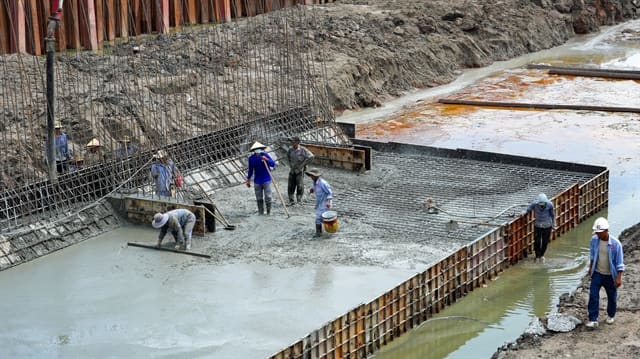
Vietnam Plans National Construction Materials Database to Coordinate Regional Supply
Tran Quoc Bao · 3 min
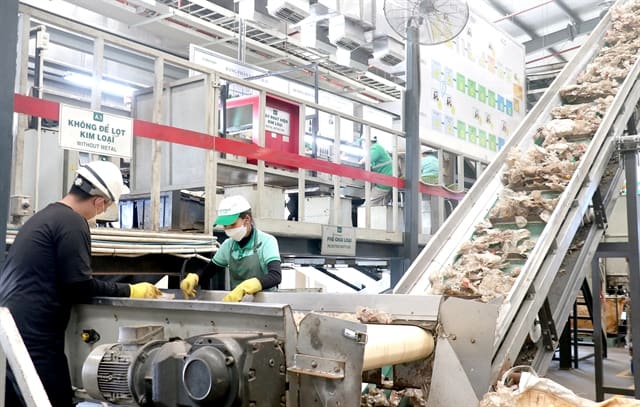
Vietnam Exporters Face Packaging Overhaul as EU Rules Take Hold
Priyanka V. Rao · 3 min

Hebei and Vietnam Target Deeper Agricultural Supply Chain Integration
Cheng Wei-Lun · 3 min
Spot something wrong? Email editor@briefasia.com. We log every correction publicly.