Asia · Trade
Stavian Group Breaks Ground on $95.6 Million Industrial Park in Thái Nguyên
The new manufacturing hub in northern Vietnam targets technology and electronics tenants as the country deepens its role in regional supply chains
KEY TAKEAWAYS
- ·Stavian Group has commenced construction of a $95.6 million industrial park in Thái Nguyên province, targeting technology and electronics manufacturers.
- ·Thái Nguyên offers land costs 30 to 40 percent below Hanoi-area sites and hosts major facilities for Samsung and Foxconn.
- ·Vietnam attracted $36 billion in foreign direct investment during 2025, with manufacturing accounting for 62 percent of total inflows.
Major Investment in Vietnam's Industrial Corridor
Stavian Group has launched construction of a $95.6 million industrial park in Thái Nguyên province, marking another significant capital commitment to Vietnam's northern manufacturing belt. The project targets technology and electronics manufacturers looking to expand capacity in Southeast Asia's second-fastest growing industrial market.
Thái Nguyên sits roughly 80 kilometers north of Hanoi and has emerged as a strategic location for companies pursuing a "China-plus-one" strategy. The province already hosts major production facilities for Samsung, Foxconn, and several tier-one automotive suppliers. Land costs remain 30 to 40 percent below comparable sites in the Red River Delta, while maintaining highway access to Haiphong port within 90 minutes.
Infrastructure and Target Sectors
The new park will span multiple phases, with initial development focused on ready-built factories and supporting logistics infrastructure. Stavian Group plans to complete the first phase within 18 months, offering plug-and-play facilities designed for precision manufacturing and assembly operations.
Electronics, automotive components, and medical device production represent the primary target sectors. Vietnam's electronics exports reached $128 billion in 2025, cementing the country's position as the world's third-largest exporter of electronic goods after China and South Korea. Thái Nguyên province contributed approximately 15 percent of that total, driven largely by Samsung's smartphone and consumer electronics campus.
The industrial park will include dedicated power substations, wastewater treatment capacity rated for high-volume manufacturing, and fiber-optic connectivity. Stavian Group has secured long-term land leases from provincial authorities and obtained environmental clearances for the initial development zones.
Regional Competition and Policy Context
The project arrives as Vietnam intensifies competition with Thailand, Malaysia, and Indonesia for foreign direct investment in advanced manufacturing. Hanoi has streamlined permit approvals for industrial projects exceeding $50 million and introduced tax incentives for companies producing semiconductors, electric vehicle components, and renewable energy equipment.
Thái Nguyên provincial authorities have set a target of attracting $2 billion in new industrial investment by 2027. The province offers corporate income tax rates as low as 10 percent for qualifying projects, compared to the national standard of 20 percent. Labor costs average $350 to $400 per month for factory workers, roughly half the level in coastal manufacturing hubs like Da Nang or Ho Chi Minh City.
Stavian Group, a diversified conglomerate with interests in real estate, logistics, and industrial development, has developed three other industrial parks in northern Vietnam over the past decade. The company's existing facilities in Bắc Ninh and Hải Dương provinces maintain occupancy rates above 85 percent, anchored by Japanese and South Korean electronics manufacturers.
Implications for Vietnam's Manufacturing Trajectory
This investment reflects sustained confidence in Vietnam's long-term industrial outlook despite global economic uncertainty. The country attracted $36 billion in foreign direct investment during 2025, with manufacturing accounting for 62 percent of total inflows. Industrial real estate developers have committed more than $1.5 billion to new park construction across northern provinces in the past 18 months alone.
Thái Nguyên's expanding industrial base also underscores the geographic diversification of Vietnam's manufacturing economy. For two decades, foreign investment concentrated heavily in southern provinces around Ho Chi Minh City and the Mekong Delta. Since 2018, northern provinces have captured a growing share, driven by proximity to China, improving transport links, and aggressive provincial incentives.
The success of Stavian Group's new park will hinge on its ability to attract anchor tenants during the construction phase. Industrial parks in Vietnam typically require one or two large-scale occupants to generate demand from supplier networks and smaller contract manufacturers. Samsung's presence in Thái Nguyên has historically served this function, pulling dozens of component suppliers and logistics providers into the province.
Vietnam's industrial real estate market faces headwinds from rising construction costs and tighter environmental regulations. Steel and concrete prices have climbed 18 percent since early 2024, while new wastewater discharge standards impose higher upfront infrastructure costs. Developers must balance competitive lease rates against longer payback periods for capital-intensive projects.
The Thái Nguyên project positions Stavian Group to capitalize on potential semiconductor and advanced electronics investments should Vietnam secure commitments from global chipmakers. The government has prioritized semiconductor assembly and testing as a strategic sector, though the country still lacks the technical workforce and upstream supply chains of Malaysia or Taiwan. Industrial parks with robust power and clean-room infrastructure stand to benefit if those investments materialize over the next five years.
Stavian Group expects to begin marketing the first phase to prospective tenants in the fourth quarter of 2026, with initial occupancy targeted for mid-2028.
RELATED STORIES
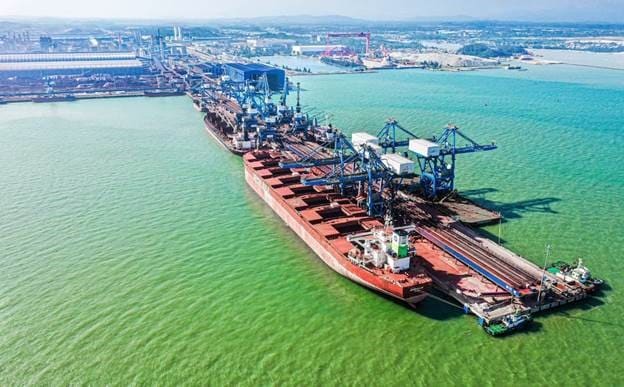
Dung Quat Economic Zone Pulls $19.4 Billion in Foreign Investment
Tran Quoc Bao · 2 min
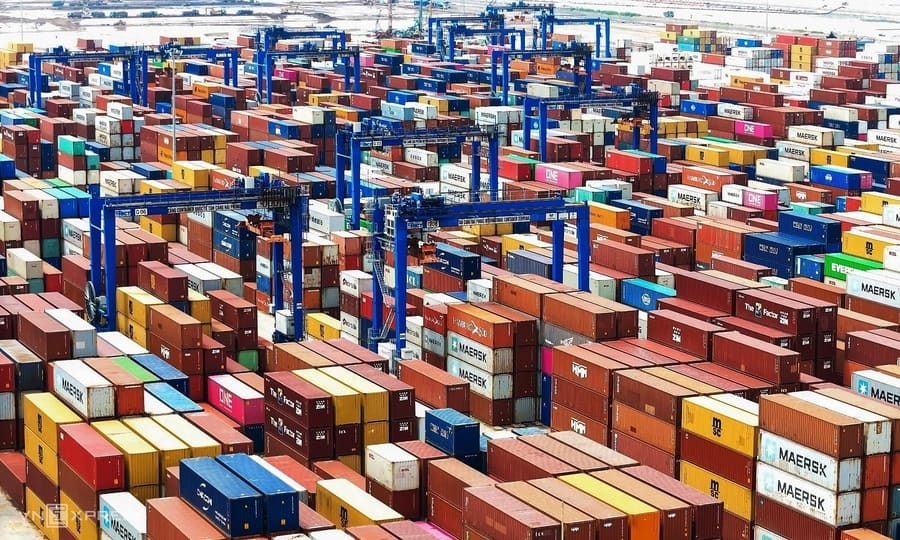
Vietnam Faces $230 Billion Export Sprint to Salvage 2026 Growth Target
Tran Quoc Bao · 2 min
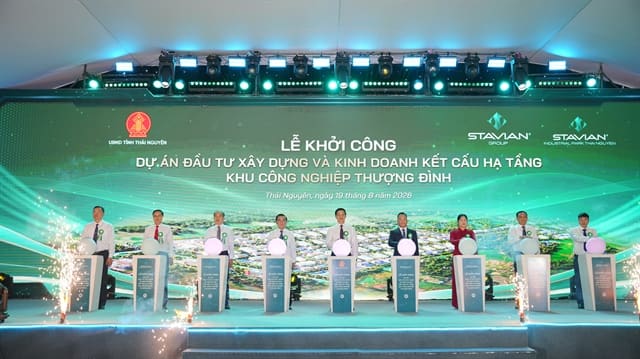
Stavian Group Launches $95.6 Million Industrial Park in Northern Vietnam
Tran Quoc Bao · 3 min
Cosco Shipping Targets Three Southeast Asian Markets in Regional Push
Cheng Wei-Lun · 3 min
Spot something wrong? Email editor@briefasia.com. We log every correction publicly.