Asia · Trade
Vietnam Faces $230 Billion Export Sprint to Salvage 2026 Growth Target
With only five months remaining, the Southeast Asian manufacturing hub must sustain record-breaking monthly shipments amid rising trade friction and cost pressures.
KEY TAKEAWAYS
- ·Vietnam must generate $227 billion to $231 billion in exports between August and December 2026 to meet its annual growth target.
- ·Electronics, textiles, and footwear sectors face regulatory scrutiny, cost pressures, and competition from Indonesia, Thailand, and India.
- ·Government plans to accelerate customs clearance and reduce port congestion, but success depends on global demand and exchange-rate stability.
The Math Behind the Push
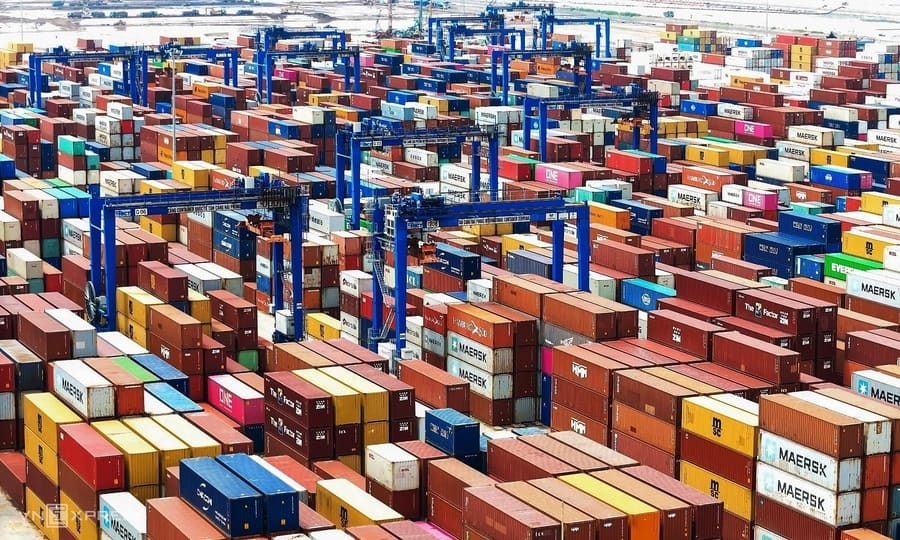
Vietnam's trade ministry has set an export benchmark that leaves little room for error: the country must ship between $227 billion and $231 billion worth of goods between August and December to hit its full-year growth projections. That translates to an average monthly export value exceeding $45 billion, a pace that would rank among the highest sustained runs in the nation's trade history.
The target reflects Vietnam's deepening integration into global manufacturing networks, particularly in electronics, textiles, and precision components. Yet the five-month window arrives at a moment when the external environment is anything but cooperative. Trade partners are tightening regulatory scrutiny, input costs remain elevated, and rival production hubs across Southeast Asia are competing for the same orders.
Pressure Points Across Key Sectors
Electronics assembly, which accounts for roughly one-third of Vietnam's total merchandise exports, faces dual headwinds. Component shortages have eased from pandemic-era peaks, but lead times remain volatile. At the same time, several major importers have introduced new compliance requirements around supply-chain transparency and environmental standards, adding administrative friction for Vietnamese suppliers.
Garment and footwear exporters, long a pillar of the trade surplus, are navigating softer consumer demand in North America and Europe. Retail buyers are ordering smaller batches and demanding faster turnaround, a shift that favors factories with flexible production lines and immediate fabric access. Smaller Vietnamese workshops, many of which lack integrated supply chains, are finding it harder to compete on speed without sacrificing margin.
Agricultural exports offer a partial offset. Demand for Vietnamese coffee, seafood, and tropical fruit has held firm, supported by competitive pricing and established distribution networks. But agricultural shipments are inherently seasonal and cannot compensate for shortfalls in higher-value manufactured goods.
Cost and Competition
Production costs inside Vietnam have climbed steadily over the past eighteen months. Electricity tariffs rose in early 2026, wage floors were adjusted upward in several provinces, and freight rates, while off their 2025 peaks, remain above pre-pandemic norms. For export-oriented manufacturers operating on thin margins, even modest cost increases can erode competitiveness.
Meanwhile, Indonesia, Thailand, and India are all vying for a larger share of global manufacturing orders. Indonesia has rolled out incentives for electronics assembly, Thailand is positioning itself as a regional hub for electric-vehicle components, and India continues to expand capacity in textiles and pharmaceuticals. Vietnam's advantage in trade agreements, including membership in the Comprehensive and Progressive Agreement for Trans-Pacific Partnership, provides some insulation, but it is not absolute.
What Comes Next
Government officials have signaled plans to accelerate customs clearance, streamline export licensing, and work with logistics providers to reduce port congestion. Provincial authorities in key manufacturing zones, including the northern industrial corridor around Hanoi and the southern manufacturing belt near Ho Chi Minh City, are under instruction to prioritize infrastructure maintenance and resolve bottlenecks that delay shipments.
Whether these measures will be enough depends on factors largely beyond Hanoi's control. Global demand trajectories, exchange-rate movements, and the pace at which major importers adjust their sourcing strategies will all play a role. For now, Vietnam's exporters are running the numbers and recalibrating production schedules, aware that the final third of the year will determine whether 2026 is remembered as a year of resilience or missed opportunity.
RELATED STORIES

HiteJinro Expands Vietnam Footprint with Scholarship Program and New Production Facility
Cheng Wei-Lun · 3 min

Cosco Shipping Targets Three Southeast Asian Markets in Regional Push
Cheng Wei-Lun · 3 min
Vietnam Automakers Push to Relax Euro 5 Tech Transfer Rules
Priyanka V. Rao · 3 min
AI and Cloud Adoption Drive New Growth in Vietnam's Digital Economy
Cheng Wei-Lun · 3 min
Spot something wrong? Email editor@briefasia.com. We log every correction publicly.