Asia · Business
Opel's China Partnership and Job Cuts Expose Europe's Auto Decline
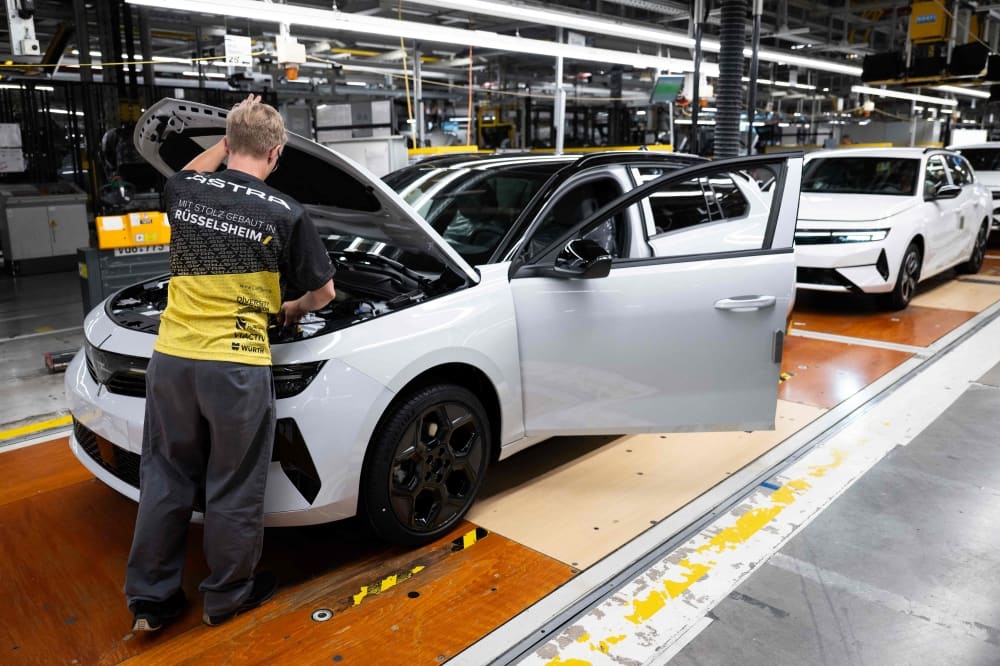
Stellantis slashes 650 engineering roles in Rüsselsheim as Leapmotor collaboration shifts design and manufacturing away from Germany's historic car hub.
KEY TAKEAWAYS
- ·Stellantis is eliminating 650 engineering roles at Opel's Rüsselsheim development centre, cutting the technical workforce from 1,650 to approximately 1,000 as it expands collaboration with China's Leapmotor.
- ·Chinese automakers captured 10.5 per cent of the European Union market in June 2026, prompting legacy manufacturers to pursue cost-reduction programmes and partnerships with Asian firms.
- ·Rüsselsheim's Opel workforce has shrunk from a 1970s peak of 42,000 to roughly 6,800 by the end of 2025, and the city is now converting 140,000 square metres of industrial land into a green hydrogen technology hub.
Engineering Exodus
Stellantis announced in April that it would eliminate 650 engineering positions at Opel's Rüsselsheim development centre, reducing the technical workforce from 1,650 to roughly 1,000. The cuts come as Opel deepens its collaboration with Hangzhou-based Leapmotor to develop a new SUV, leveraging the Chinese firm's capabilities in electric vehicle architecture and cost-efficient manufacturing.
The remaining German engineers will focus on legacy components like chassis systems, seating, lighting, steering assemblies, and driver-assistance technology. Higher-level vehicle design and software integration increasingly flow from China and other Stellantis hubs in France and Italy.
Daniel Bremm, a local representative of the IG Metall union, warned that the Rüsselsheim facility risks becoming an "adaptation hub" rather than a centre of innovation. He noted that Stellantis is hiring in France and Italy while cutting headcount in Germany, suggesting that Paris and Rome are lobbying the parent company more effectively.
Market Share Shift
Chinese automakers captured nine per cent of the European Union market during the first five months of 2026, according to Opel CEO Florian Huettl. That share climbed to 10.5 per cent in June. Huettl described the Leapmotor partnership as an effort to blend German industrial expertise with Chinese software capabilities.
The arrangement mirrors strategies across the European auto sector. Volkswagen, Mercedes-Benz, BMW, and Porsche have all launched cost-reduction programmes in response to sluggish continental demand, overcapacity in the electric vehicle segment, and intensifying competition from Asia.
Rüsselsheim's Long Decline
Opel's workforce in Rüsselsheim peaked at approximately 42,000 in the 1970s, when the brand dominated West Germany and sold affordable models such as the Kadett and Rekord across Europe. By the end of 2025, employment had fallen to roughly 6,800.
The company's trajectory changed under General Motors ownership, which restricted international expansion to avoid cannibalising other GM subsidiaries. France's Peugeot Group acquired Opel in 2017; the subsequent 2021 merger with Fiat-Chrysler created Stellantis, a multinational with 14 brands and production spread across three continents.
Opel is no longer Rüsselsheim's largest employer. That distinction now belongs to Frankfurt Airport, located nearby. Mayor Patrick Burghardt acknowledged that the latest job cuts will have an impact on the city, though he expressed concern that shedding German engineering capacity could prove costly in the long run.
Production Decisions
Stellantis will manufacture the upcoming Leapmotor-developed SUV in Zaragoza, Spain, rather than in Germany. That decision underscores the parent company's strategy of concentrating electric vehicle production in lower-cost jurisdictions.
A partial offset arrived this summer when Stellantis allocated production of the next-generation Opel Astra and DS4 to Rüsselsheim, securing plant operations beyond 2029. The announcement is part of a €1 billion investment plan for Germany running through 2030, which includes construction of a new headquarters campus in Rüsselsheim branded the "grEEn-campus."
The investment brought relief to workers and city officials, though uncertainty persists about the scope of future engineering work and the depth of the Chinese partnership.
Diversification Push
Rüsselsheim is not waiting for clarity. The municipality is accelerating economic diversification, with Opel committing to release 140,000 square metres of industrial land. The city plans to convert the site into a technology hub focused on green hydrogen production and storage.
Burghardt described the strategy as an opportunity to position Rüsselsheim for the decades ahead, even as job losses weigh on local families. The pivot reflects a broader recognition across Germany's industrial heartland that legacy automotive employment will not return to historic levels, regardless of how European manufacturers adapt to the electric transition and Asian competition.
Founded in 1862 by Adam Opel as a sewing machine and bicycle manufacturer, the company began producing cars in 1899. Its current restructuring marks another chapter in a century-long evolution, though the outcome for Rüsselsheim's engineering workforce remains uncertain as design authority and manufacturing capacity continue to migrate beyond Germany's borders.
RELATED STORIES
China Opens Weekly Arctic Shipping Service to Europe, Halving Transit Times
Cheng Wei-Lun · 3 min
China Routed Solar Exports Through 32,000 Kilometers to Dodge US Tariffs
Cheng Wei-Lun · 4 min
Hainan's Free Trade Port Strategy Targets Deeper ASEAN Supply Chain Integration
Cheng Wei-Lun · 2 min
Japan's Takaichi Doubles Down on Allied Ties as Beijing Turns Up the Heat
Aiko Nakamura · 4 min
Spot something wrong? Email editor@briefasia.com. We log every correction publicly.