Asia · Trade
China Opens Weekly Arctic Shipping Service to Europe, Halving Transit Times
The Northern Sea Route through Russia's Arctic coast offers faster delivery than Suez Canal routes while sidestepping Red Sea conflict zones, but raises environmental concerns over polar ice loss.
KEY TAKEAWAYS
- ·China has launched a weekly container service through the Arctic Northern Sea Route, cutting shipping time from Asia to Europe to approximately 22 days, half the duration of Suez Canal routes.
- ·The route allows Chinese exporters to bypass Red Sea conflict zones where Houthi attacks have disrupted shipping since Middle East tensions escalated in early 2026.
- ·Environmental groups warn that increased Arctic shipping traffic could accelerate polar ice loss, though the route is only navigable during summer months when ice coverage recedes sufficiently.
A New Northern Passage
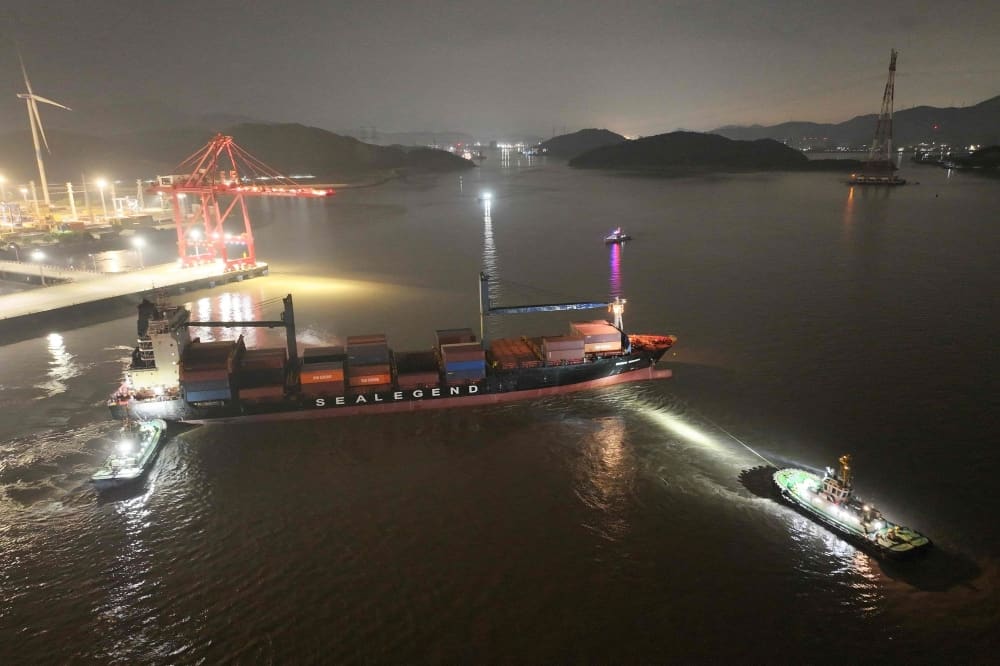
The container vessel Dubai Tower departed Ningbo in mid-August, charting a course that takes it north through the Bering Strait before turning west along Russia's Arctic coast. The voyage marks the launch of a regular weekly service connecting Chinese ports to Europe via the Northern Sea Route, a passage that slashes transit time compared to traditional southern corridors.
According to Sea Legend, the vessel is scheduled to reach Felixstowe in the United Kingdom by early September, followed by calls at Hamburg and Gdynia within the same week. The route represents a 22-day journey, roughly half the duration of conventional sailings through the Suez Canal.
Strategic Timing and Geopolitical Context
The Arctic passage is only navigable during summer months when sea ice recedes sufficiently to permit transits without icebreaker assistance. This seasonal window has become more reliable in recent years as polar temperatures rise, opening opportunities for commercial shipping that were previously impractical.
The timing aligns with significant disruptions to conventional trade lanes. Shipping through the Red Sea has faced sustained attacks from Houthi forces in Yemen, prompting many carriers to reroute around Africa's Cape of Good Hope or seek alternative passages entirely. Middle East tensions have escalated since strikes on Iran in late February, creating persistent uncertainty for vessels transiting the Suez corridor.
For Chinese exporters, the northern route offers dual advantages: faster delivery to European markets and avoidance of conflict zones that have driven up insurance premiums and added unpredictability to supply chains.
Growing Arctic Traffic
Container ship transits through the Northern Sea Route have climbed steadily. Data from Allianz Commercial shows 23 container vessels made the passage in the most recent season, up from 15 the year prior. The trend reflects growing commercial interest in Arctic shipping as ice coverage diminishes and geopolitical risks elsewhere intensify.
Denmark-based Maersk conducted the first major container transit through the NSR in 2018, demonstrating the route's viability for commercial cargo. Since then, smaller operators and Chinese shipping lines have explored the passage with increasing frequency.
Environmental Pushback
Climate researchers and advocacy groups have raised concerns that expanded shipping activity in the Arctic could accelerate the loss of sea ice. Polar regions are warming faster than the global average, and the reflective ice surface plays a critical role in regulating Earth's temperature. Ship traffic introduces black carbon emissions, potential fuel spills, and physical disturbance to fragile ecosystems.
Several major carriers have publicly committed to avoiding Arctic routes. CMA CGM, MSC, and Hapag-Lloyd have pledged not to use trans-Arctic passages, citing environmental stewardship and the need to protect vulnerable polar habitats. These companies collectively control significant portions of global container capacity, making their commitments meaningful in aggregate tonnage terms.
Yet the commercial calculus remains compelling for operators willing to use the route, particularly those based in Asia seeking faster access to European markets.
China's Polar Silk Road Vision
Beijing has articulated a long-term strategy for Arctic engagement, framing the region as an extension of its Belt and Road Initiative. Official documents refer to a Polar Silk Road, outlining ambitions for infrastructure investment, resource development, and shipping corridor establishment in the far north.
China has invested in icebreaker construction, polar research stations, and partnerships with Arctic nations, particularly Russia. The Northern Sea Route runs along Russian territorial waters, and Moscow has encouraged commercial traffic as a revenue source and strategic interest. Cooperation between Beijing and Moscow on Arctic development has deepened in recent years, with Chinese shipping companies securing permits and logistical support for transits.
The weekly service announced by Sea Legend signals a shift from experimental voyages to scheduled commercial operations, suggesting confidence in the route's reliability and profitability.
Trade Lane Implications
If Arctic shipping becomes a consistent option for Asia-Europe trade, it could reshape global logistics patterns. European ports on the North Sea and Baltic coasts gain geographic advantage over Mediterranean hubs, potentially altering port competition and hinterland connectivity. For Asian exporters, particularly in China, Japan, and South Korea, the northern route offers a hedge against disruptions in traditional chokepoints like the Suez Canal and Strait of Malacca.
However, the route's seasonal limitations and infrastructure gaps remain obstacles. Port facilities in the Russian Arctic are underdeveloped compared to southern hubs, and weather unpredictability can still delay transits. Insurance and regulatory frameworks for Arctic shipping are evolving, adding complexity for operators.
As global temperatures continue to rise and geopolitical tensions persist in traditional shipping lanes, the Arctic is likely to see growing commercial interest. The balance between economic opportunity and environmental protection will define how this northern frontier develops in the coming decade.
RELATED STORIES

Chinese Auto Brands Reshape European Market as Legacy Rivals Form Cost-Cutting Alliances
Cheng Wei-Lun · 4 min

China Routed Solar Exports Through 32,000 Kilometers to Dodge US Tariffs
Cheng Wei-Lun · 4 min
Hainan's Free Trade Port Strategy Targets Deeper ASEAN Supply Chain Integration
Cheng Wei-Lun · 2 min

Opel's China Partnership and Job Cuts Expose Europe's Auto Decline
Cheng Wei-Lun · 3 min
Spot something wrong? Email editor@briefasia.com. We log every correction publicly.