Asia · Trade
China Routed Solar Exports Through 32,000 Kilometers to Dodge US Tariffs
Chinese manufacturers built a sprawling supply chain across Southeast Asia and beyond to circumvent American trade barriers, reshaping global solar markets in the process
KEY TAKEAWAYS
- ·Chinese solar manufacturers constructed a 32,000-kilometer export route through Southeast Asia to circumvent US tariffs exceeding 200 percent on direct imports.
- ·China controls roughly 80 percent of global solar manufacturing capacity and installed over 200 gigawatts domestically in 2025, buffering export disruptions.
- ·US anti-circumvention probes extended tariffs to Vietnam, Thailand, Malaysia, and Cambodia, raising costs for American solar developers without spurring domestic production.
The 32,000-Kilometer Workaround
Chinese solar panel manufacturers have constructed a sprawling 32,000-kilometer export route to sidestep US tariffs, transforming how photovoltaic products reach American buyers. The distance represents more than just physical geography. It marks the extent to which trade barriers have reshaped renewable energy supply chains across Asia and beyond.
The route threads through Southeast Asian nations, where Chinese firms established manufacturing and assembly operations after Washington imposed successive rounds of anti-dumping duties. What began as tariff avoidance evolved into a fundamental restructuring of where solar components are made, finished, and shipped.
Facilities in Vietnam, Thailand, Malaysia, and Cambodia now serve as critical nodes in this extended supply chain. Chinese companies moved final assembly stages to these countries while maintaining core production, particularly of polysilicon and ingots, within China itself. The strategy allowed exporters to affix "Made in Vietnam" or "Made in Thailand" labels to panels that contain predominantly Chinese materials and technology.
Tariff Escalation and Industry Response
US tariffs on Chinese solar imports began in 2012 with anti-dumping and countervailing duties. The measures intensified during the Trump administration, which imposed additional levies under Section 201 of the Trade Act. By 2024, cumulative duties on direct Chinese solar imports exceeded 200 percent in some cases.
Chinese manufacturers responded not by retreating but by expanding regionally. Investment in Southeast Asian solar capacity surged. Vietnam attracted the largest share, with Chinese firms pouring capital into factories in the northern provinces. Malaysia and Thailand followed, each hosting multiple Chinese-owned or joint-venture facilities.
The relocation was selective. Energy-intensive upstream processes, polysilicon refining and wafer production, remained concentrated in Xinjiang and Inner Mongolia, where electricity costs are lower and infrastructure established. Downstream assembly, which adds less value per kilogram but qualifies products for non-Chinese origin under some trade rules, moved offshore.
Floating Solar and Domestic Expansion
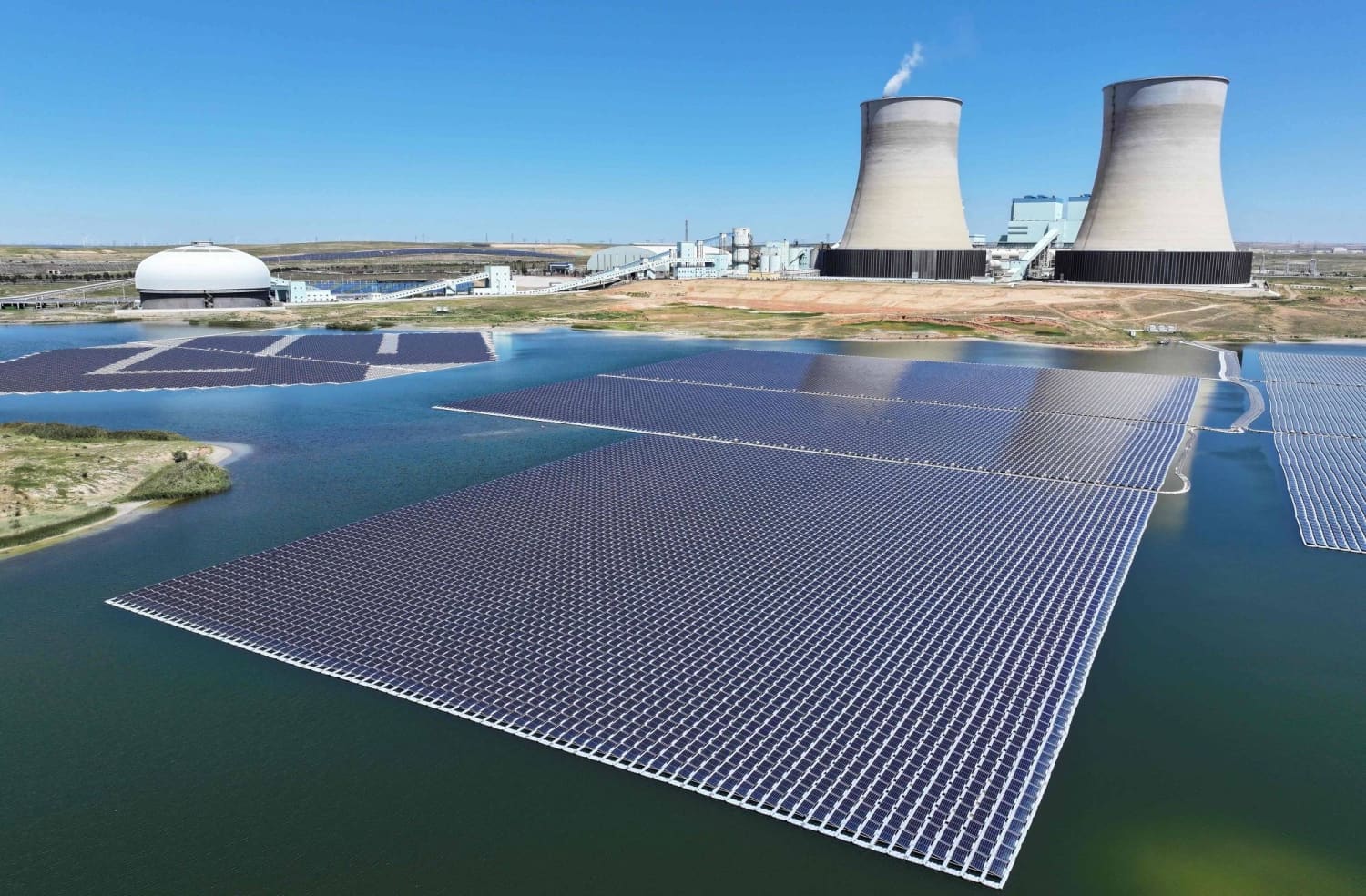
While navigating export barriers, China simultaneously accelerated domestic solar deployment. Floating solar installations, such as the arrays in Ningxia Hui Autonomous Region, exemplify this dual strategy. These projects, built on reservoirs and lakes, address land constraints while generating power close to northern industrial centers.
Ningxia's floating solar capacity alone exceeds 1 gigawatt. The installations use domestically produced panels that would have been exported in earlier years. Redirecting output to home markets cushioned manufacturers against tariff impacts and supported Beijing's carbon neutrality goals.
China now accounts for roughly 80 percent of global solar manufacturing capacity, from polysilicon to finished modules. Domestic installations in 2025 surpassed 200 gigawatts, more than the rest of the world combined. The scale provides a buffer that allows Chinese firms to absorb export disruptions while maintaining production volumes.
Southeast Asia as the New Nexus
Southeast Asian countries gained manufacturing jobs and foreign investment, but the benefits came with complications. Local content requirements proved difficult to enforce. Many facilities operated as assembly lines with minimal local value-added, importing cells and other components from China and performing only final steps onshore.
Trade authorities in Washington recognized the pattern. In 2024, the US Department of Commerce launched anti-circumvention investigations into solar imports from Vietnam, Thailand, Malaysia, and Cambodia. The probes examined whether products routed through these nations genuinely qualified as non-Chinese or merely evaded tariffs through minimal processing.
Preliminary findings indicated that a significant share of imports from Southeast Asia contained Chinese-origin cells and other inputs. New duties targeting these shipments followed, extending the tariff net beyond direct Chinese exports. The measures raised costs for US solar developers, who depend on affordable panels to compete with fossil fuels.
Market Distortions and Price Pressures
The extended supply chain added logistics costs and complexity but did not significantly raise end prices. Chinese manufacturers absorbed much of the expense through scale economies and vertical integration. Panel prices in global markets continued declining through 2025, driven by overcapacity and competition.
US solar developers faced a paradox: tariffs intended to support domestic manufacturing instead raised project costs without spurring significant American production. Domestic panel output remained below 10 gigawatts annually, a fraction of demand. Developers either paid tariffs on imported panels or delayed projects, slowing renewable energy deployment.
The 32,000-kilometer route also highlighted the fungibility of solar supply chains. Components crossed multiple borders, often returning to China for intermediate processing before final export. Tracking true origin became a bureaucratic challenge, complicating enforcement and creating uncertainty for buyers.
What Comes Next
Trade tensions show no sign of easing. US policymakers continue seeking ways to reduce dependence on Chinese solar imports, including subsidies for domestic manufacturing under the Inflation Reduction Act. China, meanwhile, deepens regional integration through investments and trade agreements that bind Southeast Asian production to Chinese supply chains.
The 32,000-kilometer route may lengthen further as companies explore assembly in Latin America and Eastern Europe to access other protected markets. Each new tariff barrier prompts another geographic shift, scattering production while concentrating control.
For now, the solar trade landscape remains a testament to how determined exporters can outmaneuver import restrictions, and how such maneuvers reshape entire industries in the process.
RELATED STORIES

Cosco Shipping Targets Three Southeast Asian Markets in Regional Push
Cheng Wei-Lun · 3 min

China Opens Weekly Arctic Shipping Service to Europe, Halving Transit Times
Cheng Wei-Lun · 3 min
Hainan's Free Trade Port Strategy Targets Deeper ASEAN Supply Chain Integration
Cheng Wei-Lun · 2 min

Japan's Takaichi Doubles Down on Allied Ties as Beijing Turns Up the Heat
Aiko Nakamura · 4 min
Spot something wrong? Email editor@briefasia.com. We log every correction publicly.