Asia · Politics
New South Wales Launches Gun Buyback After Bondi Beach Attack
Australia's most populous state will offer cash for firearms starting November 2, with payments up to $700 per weapon as part of expanded control measures
KEY TAKEAWAYS
- ·New South Wales will start a firearms buyback on November 2, offering up to $700 per weapon after a December 2025 shooting at Bondi Beach killed 15 people.
- ·The state has capped individual gun ownership at four firearms with exemptions for farmers, and the buyback targets owners exceeding that limit.
- ·A nationwide buyback proposal has stalled over funding and implementation disputes, leaving New South Wales to proceed independently.
A Response to Violence
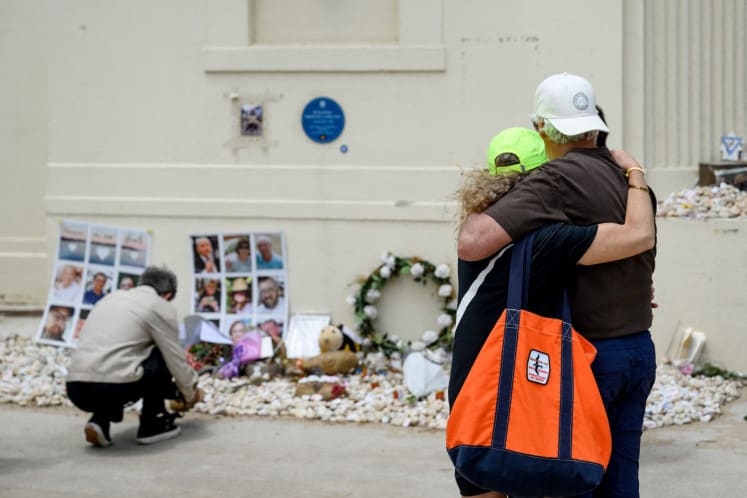
New South Wales will launch a firearms buyback program on November 2, Prime Minister Anthony Albanese announced Saturday. The initiative follows a December 2025 mass shooting at Bondi Beach that left 15 people dead during a Jewish celebration.
The buyback targets handguns, shotguns, and rifles, offering payments of up to $700 per weapon depending on type. Costs will be shared between federal and state governments. State Premier Chris Minns said the program could collect hundreds of thousands of firearms.
"We want those guns handed in, compensated for and safely destroyed," Minns said. "This is a big undertaking, but the principle behind it is simple: fewer dangerous guns in our community means a safer New South Wales."
The scheme applies specifically to gun owners who exceed new possession limits enacted by the state. New South Wales has already passed legislation restricting individuals to owning no more than four firearms, with exemptions available for farmers and certain other categories.
The Bondi Beach Incident
A father and son stand accused of opening fire on the December 14 gathering at Sydney's Bondi Beach. Police shot and killed 50-year-old Sajid Akram during the assault. His son Naveed, an Australian-born citizen, remains in custody facing terrorism charges and 15 counts of murder.
The attack ranks among Australia's deadliest mass shootings in recent decades. Authorities labeled it an antisemitic terrorist incident, prompting renewed debate over firearms access in a country that substantially tightened gun laws after the 1996 Port Arthur massacre.
Broader Reform Efforts Stall
Federal officials initially proposed a nationwide buyback spanning all states and territories. Those plans have not moved forward. Disagreements over funding allocation and implementation details have prevented a coordinated national approach.
The New South Wales program proceeds independently as a result. Other states have not announced similar timelines or committed to parallel schemes.
Albanese framed the state-level action as necessary despite the absence of a federal consensus. "We must do everything we can to make sure the antisemitic terrorist attack in Bondi doesn't happen again," he said. "That includes meaningful nationwide gun reform."
Payment Structure and Eligibility
The buyback offers varying compensation based on firearm category. Handguns, shotguns, and rifles all qualify, with the $700 maximum applying to specific models and conditions. Weapons must be legally registered to be eligible for payment.
Gun owners holding more than four firearms under the new possession cap will receive priority in the program. Those within the limit may also participate voluntarily. The state has not disclosed total budget allocations or projected participation rates.
Minns emphasized the program's public safety rationale rather than punitive intent. Owners exceeding the new limits will have a defined window to surrender excess weapons for compensation before enforcement of possession caps intensifies.
Regional Context
Australia has maintained relatively strict firearms regulations since the 1996 National Firearms Agreement, enacted after a gunman killed 35 people in Tasmania. That agreement introduced licensing requirements, registration systems, and a large-scale buyback that collected more than 600,000 weapons.
Gun ownership rates in Australia remain low compared to other developed nations. The country records fewer than one firearm-related death per 100,000 people annually, a rate significantly below that of the United States but higher than several Asian peers including Japan and Singapore.
The Bondi Beach shooting disrupted a two-decade stretch of relative calm. Mass casualty firearm incidents have been rare since the late 1990s, making the December attack an outlier that galvanized political momentum for additional controls.
New South Wales, home to Sydney and roughly one-third of Australia's population, has historically set regulatory precedents that other states later adopt. Whether the buyback model spreads will depend partly on participation rates and measurable impact on firearms circulation.
The program's November start date allows several months for public awareness campaigns and logistical preparation. State authorities have not yet detailed collection sites or processing procedures for surrendered weapons.
RELATED STORIES

Australia Expands Tech Payment Mandate to Eight Media Outlets
Priyanka V. Rao · 2 min

Vietnam and Australia Eye Deeper Ties in Rice Production and Processing
Priyanka V. Rao · 4 min
Australia's Teen Social Media Ban Faces Reality Check as 80 Percent Still Log On
Priyanka V. Rao · 4 min
Australia Eyes New Oil Refinery as Middle East War Exposes Import Dependence
Priyanka V. Rao · 3 min
Spot something wrong? Email editor@briefasia.com. We log every correction publicly.