Asia · Politics
Australia's Teen Social Media Ban Faces Reality Check as 80 Percent Still Log On
Three months after world-first restrictions took effect, new regulator data reveals enforcement challenges as government doubles down on policy
KEY TAKEAWAYS
- ·Over 80 percent of Australian teens aged 10 to 15 continue using social media three months after the December ban took effect, with usage frequency unchanged from pre-ban levels.
- ·Australia's government defends the world-first policy as reshaping public debate and shutting down millions of accounts, comparing it to minimum drinking age laws that achieve broad but not total compliance.
- ·Canberra plans to double maximum penalties on tech firms and strengthen enforcement after initial data showed the ban lacked sufficient deterrent effect on platforms or users.
The Compliance Gap
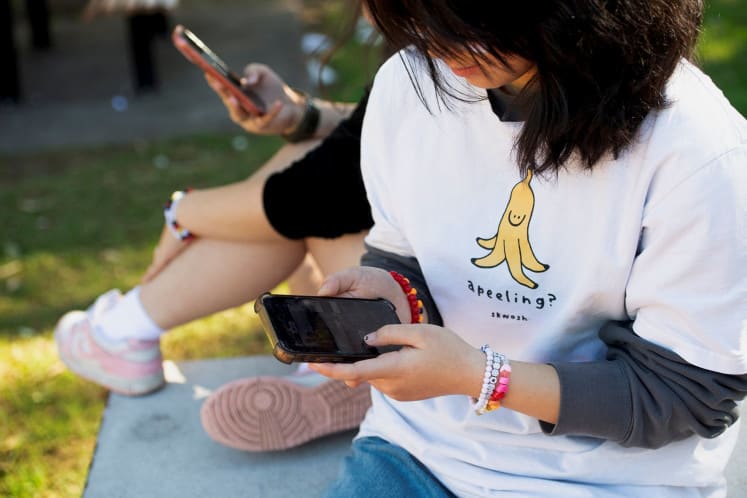
More than eight in 10 Australian teenagers continue accessing social media platforms three months after the country implemented its prohibition on usage by children under 16, according to fresh findings from eSafety, the nation's internet regulator. The data, released Friday, shows children aged 10 to 15 were using social media at the same frequency in March as before the December 10 enforcement date.
The ban, introduced over concerns about mental and physical health impacts on young users, represents the first national restriction of its kind globally. Yet the implementation reality has proven far more complex than the policy intent, with parental awareness of their children's online activity actually declining during the same period.
Australia's approach is drawing close attention from policymakers across Asia and beyond, particularly in markets where youth digital engagement runs high and regulatory frameworks remain underdeveloped. The country's experience offers an early test case for whether legislative measures can meaningfully reshape teenage behavior in an era when social platforms are embedded into daily routines.
Government Defends the Policy Framework
Andrew Leigh, Assistant Minister for Productivity, Competition, Charities and Treasury, mounted a defense of the restrictions Saturday, arguing the measure has succeeded in shifting public discourse even if absolute compliance remains elusive.
"The ban has been an important game changer in the conversation among parents," Leigh said in televised remarks. He noted that millions of accounts have been shut down since implementation, while acknowledging that full compliance was never the realistic expectation.
Leigh drew a parallel to minimum drinking age laws, which achieve widespread but not universal adherence. The comparison suggests Canberra views the ban as establishing a normative standard rather than an ironclad barrier. That framing, however, sits uneasily alongside the scale of non-compliance documented by eSafety.
The findings published Friday closely matched snapshot data the regulator released in March, three months before the center-left Labor government announced plans for tougher enforcement. Those planned measures include doubling the maximum penalty that can be imposed on technology companies failing to uphold the ban, signaling recognition that the initial framework lacked sufficient teeth.
Asia Watches the Australian Experiment
The Australian ban has generated friction with social media companies, most headquartered in the United States, which argue the restrictions are technically unworkable and infringe on parental autonomy. Platforms including Meta, TikTok and Snapchat have questioned how age verification can be implemented at scale without creating privacy risks or driving users toward less regulated corners of the internet.
For Asian governments weighing their own responses to youth digital wellbeing concerns, Australia's struggle to enforce compliance offers a cautionary data point. Singapore, South Korea and Japan have each explored regulatory interventions around screen time and platform design, but none have moved toward outright age-based bans comparable to Canberra's approach.
Indonesia, where smartphone penetration among teenagers exceeds regional averages and social commerce has become a primary economic channel, faces particular complexity. Any restriction on youth access would need to account for the role of digital platforms in education, family communication and informal income generation, especially outside major urban centers.
The Enforcement Dilemma
The eSafety data underscores a fundamental challenge: social media access is mediated through devices and accounts that are often shared, borrowed or created with parental assistance. Teenagers can easily circumvent age declarations during sign-up, use VPNs to mask location, or access platforms through friends' accounts.
Australia has yet to mandate robust age verification technology, in part due to privacy and cost concerns. Without technical guardrails embedded at the platform or network level, enforcement relies heavily on voluntary compliance by companies and families, both of which face competing incentives.
The decline in parental awareness documented by eSafety suggests that some caregivers may have relaxed monitoring after the ban's introduction, assuming the law itself would curb access. That dynamic, if widespread, would represent an unintended consequence that undermines the policy's protective intent.
Canberra's decision to double maximum penalties signals a shift toward holding platforms more accountable, but the effectiveness of financial sanctions depends on detection and prosecution, both resource-intensive activities. The government has not yet detailed how it will audit platform compliance or investigate individual violations at scale.
What Comes Next
Australia's parliament passed the ban with bipartisan support, reflecting broad public concern about the mental health effects of sustained social media exposure among adolescents. Studies have linked heavy platform use to elevated rates of anxiety, depression and body image issues, though causality remains contested in academic circles.
The eSafety findings do not address whether the ban has influenced the duration or nature of teenage social media use, only the binary question of access. It remains possible that some young users have reduced their time online or shifted to less algorithmically driven platforms, changes that would not register in the regulator's frequency data.
International observers will be watching whether Australia's enforcement mechanisms evolve to close the compliance gap, or whether the policy settles into a symbolic posture with limited practical effect. The outcome will shape debates in other jurisdictions considering similar interventions, particularly in Asia where regulatory capacity and digital infrastructure vary widely across markets.
For now, the ban stands as a statement of intent rather than an operational barrier, a reality that both supporters and critics will cite as evidence for their competing visions of how governments should navigate the intersection of youth welfare and digital access.
RELATED STORIES
Meta Removes 756,000 Australian Accounts as Teen Social Media Ban Faces Scrutiny
Priyanka V. Rao · 3 min
Australia Imposes Revenue Levy on Tech Platforms Without News Deals
Priyanka V. Rao · 2 min

Australian Healthcare Firm Kairos Targets Philippine BPO Market for Global Expansion
Priyanka V. Rao · 4 min

Roblox Agrees to Enforceable Child Safety Measures After Australian Tests Expose Risks
Priyanka V. Rao · 2 min
Spot something wrong? Email editor@briefasia.com. We log every correction publicly.