Technology · Products
AliExpress Shifts Focus to Brand Building as AI Hardware Sales Surge Overseas
The Alibaba cross-border platform showcased nine Chinese brands at IFA 2026, signalling a transition from pure marketplace to brand accelerator as cross-border economics evolve.
KEY TAKEAWAYS
- ·AliExpress showcased nine Chinese brands at IFA 2026, emphasising its Brand+ programme to help third-party sellers establish overseas brand identity beyond pure product sales.
- ·The platform's AI hardware business has doubled in overseas markets, driven by demand for smart glasses, translation devices, and consumer robotics at accessible price points.
- ·Rising logistics costs and competitive pressure are pushing AliExpress to offer brand-building services as traditional low-price arbitrage models lose viability in Western markets.
From Marketplace to Brand Platform
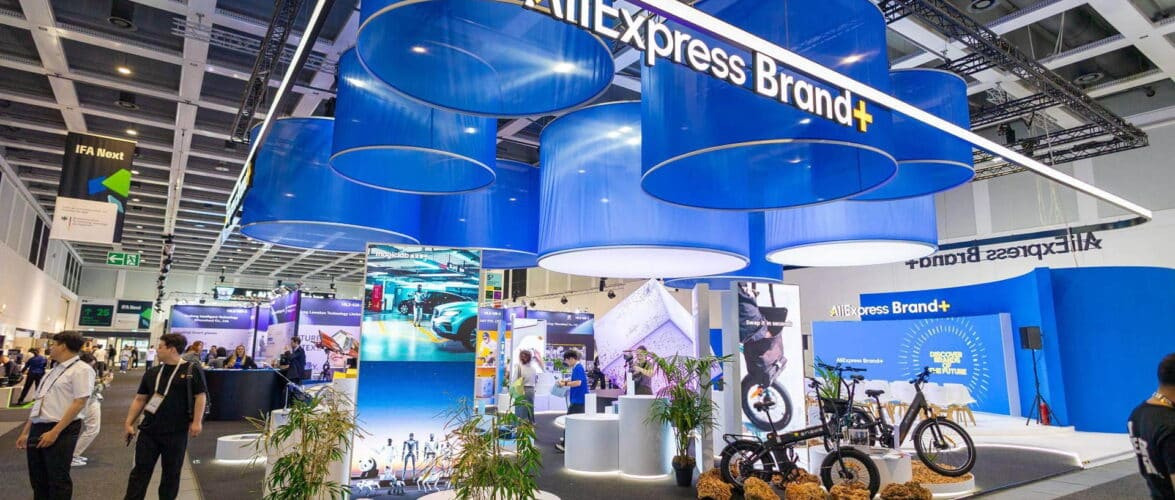
AliExpress appeared at IFA 2026 with a booth dedicated to nine Chinese brands, displaying products that ranged from smart glasses and ornithopter aircraft to 3D printers and electric bicycles. The Alibaba Group cross-border platform used the Berlin consumer electronics show to signal a strategic shift: it now positions itself as a partner for brand building, not just product distribution.
The booth reflected a broader repositioning of AliExpress as cross-border e-commerce economics shift. The platform's Brand+ programme, which supports third-party sellers in establishing overseas brand identity, is expanding as the company responds to changing cost structures and competitive pressure in international markets.
AI Hardware Doubles
The platform's AI hardware category has seen particularly strong growth, with sales doubling in overseas markets. Smart glasses, AI-powered translation devices, and consumer robotics accounted for a significant portion of the display at IFA 2026, underscoring demand for accessible AI-enabled products outside China.
The acceleration comes as Chinese hardware makers seek distribution channels that offer more than logistics. AliExpress is positioning Brand+ as infrastructure for market entry, providing localised marketing support, customer service frameworks, and brand identity tools that smaller manufacturers typically lack resources to build independently.
Economics of Cross-Border Shift
The pivot to brand support reflects pressure on the traditional cross-border model. Rising logistics costs, longer delivery times, and increased scrutiny of ultra-low-price goods in Western markets have made pure arbitrage plays less viable. Platforms that can help sellers build lasting customer relationships and premium positioning now hold structural advantages.
AliExpress is betting that Chinese manufacturers, particularly in the AI and smart hardware segments, will pay for brand-building services if those services deliver higher margins and customer retention. The Brand+ model offers tiered support, from basic storefront customisation to full market-entry consulting, positioning the platform as more than a transaction layer.
Regional Implications
The strategy has implications across Asia's export-driven economies. As Chinese platforms invest in brand infrastructure, they create pathways for manufacturers in Vietnam, Indonesia, and India to access similar tools. AliExpress has indicated that Brand+ will not remain China-exclusive, opening the programme to sellers across the region who meet quality and service thresholds.
For buyers in Europe and North America, the shift means more curated product selection and potentially faster resolution of service issues, as brands take on responsibilities previously handled by anonymous sellers. The trade-off is likely higher prices, as brand-building costs flow through to consumers.
The IFA 2026 presence marks AliExpress's most visible brand-focused initiative to date. Whether the platform can scale Brand+ while maintaining the price competitiveness that built its user base remains an open question. Early data from the AI hardware segment suggests demand exists for branded Chinese products at mid-tier price points, provided quality and support meet expectations.
The ornithopter aircraft at the booth, a biomimetic drone that flaps wings rather than spinning rotors, drew sustained attention from trade visitors. It exemplified the kind of novel product that benefits from brand context: technically sophisticated, visually distinctive, and difficult to evaluate based on price alone. AliExpress is wagering that such products represent the future of cross-border commerce, where brand and innovation matter as much as cost.
RELATED STORIES

China Scrubs 5.6 Million AI-Generated Posts in Platform Cleanup
Cheng Wei-Lun · 3 min

Sharpa Secures $668 Million at $3.3 Billion Valuation in Tech Giant-Backed Round
Cheng Wei-Lun · 2 min

LG Pivots to AI-Defined Vehicle Platform as Korea Chases China's Self-Driving Lead
Jun-ho Seo · 3 min

China's Auto Chip Race Shifts to Volume as Horizon Robotics Crosses 15 Million Units
Jun-ho Seo · 3 min
Spot something wrong? Email editor@briefasia.com. We log every correction publicly.