Technology · Startups
Sharpa Secures $668 Million at $3.3 Billion Valuation in Tech Giant-Backed Round
Chinese robotics startup draws investment from Alibaba, Tencent, Meituan, and JD.com as it deploys automation systems in quick-service restaurants
KEY TAKEAWAYS
- ·Sharpa raised RMB 4.5 billion at a RMB 22 billion valuation, backed by Alibaba, Tencent, Meituan, JD.com, and venture firms.
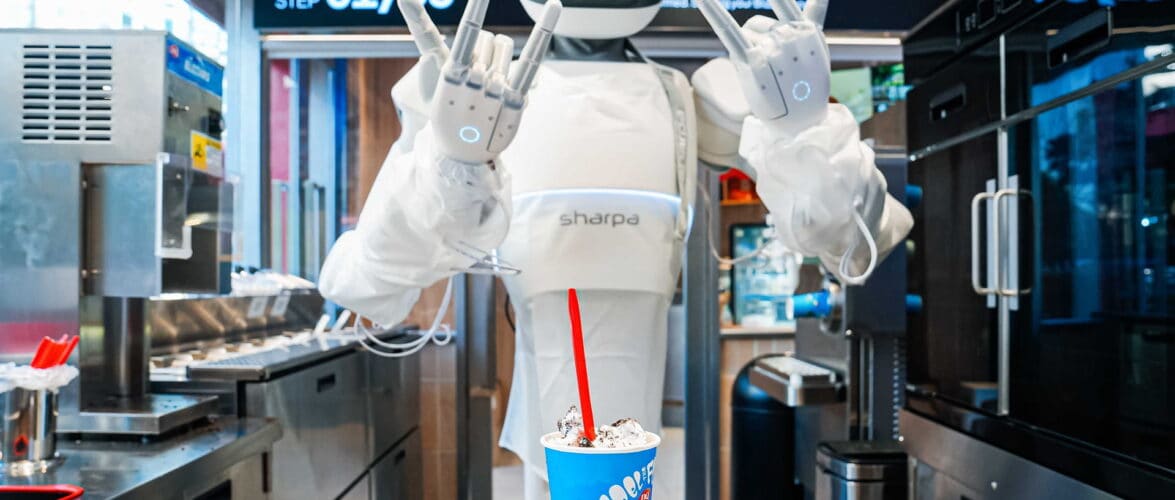
- ·The robotics startup is deploying automation systems at Dairy Queen locations to handle food preparation and order assembly tasks.
- ·China's commercial robotics sector has drawn heavy investment as restaurants face labor shortages and rising wage costs in urban markets.
Major Capital Injection
Sharpa closed a funding round exceeding RMB 4.5 billion (USD 668 million), bringing its post-money valuation to RMB 22 billion (USD 3.3 billion), the company announced. The round drew participation from China's largest technology platforms: Alibaba Group, Tencent, Meituan, and JD.com, alongside Transsion and investment firms including HSG, Qiming Venture Partners, DragonBall Capital, and Luminous Ventures.
The capital injection positions Sharpa among the most heavily funded robotics ventures in Asia's automation race, where restaurant chains and retailers are experimenting with mechanical labor to address rising wage costs and operational consistency demands.
Restaurant Automation Gains Traction
Sharpa has begun deploying its robotic systems at Dairy Queen locations, automating tasks that range from food preparation to order assembly. The partnership with the American quick-service chain marks a test case for robotic integration in franchised food environments, where standardized processes and high transaction volumes create opportunities for mechanical efficiency.
Quick-service restaurants in China face dual pressures: labor shortages in tier-one cities and the need to maintain speed during peak hours. Robotic arms and automated stations promise to handle repetitive tasks without fatigue, though the technology remains expensive and requires tailored installation for each kitchen layout.
China's Robotics Investment Wave
The investor roster reflects broader strategic interest in automation infrastructure. Meituan, which operates China's dominant food delivery platform, stands to benefit from backend efficiencies that reduce order preparation time. JD.com has invested heavily in warehouse automation and sees restaurant robotics as an adjacent market. Alibaba's participation aligns with its retail technology initiatives, including automated grocery stores and smart logistics.
Venture firms backing Sharpa have concentrated on industrial automation and artificial intelligence. Qiming Venture Partners has funded robotics companies focused on manufacturing and logistics, while DragonBall Capital has placed bets on AI-driven automation across sectors.
Market Context and Competitive Landscape
China's commercial robotics market has attracted billions in capital over the past three years, driven by government incentives for advanced manufacturing and the high cost of urban labor. Startups developing robotic arms, autonomous mobile robots, and vision systems have raised successive rounds, though profitability remains elusive for most.
Sharpa competes with domestic players such as Keenon Robotics, which supplies delivery robots to restaurants, and international vendors like Miso Robotics, which has deployed automated frying stations in U.S. chains. The sector remains fragmented, with no single standard for kitchen robotics and each deployment requiring significant customization.
Deployment Challenges Ahead
Scaling robotic systems beyond pilot locations presents operational hurdles. Franchise operators must weigh upfront hardware costs against labor savings, a calculation that varies by geography and wage levels. Maintenance networks remain underdeveloped, and software updates require coordination across distributed sites.
Sharpa's ability to convert pilot deployments into volume contracts will determine whether its valuation reflects sustainable demand or speculative positioning. The Dairy Queen partnership offers visibility, but the economics of robotic labor in food service are still being tested in real-world conditions.
The funding will likely support manufacturing scale-up, software refinement, and expansion into additional restaurant chains. Whether Sharpa can achieve unit economics that justify its valuation depends on adoption rates and the speed at which installation and maintenance costs decline.
RELATED STORIES
Hong Kong Debuts Robot-Run Convenience Store in Commercial Automation Push
Cheng Wei-Lun · 3 min

China Scrubs 5.6 Million AI-Generated Posts in Platform Cleanup
Cheng Wei-Lun · 3 min
Chinese Automakers Target Hybrid Market After EV Dominance
Cheng Wei-Lun · 3 min
Private Capital Floods Asia's MedTech Sector as Brain Interfaces and Robotics Draw Investors
Priyanka V. Rao · 4 min
Spot something wrong? Email editor@briefasia.com. We log every correction publicly.