Technology · Products
Chinese Automakers Target Hybrid Market After EV Dominance
Industry leaders shift focus to full-hybrid technology as BYD reports $1.2 billion quarterly profit, signaling strategic expansion beyond battery-electric vehicles
KEY TAKEAWAYS
- ·Chinese automakers are expanding into full-hybrid vehicles after establishing leadership in battery-electric technology, with BYD posting a $1.2 billion quarterly profit.
- ·The strategic shift targets markets where Japanese and Korean brands like Toyota and Honda have maintained hybrid dominance for decades.
- ·Southeast Asian manufacturing hubs offer localization opportunities as Chinese brands balance EV infrastructure gaps with hybrid transition demand.
Strategic Pivot to Hybrid Technology
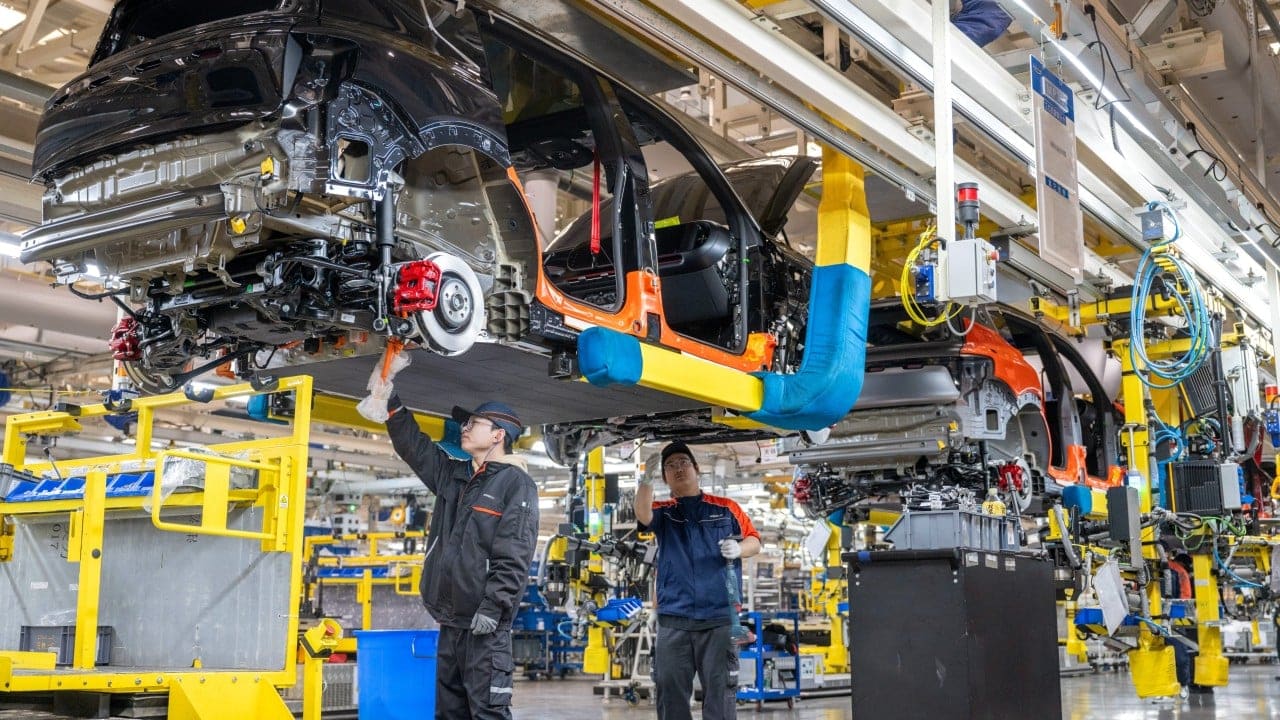
Chinese automakers are mounting a challenge in the full-hybrid vehicle segment, leveraging their established expertise in battery-electric technology to compete against traditional international manufacturers. The move represents a calculated expansion beyond pure EVs, targeting a market segment where Japanese and Korean brands have historically maintained dominance.
BYD, the Shenzhen-based manufacturer that has become synonymous with China's electric vehicle rise, reported a quarterly profit of $1.2 billion. The figure reflects sustained demand for new energy vehicles across domestic and international markets, even as the company prepares to broaden its technological portfolio.
Full-hybrid vehicles, which combine internal combustion engines with electric motors but do not require external charging, occupy a distinct niche between conventional cars and plug-in hybrids. Toyota and Honda have long controlled this space through models like the Prius and Accord Hybrid, systems refined over decades. Chinese manufacturers now see an opportunity to apply battery management expertise and cost advantages developed in the EV sector to this adjacent category.
Market Dynamics and Regional Expansion
The strategic emphasis on hybrids comes as Chinese automakers face varied regulatory landscapes across export markets. While some regions push aggressively toward zero-emission mandates, others maintain infrastructure or policy environments where full hybrids remain attractive transition technologies. For manufacturers seeking global scale, a diversified powertrain portfolio reduces dependence on any single market's policy trajectory.
Southeast Asian markets present particularly fertile ground. Nations like Thailand and Indonesia have positioned themselves as regional automotive hubs, with governments offering incentives for hybrid production even as they prepare longer-term EV infrastructure. Chinese brands, already expanding assembly operations across ASEAN, can leverage these facilities to localize hybrid production and avoid tariff exposure.
The profit performance underscores financial resilience amid price competition. Chinese EV makers have engaged in sustained price reductions over the past year, compressing margins but expanding market share. BYD's ability to post substantial profit despite this environment suggests operational scale and vertical integration are offsetting pricing pressure.
Technology Transfer and Competitive Positioning
Hybrid systems demand different engineering priorities than pure battery-electric platforms. Thermal management, powertrain coordination between combustion and electric modes, and regenerative braking calibration all require distinct expertise. Chinese manufacturers are investing in these capabilities, often through partnerships with domestic suppliers who have matured alongside the EV supply chain.
Battery technology remains a transferable advantage. The cells, management systems, and power electronics developed for EVs apply directly to hybrid architectures, albeit at smaller scale. Chinese firms control significant portions of the global battery supply chain, from raw material processing through cell manufacturing. This vertical integration translates to cost and supply security advantages that legacy automakers struggle to replicate quickly.
International brands have responded with accelerated electrification timelines, but face constraints. Established hybrid platforms represent sunk R&D investment and production tooling. Pivoting entirely to new architectures risks cannibalizing profitable existing lines. Chinese entrants, building capacity from newer baselines, carry less legacy burden.
Implications for Asia's Automotive Landscape
The hybrid push will intensify competition across Asian markets where vehicle affordability remains paramount. Chinese manufacturers have demonstrated willingness to price aggressively to establish market presence, a strategy that pressures incumbents' margins and dealer networks. If replicated in hybrids, this could accelerate market share shifts already visible in the EV segment.
For suppliers, the expansion creates demand for components spanning both electric and combustion technologies. Regional parts manufacturers in Thailand, Malaysia, and Vietnam stand to benefit if Chinese assemblers localize hybrid production. Conversely, suppliers tied exclusively to legacy powertrain architectures face mounting pressure as the product mix shifts.
BYD's profit milestone also signals that Chinese EV makers are moving beyond the cash-burn phase common to emerging auto sectors. Profitability at scale enables sustained R&D investment, international expansion, and price flexibility - resources that will prove essential as competition extends into hybrid and other powertrain variants. The question for established players is whether their hybrid head start can withstand challengers who bring battery expertise, cost discipline, and aggressive market strategies forged in the world's largest automotive market.
RELATED STORIES

CaoCao Mobility Bets on Autonomous Taxis as Revenue Tops RMB 10 Billion
Cheng Wei-Lun · 3 min

China Builds AI Infrastructure in Rural West to Power Coastal Tech Ambitions
Cheng Wei-Lun · 3 min
China Drafts National Liquid-Cooling Standard as AI Racks Near 1MW Power Draw
Cheng Wei-Lun · 2 min
Beijing Warns Domestic EV Makers Against Overseas Price Wars
Cheng Wei-Lun · 3 min
Spot something wrong? Email editor@briefasia.com. We log every correction publicly.