Asia · Business
Australia Eyes New Oil Refinery as Middle East War Exposes Import Dependence
Canberra and Western Australia will fund a feasibility study for the nation's first new crude processing facility since the 1960s, aiming to reduce reliance on foreign fuel amid regional supply shocks.
KEY TAKEAWAYS
- ·Australia's federal and Western Australia governments will spend A$4 million on a feasibility study for the nation's first new oil refinery since the 1960s, driven by conflict in Iran that has disrupted fuel imports.
- ·The country now imports roughly 80 percent of its petroleum products and operates only two refineries, down from eight in 2000, after high costs and Asian competition forced closures.
- ·Any new facility must justify capital costs against Asia's refining glut and align with Australia's net-zero emissions target by 2050, with preliminary study results expected in 12 to 18 months.
A$4 Million Feasibility Push
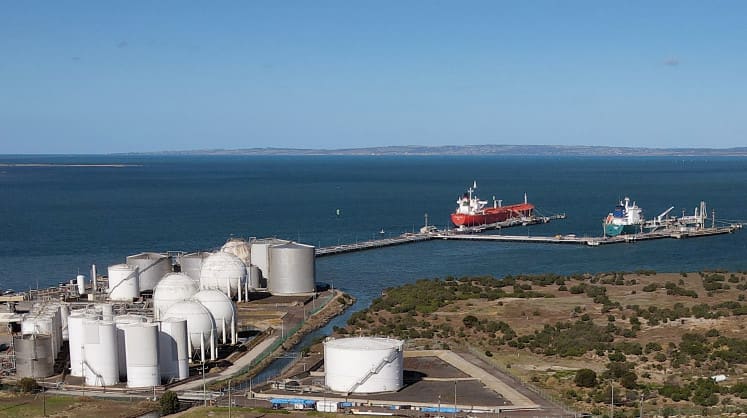
Australia's federal and Western Australia state governments have committed A$4 million to explore construction of the country's first new oil refinery in more than six decades. The joint feasibility study responds to supply disruptions triggered by conflict in the Middle East, which has underscored Canberra's vulnerability to external fuel shocks.
The nation currently imports roughly 80 percent of its petroleum products, leaving it exposed when maritime routes tighten or producer regions face instability. Federal Resources Minister Madeleine King framed the initiative as a national security imperative, noting that Western Australia has operated without any domestic refining capacity since BP closed its Kwinana facility in 2021.
Only two refineries remain operational across Australia: Ampol's plant in Queensland and Viva Energy's site in Victoria, both on the eastern seaboard. That marks a steep decline from eight facilities in 2000, when the sector still benefited from post-war investment and captive domestic demand.
The Economics That Shuttered an Industry
Most of Australia's refining infrastructure dates to the 1950s and 1960s, an era of rapid industrialization and protectionist trade policy. Over the past three decades, however, high labor and compliance costs made older Australian plants uncompetitive against large-scale complexes in Singapore, South Korea, and the Middle East, which enjoy economies of scale and lower operating expenses.
Successive closures left the country dependent on refined product imports, a shift that reduced consumer prices in stable periods but created strategic risk when geopolitical events disrupted tanker flows. The Iran conflict has brought that risk into sharp relief, prompting policymakers to revisit the case for onshore processing capacity.
Industry observers note that any new Australian refinery would need to justify capital expenditure in the hundreds of millions of dollars, secure long-term crude feedstock agreements, and navigate environmental permitting in a market increasingly focused on decarbonization. The feasibility study will assess site options, technology configurations, and financing structures before any construction decision.
Western Australia's Strategic Calculation
Western Australia's participation reflects both its resource endowment and its geographic isolation from the eastern refineries. The state produces significant volumes of crude oil from offshore fields in the Carnarvon and Browse basins, yet it ships that output overseas and reimports refined diesel and jet fuel, a logistical inefficiency that adds cost and vulnerability.
King emphasized that fuel security extends beyond Western Australia, affecting mining operations, agriculture, and defense logistics nationwide. A refinery in the west could serve as a hedge against disruptions to the longer supply chains that feed the eastern states, particularly if conflict or natural disaster blocks key shipping lanes.
The study will also examine whether emerging technologies, including modular refining units and renewable hydrogen integration, can improve the economic case. Australia's push toward net-zero emissions by 2050 adds complexity, as any new fossil-fuel infrastructure must reconcile with climate commitments and the eventual decline in petroleum demand.
Regional Context and Asia's Refining Glut
Australia's move comes as Asia's refining sector faces its own pressures. China has added massive capacity over the past decade, while India and Southeast Asian nations have expanded or upgraded plants to serve growing domestic markets and export to the Pacific. That regional glut has kept refined-product prices relatively low, complicating the investment case for smaller, higher-cost facilities.
Yet the same dynamics that favor large Asian refineries also concentrate risk. A significant share of Australia's diesel and jet fuel arrives from Singapore, South Korea, and Japan. Any disruption in those supply chains, whether from conflict, refinery outages, or trade restrictions, can tighten availability and spike prices in Australian ports within days.
The feasibility study will model scenarios including extended Middle East conflict, sanctions affecting key exporters, and climate-driven disruptions to shipping routes. Policymakers are weighing whether the insurance value of domestic capacity justifies higher upfront costs and potentially higher pump prices for consumers.
Canberra has not set a timeline for the study's completion, but industry participants expect preliminary findings within 12 to 18 months. If the economics prove viable, site selection, environmental approvals, and financing could add several more years before construction begins, meaning any new refinery would not come online until the early 2030s at the earliest.
RELATED STORIES
Vietnam and Australia Eye Deeper Ties in Rice Production and Processing
Priyanka V. Rao · 4 min

Australia Imposes Revenue Levy on Tech Platforms Without News Deals
Priyanka V. Rao · 2 min

Australian Healthcare Firm Kairos Targets Philippine BPO Market for Global Expansion
Priyanka V. Rao · 4 min

Roblox Agrees to Enforceable Child Safety Measures After Australian Tests Expose Risks
Priyanka V. Rao · 2 min
Spot something wrong? Email editor@briefasia.com. We log every correction publicly.