Asia · Business
HiteJinro Expands Vietnam Footprint with Scholarship Program and New Production Facility
Korean beverage giant awards $15,400 to Vietnamese students as it prepares to open its first overseas manufacturing plant in Southeast Asia
KEY TAKEAWAYS
- ·HiteJinro awarded 400 million dong to 20 Vietnamese university students through a scholarship program that has supported 130 recipients since 2017.
- ·The Korean beverage company is completing its first overseas manufacturing plant in Vietnam to serve the fast-growing Southeast Asian spirits market.
- ·Vietnam's 100 million consumers and rising disposable incomes make it a strategic hub for regional production and distribution across ASEAN markets.
Korean Beverage Maker Deepens Vietnam Commitment
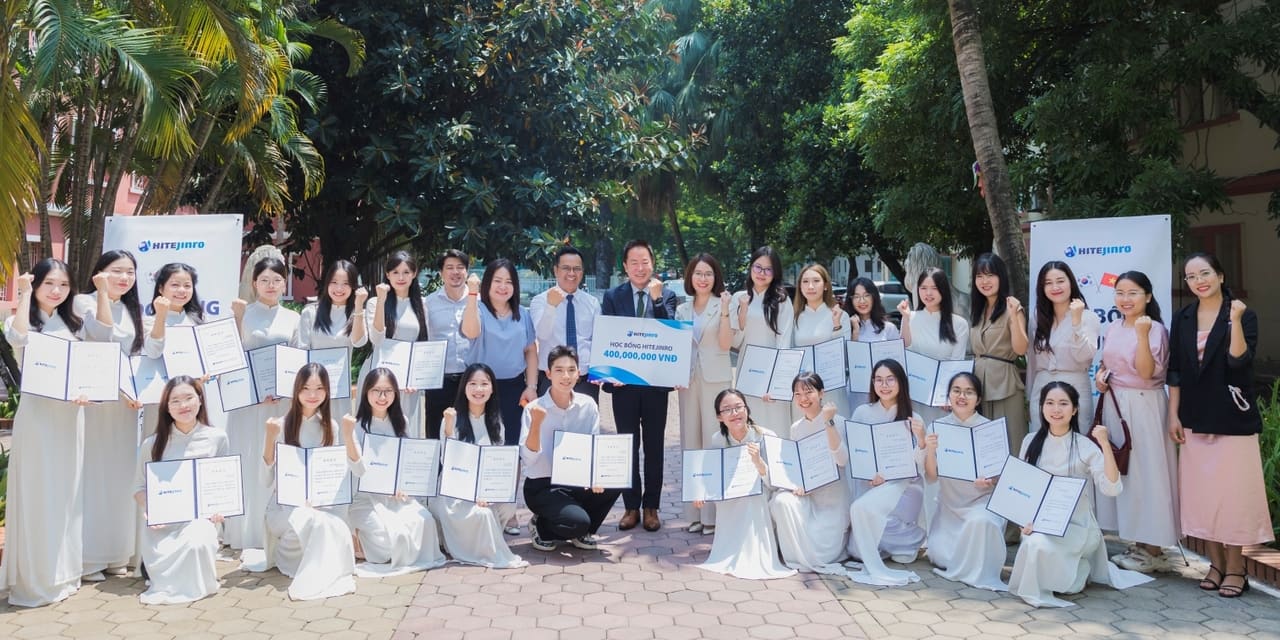
HiteJinro distributed 400 million dong ($15,400) in scholarships to 20 Vietnamese university students this week, continuing an initiative that has now supported 130 young people since its 2017 launch. Each recipient from Hanoi University and Hanoi University of Foreign Studies received 20 million dong, according to the company's Thursday announcement.
The scholarship program has delivered a total of 2.4 billion dong over seven rounds, making it one of the more sustained corporate education initiatives in Vietnam's capital region. CEO Jang In-seop attended the award ceremony and highlighted a former scholarship recipient who now works for the company, illustrating the program's talent-pipeline dimension.
The timing of this year's awards coincides with a more substantial investment: HiteJinro is nearing completion of its first overseas production facility, located in Vietnam. The plant represents a strategic shift for the Seoul-based liquor producer, which has traditionally manufactured all products domestically and exported them across Asia.
Why Vietnam Matters for Korean Spirits
Vietnam's beverage alcohol market has been growing at double-digit rates in recent years, driven by rising disposable incomes and a young, urbanizing population. The country's 100 million consumers represent a critical growth market for international spirits brands, particularly those from neighboring Northeast Asian economies with established distribution networks.
HiteJinro's decision to build local production capacity reflects both the scale of opportunity and the practical challenges of serving the market through exports alone. Import tariffs, logistics costs, and the need for fresher inventory in tropical climates all favor domestic manufacturing for high-volume products.
The company's scholarship program predates the factory announcement by several years, suggesting a deliberate, long-term approach to market entry. By investing in local talent development before breaking ground on manufacturing, HiteJinro has built relationships with universities and positioned itself as a community stakeholder rather than a purely transactional foreign investor.
From Scholarships to Supply Chains
The scholarship initiative targets students in business, economics, and foreign languages, disciplines directly relevant to HiteJinro's operations in Vietnam. The program provides not just financial support but also potential recruitment channels as the company scales up its local workforce to staff the new facility.
This human-capital strategy mirrors approaches taken by other Korean conglomerates expanding in Southeast Asia, where competition for skilled labor remains intense despite large populations. Samsung, LG, and Hyundai have all established scholarship and training programs in Vietnam ahead of or alongside major capital investments.
HiteJinro's factory will enable the company to serve not just Vietnam but potentially other ASEAN markets with lower transport costs and faster turnaround times. The regional bloc's internal trade agreements make Vietnam an attractive manufacturing hub for companies targeting consumers across Indonesia, Thailand, the Philippines, and beyond.
Regional Ambitions Beyond Soju
While HiteJinro is best known for its Jinro soju brand, the company has been diversifying its product portfolio and geographic footprint for over a decade. The Vietnam plant will likely produce multiple beverage lines adapted to local taste preferences, which tend to favor sweeter, lower-alcohol options compared to traditional Korean spirits.
The Southeast Asian expansion comes as growth in HiteJinro's home market has slowed, with South Korea's aging population and changing drinking habits putting pressure on traditional soju sales. Younger Korean consumers are increasingly turning to beer, wine, and imported spirits, pushing domestic producers to look abroad for volume growth.
Vietnam offers a demographic contrast: a median age below 30, rapidly expanding middle class, and a nightlife culture that has embraced both local and international alcohol brands. HiteJinro will face competition from established players including Thai Beverage, San Miguel, and a growing roster of craft and premium spirits brands, but its manufacturing presence gives it a cost advantage in the mass-market segment.
The scholarship program, now in its eighth year, has become a modest but visible part of HiteJinro's brand presence in Vietnam. As the company transitions from importer to manufacturer, that early investment in local relationships may prove as valuable as the bricks and mortar going up at the new plant.
RELATED STORIES
German Appliance Maker Vorwerk Opens HCMC Office After 14-Month Vietnam Build-Out
Priyanka V. Rao · 3 min

South Korea's Labor Market Shows Fragile Recovery Amid Industrial Headwinds
Jun-ho Seo · 4 min
Emart Posts $30 Million Loss as Starbucks Korea Boycott Bites
Jun-ho Seo · 2 min

Asiana Shareholders Clear Final Hurdle for Korean Air Takeover
Cheng Wei-Lun · 2 min
Spot something wrong? Email editor@briefasia.com. We log every correction publicly.