Asia · Trending
South Korea's Labor Market Shows Fragile Recovery Amid Industrial Headwinds
Employment rose by 108,000 in July, but manufacturing sector weakness exposes persistent structural challenges in Asia's fourth-largest economy
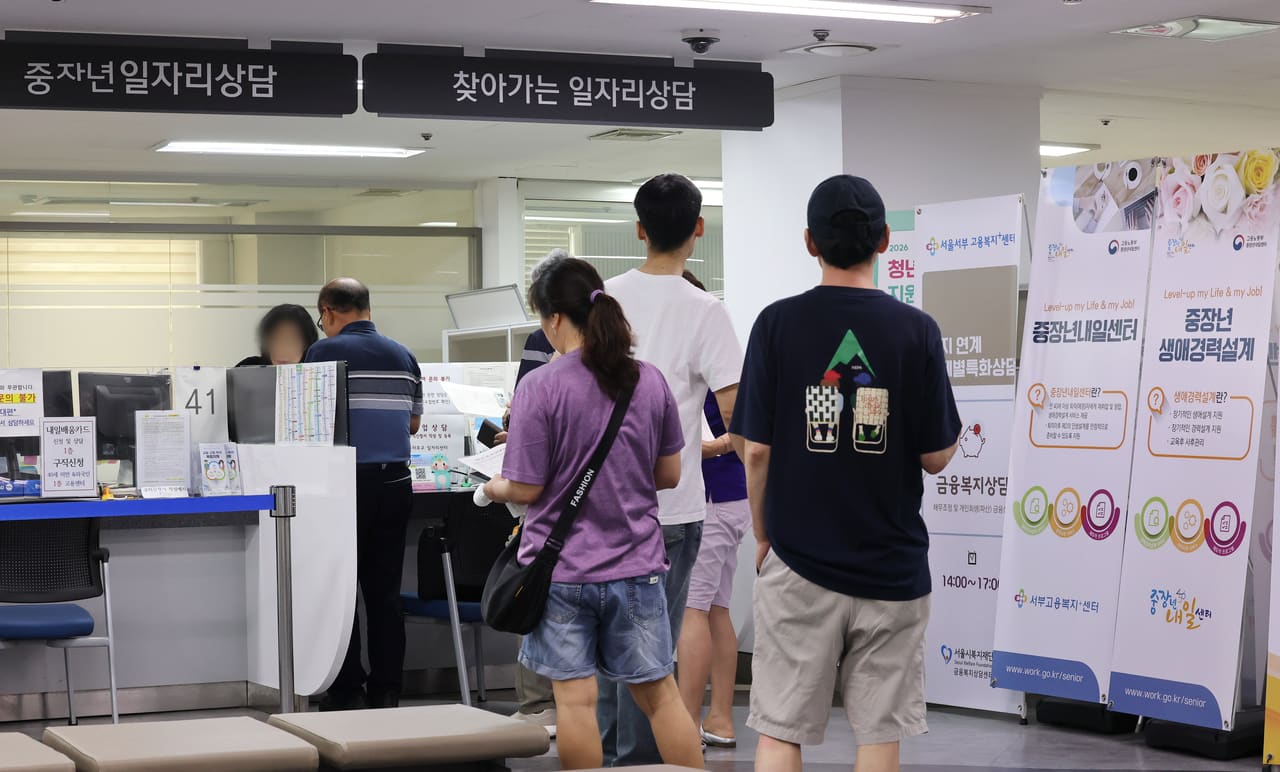
KEY TAKEAWAYS
- ·South Korea added 108,000 jobs in July, reaching 29.13 million employed, the second consecutive month of growth after May's 40,000 contraction.
- ·Manufacturing employment declined for the seventh straight month through July, driven by weak chip demand, automation, and competitive pressure from Chinese manufacturers.
- ·Service sectors including healthcare, hospitality, and logistics absorbed most new hires, but these roles offer lower pay than traditional factory jobs.
A Modest Rebound With Underlying Weakness
South Korea's employment landscape posted its second consecutive month of expansion in July, with payrolls climbing by 108,000 positions year-on-year to reach 29.13 million workers, according to the Ministry of Data and Statistics. The figure represents a notable acceleration from June's 63,000 gain and marks a turnaround after May's unexpected 40,000 contraction, which had ended a 17-month streak of positive job creation.
Yet beneath the headline recovery lies a more troubling reality: the manufacturing sector, long the backbone of South Korea's export-driven economy, continues to shed workers even as service industries absorb labor. The divergence highlights a structural shift that policymakers in Seoul are watching closely, particularly as global demand for semiconductors and electronics remains volatile.
The July data arrives at a critical juncture for Asia's fourth-largest economy. South Korea's gross domestic product expanded just 0.3 percent quarter-on-quarter in the April-June period, weighed down by sluggish capital investment and tepid consumer spending. With household debt hovering near record levels and interest rates still elevated following the Bank of Korea's prolonged tightening cycle, labor market resilience has become a key barometer of economic health.
Manufacturing's Persistent Drag
The ongoing weakness in factory employment underscores the challenges facing South Korea's industrial base. Major conglomerates including Samsung Electronics and SK Hynix have trimmed headcount through attrition and hiring freezes as they navigate a prolonged downturn in global chip demand. Automotive suppliers, meanwhile, face intensifying competition from Chinese electric vehicle manufacturers that have captured market share across Southeast Asia and Europe.
Manufacturing employment has contracted for seven consecutive months through July, a streak that reflects both cyclical pressures and longer-term automation trends. Factories are deploying robotics and artificial intelligence at an accelerating pace, reducing the need for assembly-line labor even as production volumes stabilize. The Korea Employers Federation estimates that productivity-enhancing technologies eliminated approximately 45,000 manufacturing roles in the first half of the year, a trend likely to continue as firms prioritize cost efficiency.
This industrial hollowing-out carries significant political implications. Manufacturing workers, many concentrated in swing districts around Ulsan, Changwon, and the Gyeonggi industrial belt, form a crucial voting bloc ahead of next year's general elections. The government has pledged 1.8 trillion won in subsidies for reshoring initiatives and advanced manufacturing clusters, but early results have been mixed, with companies citing labor shortages for skilled technicians even as overall factory employment declines.
Services Absorb Displaced Workers
The service sector has shouldered much of the employment growth over the past two months, driven primarily by healthcare, hospitality, and logistics. Hospital networks have ramped up hiring to meet demand from South Korea's rapidly aging population, with the over-65 demographic now accounting for nearly 19 percent of the total population. Delivery platforms and e-commerce warehouses have similarly expanded payrolls, capitalizing on sustained consumer preference for online shopping established during the pandemic years.
Tourism-related employment has rebounded as visitor arrivals from China, Japan, and Southeast Asia recover toward pre-pandemic levels. The Korea Tourism Organization reported 1.4 million foreign arrivals in June, the highest monthly total since early 2020. Hotels, restaurants, and tour operators in Seoul, Busan, and Jeju Island have responded by increasing staff, though wage growth in these roles remains modest, averaging just 2.1 percent year-on-year in nominal terms.
Public-sector hiring has also contributed to the employment uptick. The central government and regional authorities added approximately 18,000 positions in July, part of a broader effort to bolster social services and infrastructure maintenance. Critics argue that such job creation, while politically expedient, does little to address productivity challenges or support long-term competitiveness.
Regional Context and Policy Implications
South Korea's labor market dynamics mirror broader trends across industrialized Asia. Japan reported similar manufacturing softness in its July employment data, with factory payrolls down 0.8 percent year-on-year even as overall unemployment held at 2.5 percent. Taiwan's manufacturing sector has faced comparable headwinds, with electronics assembly employment declining as firms shift production to Vietnam and India to diversify supply chains.
The divergence between manufacturing and services employment raises questions about wage growth and income distribution. Factory jobs historically offered higher pay and better benefits than many service roles, and their decline threatens to widen income inequality. Average monthly earnings in manufacturing stood at 4.2 million won in the second quarter, compared with 3.1 million won in hospitality and retail sectors.
Policymakers face a delicate balancing act. The Bank of Korea has held its benchmark rate steady at 3.25 percent since January, wary of reigniting household debt growth but mindful that prolonged high rates could further dampen investment and hiring. Finance Minister Choi Sang-mok signaled in recent parliamentary testimony that the government is considering additional fiscal support for small and medium-sized manufacturers, though budget constraints limit the scope of intervention.
What Comes Next
The trajectory of South Korea's labor market through year-end will hinge on several variables. Global semiconductor demand, which drives a significant share of manufacturing employment, shows tentative signs of stabilization as inventory corrections near completion. However, geopolitical tensions and export controls on advanced chipmaking equipment could complicate recovery prospects for the sector.
Domestically, the government's productivity agenda, including investments in artificial intelligence infrastructure and green technology clusters, aims to create higher-value jobs over the medium term. Whether displaced factory workers can transition into these roles remains an open question, particularly given skill mismatches and geographic constraints.
For now, the modest job gains of July offer a degree of reassurance that South Korea's labor market has not tipped into broader contraction. Yet the underlying fragility, especially in manufacturing, suggests that the path to sustained employment growth will be neither smooth nor swift.
RELATED STORIES
Seoul Convenes Industry Leaders to Address US Polysilicon Tariff Impact
Cheng Wei-Lun · 3 min
Seoul and New Delhi Strengthen Customs Cooperation to Ease Trade Friction
Cheng Wei-Lun · 3 min
Homeplus Reopens 67 Stores After Seoul Court Grants Rehabilitation Extension
Jun-ho Seo · 2 min
South Korea's Tourism Recovery Delivers Ninefold Jump in Foreign Card Spending
Jun-ho Seo · 5 min
Spot something wrong? Email editor@briefasia.com. We log every correction publicly.