Asia · Business
Vietnam Seafood Sector Eyes Premium Markets at Vietfish 2026
Industry gathers in Ho Chi Minh City to showcase processing capabilities and pivot toward sustainability as export pressures mount
KEY TAKEAWAYS
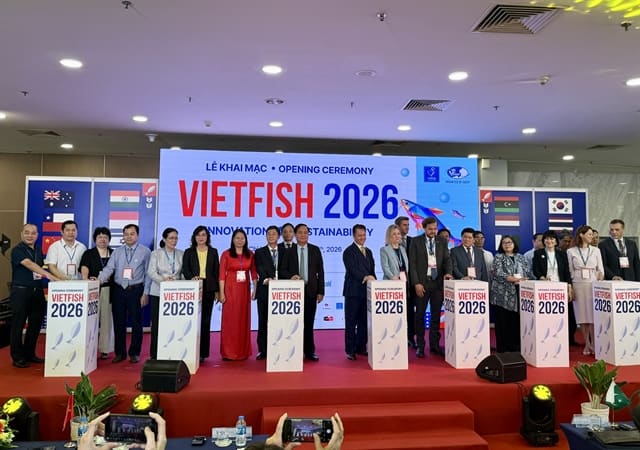
- ·Vietfish 2026 opened August 19 in Ho Chi Minh City, gathering seafood producers and processors as Vietnam pushes toward higher-value exports and traceability standards.
- ·Vietnam exported approximately 1.8 million metric tons of seafood in 2025, generating around USD 9.2 billion, but margins have compressed under tighter buyer certification requirements.
- ·Exhibitors are showcasing blockchain traceability, biofloc shrimp systems, and premium product lines to compete with Indonesia, Thailand, and India in regional markets.
Industry Convenes Amid Export Headwinds
Vietnam's seafood sector opened its annual showcase on August 19, with Vietfish 2026 drawing producers, processors, and exporters to the Saigon Exhibition and Convention Centre. The event arrives as the country's aquaculture and fisheries industries confront dual pressures: rising costs in traditional markets and tightening environmental standards from key buyers in North America and Europe.
The exhibition spans the full supply chain, from hatchery operators and feed suppliers to cold-chain logistics providers and frozen-food processors. Participation this year reflects the sector's urgency to demonstrate compliance with traceability requirements and to signal a shift from volume-driven exports to premium, value-added products.
Pivoting Toward Traceability and Certification
Vietnam exported roughly 1.8 million metric tons of seafood in 2025, generating around USD 9.2 billion in revenue, according to data from the Vietnam Association of Seafood Exporters and Producers. Yet margins have compressed as buyers in the United States and European Union demand third-party certification for wild-caught and farmed seafood alike. The Monterey Bay Aquarium Seafood Watch program and Marine Stewardship Council standards now feature prominently in procurement contracts, forcing Vietnamese exporters to invest in audit trails and farm-level monitoring.
At Vietfish 2026, several pavilions highlight blockchain-enabled traceability platforms and IoT sensors for shrimp and pangasius farms. These technologies aim to document feeding regimes, antibiotic use, and water quality in real time, addressing buyer concerns that have historically relegated Vietnamese seafood to mid-tier retail channels.
Diversifying Species and Processing Techniques
Beyond compliance, exhibitors are showcasing new product lines designed to capture higher price points. Frozen pangasius fillets, long the workhorse of Vietnam's export basket, are being supplemented by ready-to-cook portions, marinated cuts, and single-serve packs aimed at convenience-focused consumers in Japan, South Korea, and Singapore.
Shrimp processors are also pivoting. Black tiger prawn farmers in the Mekong Delta have begun trial runs of organic certification, while whiteleg shrimp operations are experimenting with biofloc systems that recycle water and reduce effluent discharge. These closed-loop systems carry upfront capital costs but promise lower feed conversion ratios and eligibility for sustainability premiums in European supermarkets.
Industry participants note that diversification extends to species selection as well. Cobia, grouper, and seabass are gaining traction among southern Vietnamese hatcheries, offering alternatives to the saturated pangasius market and aligning with demand for premium white fish in affluent urban centers across Asia.
Regional Competition and Policy Support
Vietnam's seafood ambitions unfold against stiff regional competition. Indonesia is scaling up its own aquaculture capacity, while Thailand retains a decades-long lead in shrimp processing infrastructure and brand recognition. India, meanwhile, has captured significant market share in vannamei shrimp exports to the United States, leveraging lower labor costs and established cold-chain networks.
Domestic policy is adapting. Hanoi has earmarked subsidies for hatchery upgrades and aquaculture zone planning, aiming to consolidate fragmented smallholder farms into larger, auditable production clusters. Provincial authorities in Ca Mau, Bac Lieu, and Kien Giang have introduced zoning regulations that separate intensive shrimp farms from mangrove buffer zones, a move designed to satisfy both environmental groups and international buyers.
The government's revised Fisheries Law, effective since early 2025, also imposes stricter penalties for illegal, unreported, and unregulated fishing, addressing longstanding "yellow card" warnings from the European Commission. Compliance with these rules is now a prerequisite for export licenses, raising the stakes for processors who source from wild-caught fleets.
What Comes Next
Vietfish 2026 underscores a sector at an inflection point. Volume growth, which powered Vietnam's rise to become the world's third-largest seafood exporter, is giving way to a more complex calculus that weighs certification costs, species diversification, and brand positioning. Buyers are no longer content with commodity-grade frozen blocks; they want proof of sustainable sourcing, transparent supply chains, and products tailored to evolving consumer preferences.
The exhibition will run through August 21, with technical seminars scheduled on cold-chain logistics, aquafeed nutrition, and export market access. For an industry that has long competed on price, the challenge now is to compete on quality, traceability, and environmental stewardship. Whether Vietnam's fragmented base of smallholder farmers and mid-sized processors can execute that transition at scale will shape the sector's trajectory for the next decade.
RELATED STORIES
Vietnam Faces $230 Billion Export Sprint to Salvage 2026 Growth Target
Tran Quoc Bao · 2 min
US Increases Anti-Dumping Duties on Vietnamese Pangasius Exports
Priyanka V. Rao · 4 min

Stavian Group Breaks Ground on $95.6 Million Industrial Park in Thái Nguyên
Priyanka V. Rao · 3 min
Dung Quat Economic Zone Pulls $19.4 Billion in Foreign Investment
Tran Quoc Bao · 2 min
Spot something wrong? Email editor@briefasia.com. We log every correction publicly.