Asia · Business
Dung Quat Economic Zone Pulls $19.4 Billion in Foreign Investment
Central Vietnam's industrial hub attracts major capital inflows as the country positions itself as a manufacturing alternative in Southeast Asia
KEY TAKEAWAYS
- ·The Dung Quat Economic Zone and Quang Ngai industrial parks have attracted nearly $19.4 billion in foreign direct investment, establishing central Vietnam as a significant manufacturing hub.
- ·The investment spans petrochemicals, steel, renewable energy manufacturing, and automotive components, reflecting Vietnam's shift toward heavier industrial production beyond garments and electronics.
- ·Sustaining these capital flows will require Vietnam to balance competitive labor costs with workforce skill development while addressing infrastructure gaps in logistics and supply chain coordination.
Central Vietnam's Industrial Magnet
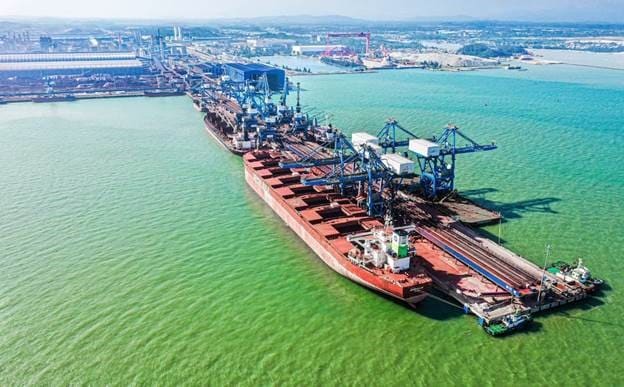
The Dung Quat Economic Zone and industrial parks across Quang Ngai province have attracted close to $19.4 billion in foreign direct investment, positioning central Vietnam as an increasingly important node in Asia's shifting manufacturing landscape.
The capital flows into this coastal province represent a broader pattern of investment diversification across Southeast Asia, with Vietnam emerging as a preferred destination for manufacturers seeking alternatives to concentrated production bases. Quang Ngai's industrial infrastructure, anchored by the Dung Quat complex, has become a test case for how secondary cities can compete for industrial capital traditionally directed toward established hubs like Ho Chi Minh City or Hanoi.
Strategic Location Drives Appeal
Dung Quat's appeal lies in its deep-water port facilities and proximity to regional shipping lanes connecting Northeast Asia with Singapore and the wider ASEAN market. The economic zone sits roughly 900 kilometers south of Hanoi and 900 kilometers north of Ho Chi Minh City, offering investors access to central Vietnam's labor market while maintaining connectivity to major commercial centers.
The industrial parks within Quang Ngai have attracted investments spanning petrochemicals, steel production, renewable energy manufacturing, and automotive components. This sectoral diversity reflects Vietnam's push to move beyond garment and electronics assembly into heavier industrial production, a transition that requires significant capital expenditure and long-term commitment from foreign partners.
Regional Competition for Industrial Capital
Vietnam's success in drawing manufacturing investment has intensified competition across Southeast Asia. Indonesia, Thailand, and Malaysia are all upgrading industrial zones and offering incentives to capture a share of the capital flowing out of China and other higher-cost production bases.
Quang Ngai's $19.4 billion figure places it among Vietnam's more successful provincial investment stories, though it still trails the investment volumes seen in southern provinces like Binh Duong or Dong Nai. The central region has historically lagged behind the south in industrial development, making the Dung Quat figures notable for their scale.
The province has benefited from national infrastructure investments, including highway connections and power grid upgrades, that reduce the operational friction that once deterred investors from considering locations outside the two main metropolitan areas. These improvements have narrowed the gap between established industrial zones and emerging ones, giving investors more geographic options.
What Comes Next
The sustainability of these investment flows depends on several factors. Vietnam's ability to maintain competitive labor costs while improving workforce skills will determine whether current investors expand operations or look elsewhere. The country faces wage pressure as its economy develops, a dynamic that has already pushed some low-margin manufacturing to Cambodia and Bangladesh.
Infrastructure bottlenecks remain a concern. While Dung Quat's port can handle large vessels, inland logistics and supply chain coordination still lag behind what investors find in Thailand or Malaysia. Addressing these gaps will require continued public investment and regulatory streamlining, areas where Vietnam has shown progress but not yet parity with regional peers.
The composition of future investment matters as much as the volume. If Quang Ngai can attract higher-value manufacturing and technology-intensive projects, the economic impact will extend beyond job creation to skills transfer and domestic supply chain development. That outcome is far from guaranteed, but the $19.4 billion committed so far suggests investors see potential beyond cheap labor arbitrage.
RELATED STORIES
Vietnam Faces $230 Billion Export Sprint to Salvage 2026 Growth Target
Tran Quoc Bao · 2 min
Vietnam's Manufacturing Surge Raises Questions About Industrial Independence
Cheng Wei-Lun · 4 min
Vietnam Automakers Push to Relax Euro 5 Tech Transfer Rules
Priyanka V. Rao · 3 min
AI and Cloud Adoption Drive New Growth in Vietnam's Digital Economy
Cheng Wei-Lun · 3 min
Spot something wrong? Email editor@briefasia.com. We log every correction publicly.