Lifestyle · Culture
Singaporeans Lease Second Homes in Southeast Asia as Rents Soar at Home
Young professionals are signing year-long leases in Bangkok, Kuala Lumpur, and beyond while maintaining their Singapore properties, driven by burnout and a million-dollar housing market.
KEY TAKEAWAYS
- ·Young Singaporeans are renting apartments in Bangkok, Kuala Lumpur, and Guangxi while maintaining primary residences in the city-state, where resale flat prices rose 9.5 percent in 2024 and record 1,594 units sold for over SGD1 million in 2025.
- ·Applications to Malaysia's My Second Home program surged from 1,902 in December 2024 to 12,495 in March 2026, with Singaporean applicants quadrupling from 96 to 383 in the same period.
- ·Remote work flexibility and lower regional rents enable lifestyle arbitrage, with some Singaporeans earning SGD2,300 monthly surplus by renting out Singapore flats and leasing larger homes abroad.
A Second Base in Bangkok
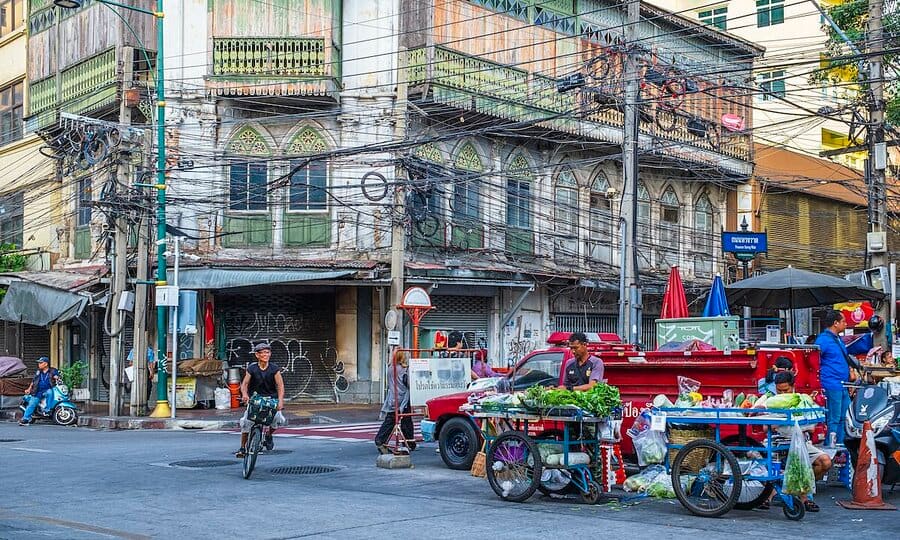
Chin Wei Nyen, a 30-year-old former product manager, now splits her time equally between Singapore and Bangkok. She spends roughly two weeks in each city, working as a freelance social media manager from a rented apartment in the Thai capital that costs SGD600 (USD472) monthly.
The arrangement began in late 2024, when her employer offered three months of remote work as an alternative to resignation. She took it, moved to Bangkok temporarily, and found something unexpected: relief from the comparison culture she felt defined life back home.
She returned to Singapore, resigned in May 2025, then went back to Bangkok six months later and signed a year-long lease. She and her husband, an operations manager, share a four-room resale flat in Punggol and a monthly mortgage of about SGD2,000. The second apartment is an additional expense she considers worthwhile.
Chin secured a Destination Thailand Visa in April, a five-year multiple-entry permit launched in July 2024 for digital nomads, remote workers, and freelancers. She keeps duplicate wardrobes and toiletries in both cities and travels without checked luggage.
The Numbers Behind the Move
More than 221,000 Singaporeans lived abroad by the end of 2025, up from 213,000 in 2016, according to the Department of Statistics. While comprehensive data on overseas rental arrangements remains unavailable, proxy indicators point to rising interest.
Applications to Malaysia's My Second Home program jumped from 1,902 in December 2024 to 12,495 in March 2026, according to consultancy Asia Home Services. Singaporean applicants quadrupled in the same window, from 96 to 383.
The catalyst is clear: public housing resale prices in Singapore climbed 9.5 percent in 2024 and another 4 percent in 2025. Prices have appreciated 55.7 percent since the second quarter of 2019, according to Huttons Asia senior director of data analytics Lee Sze Teck.
The number of resale flats sold for SGD1 million or more reached a record 1,594 units in 2025, 54 percent higher than the previous peak of 1,035 in 2024, said Wong Siew Ying, head of research and content at PropNex. The average transaction price for these million-dollar flats rose 2.1 percent to SGD1.14 million last year.
Arbitrage and Space
Jim Ng, 31, and his wife Catheryn Wong, 32, run a digital marketing agency in Singapore. They own a three-room HDB flat purchased in 2018, which they now rent out for SGD3,200 a month. The couple moved to Medan in May 2024, then relocated to a 250-square-meter two-story house in Gamuda Cove, Selangor, Malaysia.
Their Malaysian house costs SGD900 monthly, nearly four times the floor area of their Singapore flat. The rental income from their flat covers the Malaysian lease and leaves approximately SGD2,300 in surplus each month.
Ng cites a cultural fit and language accessibility as reasons for choosing Malaysia over Indonesia. The trade-off is a 40-minute drive to central Kuala Lumpur and concerns about the distance to the nearest police station, which he says reduces the sense of security he took for granted in Singapore.
Content creator Rachell Ng posted in July 2025 that she and her husband rented a four-room condominium in Guangxi, China, for SGD520 a month. They spent between SGD9,000 and SGD10,000 on vinyl flooring and other minor renovations. The couple travels to Guangxi almost monthly for work and maintains their primary residence in Singapore.
Friction Points
Chin highlights payment infrastructure as a recurring frustration. Thailand favors QR-code transactions linked to local bank accounts, which tourist visa holders cannot open. She relies on credit cards and international payment apps, which are less widely accepted.
Tanya Ong, a 32-year-old civil servant, lived in Nakhon Pathom, about 90 minutes by public transport from central Bangkok, between March 2024 and September 2025. She found her savings rate slower than in Singapore due to lower earnings, but valued exposure to people from different backgrounds.
Ng and Wong cite the lack of nearby law enforcement and emergency services as a persistent concern in their gated township. Chin does not see Bangkok as a permanent arrangement. She plans to extend her lease through the end of 2027 but expects to return to Singapore full-time eventually.
What Comes Next
The trend reflects a structural shift in how young Singaporeans without dependents are thinking about lifestyle arbitrage. Remote work norms established during the pandemic have made geographic flexibility a negotiable benefit rather than an exception.
Property platform Stacked Homes notes that Singapore's resale market has recently shown signs of moderation, but affordability pressures remain acute for first-time buyers and young couples. The premium for space and lower cost of living in neighboring markets continues to widen.
For now, Chin says the dual-city arrangement has given her what she needed most: distance from the pressure to keep pace. She no longer measures her progress against peers on the same timetable. The second apartment, she says, is less about escape and more about control over her own rhythm.
RELATED STORIES
Singapore Entrepreneur Trades University for Family Fish Farm in Johor Bahru
Lim Hui Ying · 4 min
Singapore Awards 200 MW Data Centre Capacity to Four Operators on Jurong Island
Lim Hui Ying · 2 min
Korean Fried Chicken Chain Mom's Touch Enters Singapore Market
Lim Hui Ying · 2 min
Chagee Opens Three Singapore Locations in One Day, Targets Family Market
Lim Hui Ying · 3 min
Spot something wrong? Email editor@briefasia.com. We log every correction publicly.