Lifestyle · Culture
Singapore Entrepreneur Trades University for Family Fish Farm in Johor Bahru
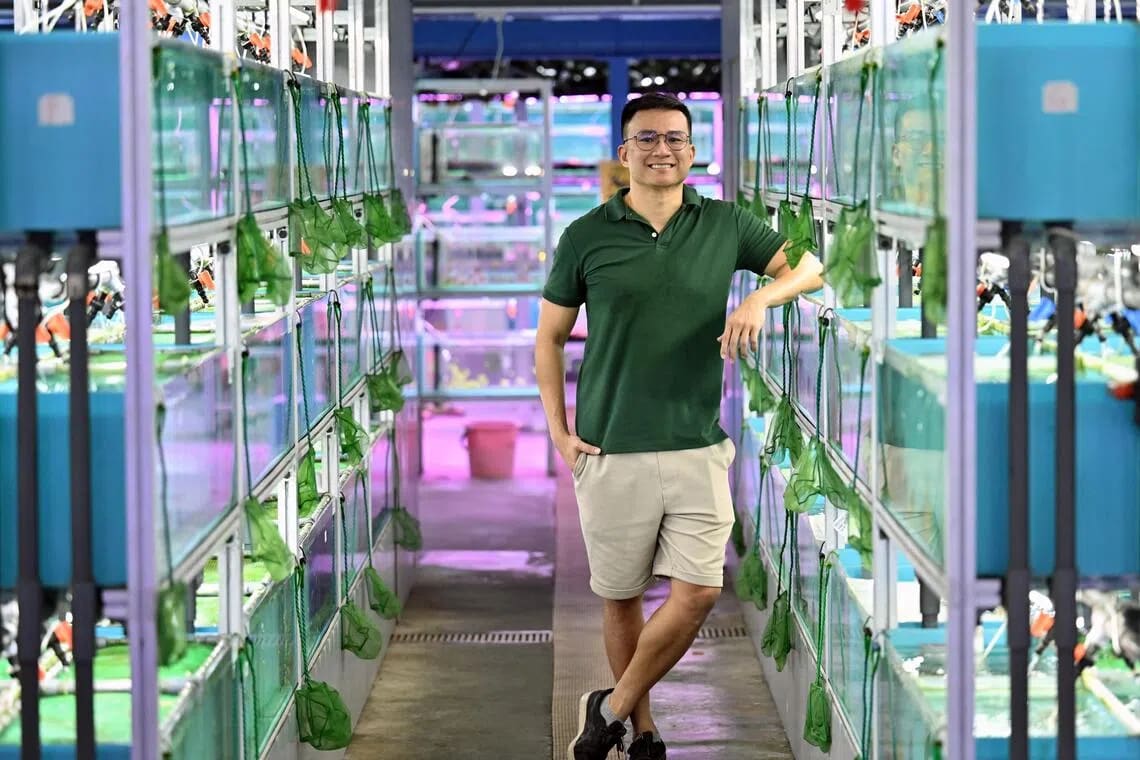
Desmond Lim postponed higher education to scale ornamental fish e-marketplace, turning a traditional trade into a digital venture
KEY TAKEAWAYS
- ·Desmond Lim chose to delay university after national service to focus on scaling his family's ornamental fish farm and e-marketplace in Johor Bahru.
- ·The platform digitizes a traditionally offline trade, connecting breeders and hobbyists across Southeast Asia despite logistical challenges with live animal shipments.
- ·Lim's venture reflects a broader trend of young Asian founders prioritizing hands-on business experience over formal credentials in fragmented, informal sectors.
From Junior College to Fish Tanks
Most Singaporeans finish national service and head straight to university. Desmond Lim went the other way. After completing his two years of service, he chose the family fish farm in Johor Bahru over a degree program, spending his days among tanks of ornamental species rather than lecture halls.
The decision was not impulsive. Lim had wanted to work with aquatic animals since childhood, and the family business offered a direct path. While his peers enrolled in undergraduate courses, he immersed himself in the mechanics of breeding, water chemistry, and logistics that underpin the ornamental fish trade across Southeast Asia.
Building Digital Infrastructure in a Traditional Trade
The ornamental fish industry in Malaysia and Singapore has historically operated through physical farms, wet markets, and word-of-mouth dealer networks. Lim saw an opening to bring the sector online. His family operation evolved into an e-marketplace connecting breeders with hobbyists and retailers, a model still uncommon in a trade where buyers prefer to inspect fish in person before purchase.
The platform addresses friction points familiar to anyone in the aquarium hobby: inconsistent availability, opaque pricing, and the geographic limits of brick-and-mortar suppliers. By digitizing inventory and standardizing listings, Lim's marketplace allows customers across the region to browse stock in real time and arrange delivery, a shift that mirrors broader e-commerce adoption in Asia but remains nascent in live animal categories.
The Johor Bahru Hub
Johor Bahru has long been a production center for ornamental fish destined for Singapore and wider export markets. The city benefits from lower land costs than Singapore, access to freshwater sources, and proximity to Changi Airport's cargo facilities. Lim's farm operates within this ecosystem, breeding popular species and sourcing rarer varieties from partner farms across Malaysia and Indonesia.
Running a cross-border operation comes with logistical complexity. Fish are perishable inventory, sensitive to temperature and handling. Lim has had to build cold-chain partnerships and negotiate customs procedures for live shipments, challenges that do not exist in most e-commerce verticals. The margin for error is slim; a delayed shipment or compromised water quality can wipe out stock.
Postponing University, Not Abandoning It
Lim describes his choice as a postponement rather than a permanent exit from formal education. He has not ruled out eventually pursuing a degree, but timing matters. The early years of scaling a platform are resource-intensive, and splitting focus between coursework and operations would slow momentum.
The trade-off is common among founders in Asia's startup landscape, where the opportunity cost of university can outweigh the credential, particularly in sectors where hands-on expertise and execution matter more than academic pedigree. Lim's knowledge of fish health, breeding cycles, and supplier relationships came from the farm floor, not a syllabus.
Market Dynamics in Ornamental Fish
The ornamental fish trade in Asia is fragmented and informal. Singapore alone imports millions of fish annually, serving both domestic hobbyists and re-export channels to Europe and North America. Prices vary widely depending on species rarity, coloration, and lineage. High-end varieties such as arowana or flowerhorn cichlids can command thousands of dollars per fish, while common guppies and tetras sell for cents.
Lim's platform caters to the broad middle of the market, where volume and reliability matter more than rare specimens. The goal is to make routine purchases easier rather than chase trophy fish collectors. That positions the marketplace as infrastructure, not a boutique.
Challenges Ahead
Bringing a traditional sector online is not frictionless. Trust remains a barrier; buyers accustomed to inspecting fish in person are wary of photos and descriptions. Lim has introduced guarantees and return policies, but the live-animal nature of the product complicates standard e-commerce practices. Dead-on-arrival claims, acclimation issues, and disease outbreaks all create customer service complexity absent from most digital retail.
Competition is also emerging. As Southeast Asian internet penetration deepens, other players are exploring similar models. Lim's advantage lies in his family's existing farm operations and supplier relationships, but that moat is not insurmountable.
The broader question is whether the ornamental fish trade will consolidate around a few large platforms or remain a patchwork of small operators. Lim is betting on the former, but the outcome depends on factors beyond his control, including regulatory changes, logistics costs, and shifting consumer preferences in a post-pandemic environment where home aquariums saw a brief surge.
For now, the farm in Johor Bahru continues to operate, and the digital side of the business grows in parallel. Whether Lim eventually returns to university or commits fully to the venture remains open. What is clear is that his path diverged from the conventional Singaporean trajectory, and the results are still unfolding.
RELATED STORIES

Singaporeans Lease Second Homes in Southeast Asia as Rents Soar at Home
Lim Hui Ying · 4 min
Gen Z Founders Launch Singapore Bullion Startup With S$500,000 Pooled Capital
Lim Hui Ying · 3 min
Chagee Opens Three Singapore Locations in One Day, Targets Family Market
Lim Hui Ying · 3 min
Singapore's Dollar Stores Face Existential Threat as E-Commerce Slashes Margins
Lim Hui Ying · 3 min
Spot something wrong? Email editor@briefasia.com. We log every correction publicly.