Technology · Products
Samsung Display Unveils Technology to Fix Brightness Drop in Foldable Screens
New Wide View OLED addresses a persistent limitation where curved areas around the crease display at just 40 percent of standard brightness
KEY TAKEAWAYS
- ·Samsung Display introduced Wide View OLED technology that equalizes brightness across foldable screens, addressing the 40 percent brightness drop in curved crease areas.
- ·The company also unveiled larger stretchable displays and panels designed for AI devices and next-generation vehicles at IMID 2026 in Busan.
- ·Wide View could help Samsung Display maintain its lead over Chinese rivals BOE and Tianma in the foldable panel market, with first devices likely in 2027.
A Fix for Foldables' Biggest Visual Flaw
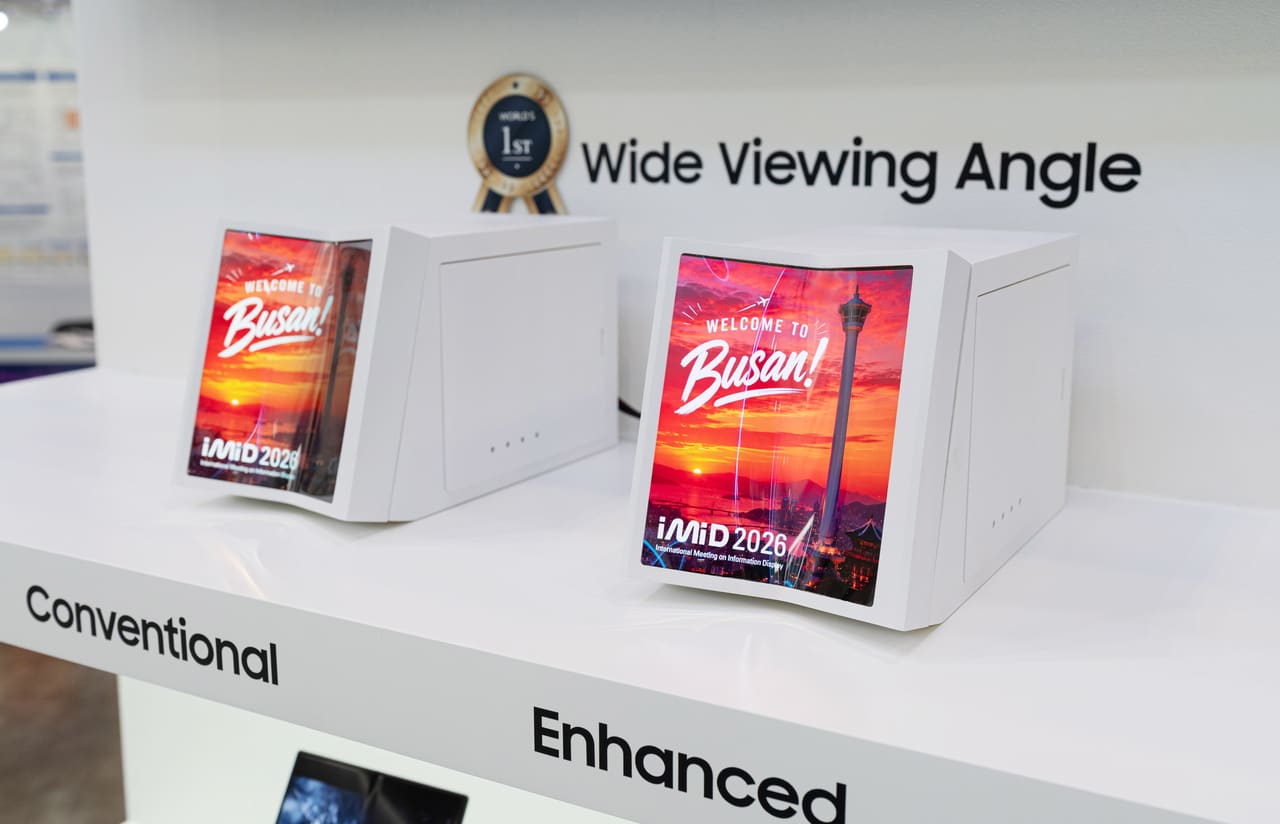
Samsung Display introduced a new OLED technology on Wednesday that tackles one of the most visible weaknesses in foldable smartphones: the brightness drop around the crease. The 7.6-inch "Wide View" display, unveiled at IMID 2026 in Busan, addresses a problem that has plagued every commercial foldable to date.
In existing foldable devices, the curved sections near the hinge crease display at roughly 40 percent of the brightness seen on flat portions of the screen. That gap is immediately noticeable when watching video or reading text that spans the fold. Samsung Display's solution aims to equalize brightness across the entire surface, including the stressed areas where the screen bends.
The company did not disclose the specific engineering changes behind Wide View, but the technology represents a direct response to user feedback and review criticism that has followed foldables since their commercial launch. Brightness uniformity has been a recurring complaint, particularly in outdoor use and high-contrast content.
Beyond Foldables
Samsung Display also presented a larger iteration of its stretchable display technology at the event. Stretchable screens can expand and contract without breaking, a capability that opens design possibilities for wearables, automotive interiors, and industrial applications where rigid or even flexible panels fall short.
The company showcased additional panels tailored for AI-powered devices and next-generation vehicles, though it provided limited technical detail on those products. The automotive panels likely target the growing demand for dashboard displays that integrate AI assistants, real-time navigation overlays, and driver-monitoring systems.
Asia's OLED Race
The announcement comes as display makers across Korea, China, and Japan compete to secure design wins in premium smartphones, laptops, and automotive cockpits. Samsung Display remains the dominant supplier of OLED panels for foldable phones, shipping screens to its sibling Samsung Electronics as well as to competitors including Xiaomi, Oppo, and Honor.
Chinese panel makers BOE and Tianma have ramped up foldable OLED production over the past two years, applying pricing pressure on Samsung Display. BOE now supplies foldable panels to several Chinese brands and has been working to close the quality and durability gap with Samsung's offerings.
Wide View could help Samsung Display defend its technical lead, particularly if the brightness improvement translates into a tangible user experience advantage. Foldable phones remain a small but fast-growing segment, with shipments expected to exceed 20 million units globally in 2026, according to industry trackers.
What It Means for Devices
If Wide View reaches mass production, the first devices to carry the technology will likely be Samsung Electronics' Galaxy Z Fold lineup, expected to refresh in the second half of 2027. Other Android manufacturers that source displays from Samsung Display could adopt the technology in subsequent product cycles.
The brightness fix also has implications for foldable laptops and tablets, categories where screen size magnifies the visual impact of uneven brightness. Several PC makers have launched foldable laptops with OLED screens, but adoption has been limited by high prices and concerns about durability and image quality.
Samsung Display has not announced a production timeline or named commercial partners for Wide View. The technology is still in the demonstration phase, and the company will need to prove it can manufacture the panels at scale without yield or cost penalties that would undermine foldables' already steep pricing.
RELATED STORIES
LG Display Unveils Mask-Free OLED Tech That Boosts Brightness and Lifespan
Cheng Wei-Lun · 3 min

LG Electronics Logs Record Appliance Subscription Revenue in First Half
Cheng Wei-Lun · 3 min
Samsung Fold8's Wider Aspect Ratio Pulls New Buyers into Foldable Market
Jun-ho Seo · 3 min

Apple Pushes for 20% Price Cut on iPhone 18 OLED Panels Despite Higher Material Costs
Cheng Wei-Lun · 3 min
Spot something wrong? Email editor@briefasia.com. We log every correction publicly.