Technology · Dev
LG Display Unveils Mask-Free OLED Tech That Boosts Brightness and Lifespan
Korean panel maker's Flipp technology eliminates fine metal masks in production, promising more efficient displays on large-format substrates
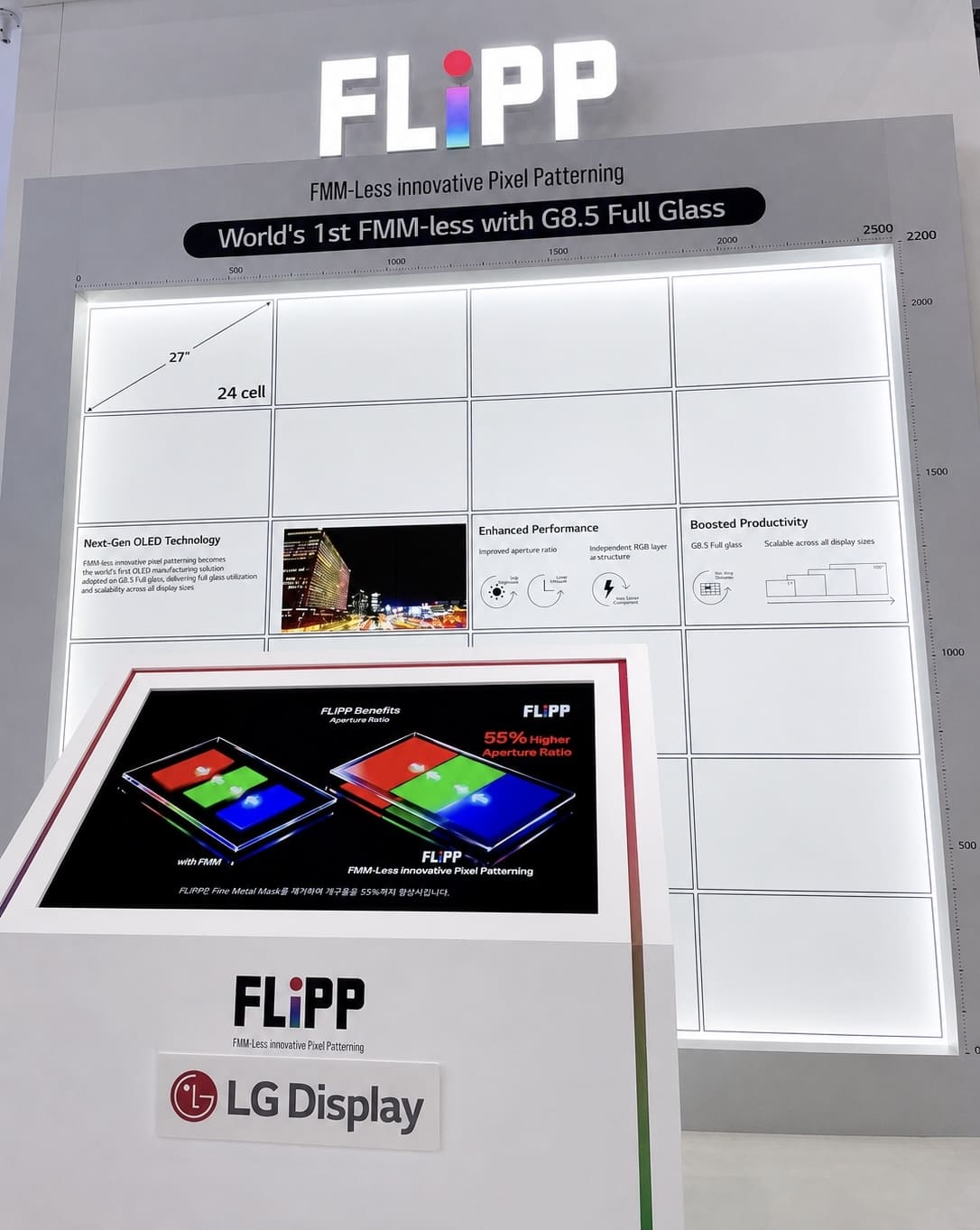
KEY TAKEAWAYS
- ·LG Display introduced Flipp, a mask-free OLED production method on full 8.5-generation glass substrates, delivering brighter panels with longer lifespans and lower power consumption.
- ·The technology eliminates fine metal masks, a costly and yield-limiting component in traditional OLED manufacturing, potentially reducing per-panel costs and accelerating production.
- ·The announcement intensifies competition in Asia's OLED supply chain as Chinese panel makers invest heavily, with commercial deployment timelines not yet disclosed by LG Display.
A Manufacturing Shift in Seoul
LG Display introduced a production method this week that removes one of the most constraining elements in OLED manufacturing: the fine metal mask used to deposit red, green, and blue sub-pixels. The Korean panel maker announced Flipp, short for FMM-less innovative pixel patterning, at IMID 2026, the display industry conference held in Seoul. The technology marks the first time a manufacturer has produced organic light-emitting diode panels on a full 8.5-generation glass substrate without relying on shadow masks, according to LG Display.
Fine metal masks have long served as stencils in OLED production, guiding the deposition of organic materials onto glass. They are precise but fragile, expensive to produce, and difficult to scale. Eliminating them opens the door to larger substrates, higher yields, and new performance characteristics that the industry has pursued for years.
What Flipp Changes on the Factory Floor
The new process replaces mask-based deposition with an alternative patterning method that LG Display has not fully detailed in public materials. What the company has disclosed is the outcome: displays that deliver higher brightness, consume less power, and offer longer operational lifespans compared to panels made with conventional fine metal masks.
The shift to 8.5-generation substrates is significant. Larger glass sheets allow manufacturers to cut more panels per production run, improving economies of scale. Fine metal masks become harder to handle as substrate size increases, which is why most OLED production for televisions and monitors has remained on smaller generations or relied on white OLED architectures that sidestep RGB patterning entirely. Flipp removes that constraint.
LG Display has not announced commercial deployment timelines or named customers, but the unveiling at IMID signals that the technology has moved beyond the lab. The conference, organized by the Korean Information Display Society, typically serves as a venue for manufacturers to preview production-ready innovations rather than early-stage research.
Asia's OLED Race Intensifies
The announcement arrives as competition in the OLED supply chain tightens across Northeast Asia. Samsung Display dominates small and medium-sized OLED panels for smartphones and tablets, while LG Display leads in large-format OLED for televisions. Both companies are racing to reduce costs and improve performance as Chinese panel makers, including BOE and CSOT, invest heavily in OLED capacity and close the technology gap.
Mask-free production could shift the cost structure. Fine metal masks represent a recurring expense in OLED manufacturing, and their precision limits yield rates. By removing them, LG Display may be able to lower per-panel costs and accelerate production cycles, two variables that matter in a market where pricing pressure from Chinese competitors has squeezed margins.
The technology also has implications for device makers. Brighter displays with lower power consumption are priorities for laptop manufacturers, monitor brands, and automotive suppliers, all of which are expanding their use of OLED. Longer lifespan addresses one of the persistent concerns around OLED adoption in commercial and professional applications, where burn-in and degradation remain considerations.
What Comes Next
LG Display has not disclosed which product categories will be the first to incorporate Flipp-based panels. The 8.5-generation substrate size suggests a focus on monitors, laptops, and mid-sized displays rather than smartphones or large televisions, though the company's existing OLED TV production uses different architectures and could remain separate.
The timing of the announcement, midway through 2026, positions LG Display to begin volume production in the coming quarters if the technology proves stable at scale. The company has previously introduced manufacturing innovations at IMID that reached mass production within 12 to 18 months.
For the broader display industry, Flipp represents a test case for alternative patterning methods. If LG Display can demonstrate reliable yields and cost advantages, other panel makers will face pressure to develop or license similar approaches. The fine metal mask, a fixture of OLED manufacturing for two decades, may be on its way out.
RELATED STORIES
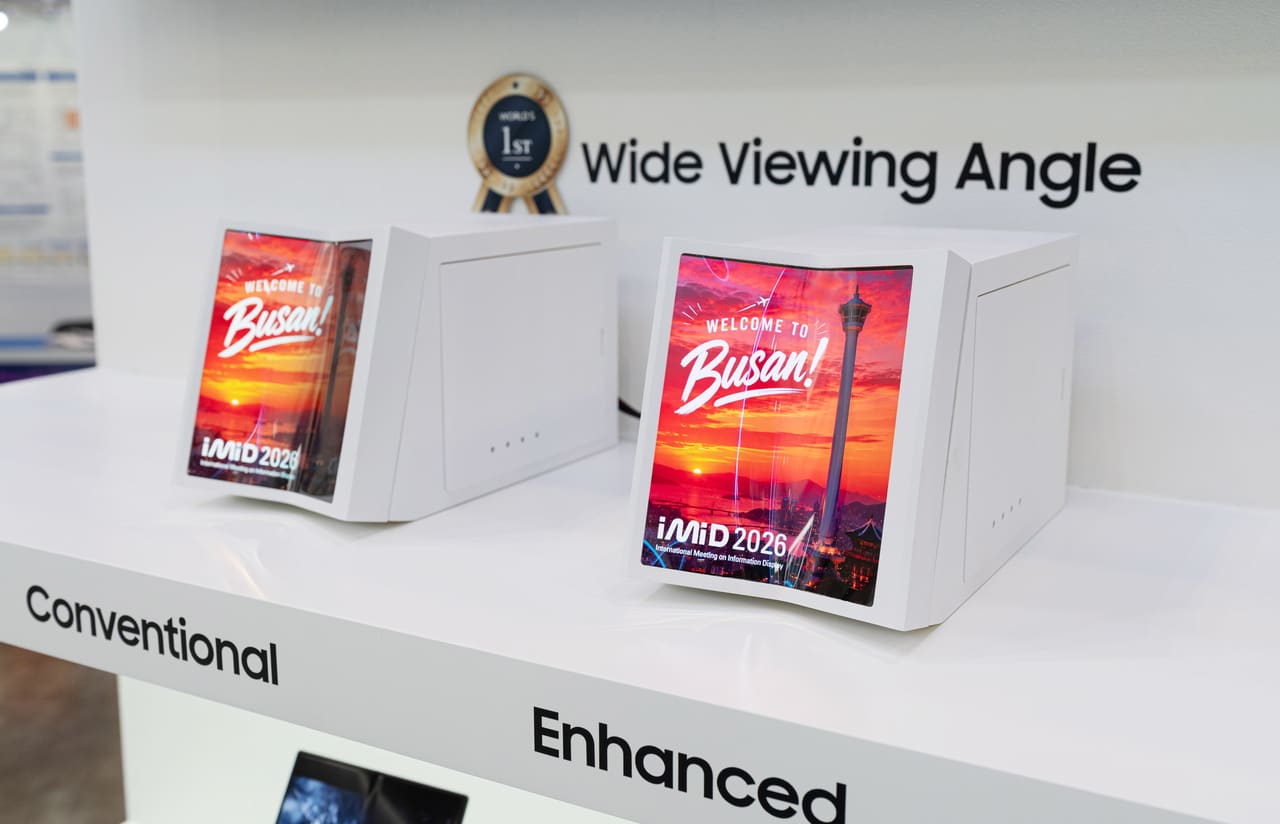
Samsung Display Unveils Technology to Fix Brightness Drop in Foldable Screens
Cheng Wei-Lun · 2 min

LG Electronics Logs Record Appliance Subscription Revenue in First Half
Cheng Wei-Lun · 3 min
SK Keyfoundry Commits $64 Million to Expand 8-Inch Wafer Capacity
Cheng Wei-Lun · 3 min
Samsung Eyes R&D Facility Conversion to Boost Foundry Output
Cheng Wei-Lun · 2 min
Spot something wrong? Email editor@briefasia.com. We log every correction publicly.