Sustainability · Nature
Power Win Taiwan Posts First-Half Profit Exceeding Full 2025 on Battery Recycling Boom
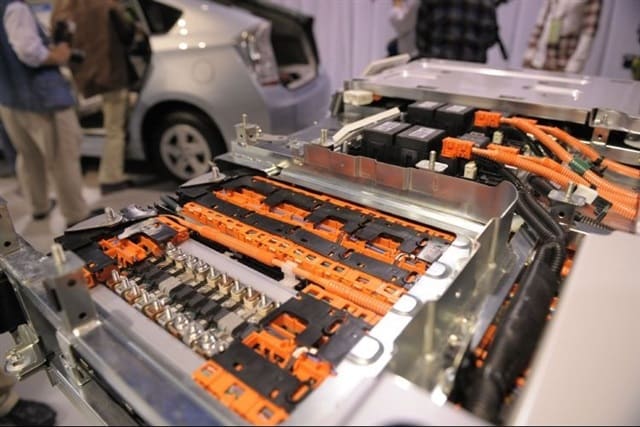
Taiwan's largest waste battery processor sees recycling volumes surge eightfold as EV adoption accelerates and metal prices recover across Asia.
KEY TAKEAWAYS
- ·Power Win Taiwan's first-half 2026 net profit surpassed its entire 2025 earnings, driven by an eightfold increase in battery recycling volumes and recovering lithium, cobalt, and nickel prices.
- ·The company processes spent EV batteries from Taiwan and regional imports, benefiting from government regulations requiring manufacturers to fund end-of-life recycling programs across Asia.
- ·Profitability depends on sustained EV adoption and stable metal prices, with competition rising as battery makers build closed-loop recycling systems and regional capacity expands faster than current waste volumes.
Recycling Revenue Outpaces Forecast
Power Win Taiwan, the island's largest waste battery processor, reported first-half 2026 net profit that exceeded the company's full-year 2025 earnings, according to the company. The surge comes as electric vehicle adoption across Asia drives demand for battery recycling services while recovering commodity prices lift the value of extracted materials.
The company processed an eightfold increase in battery recycling volumes during the first six months of 2026 compared to the same period last year. Power Win extracts lithium, cobalt, nickel, and other metals from spent EV batteries, selling the recovered materials to battery manufacturers and metals traders across the region.
Taiwan's position as a hub for electronics manufacturing and its proximity to major EV markets in China, Japan, and South Korea has positioned Power Win to capture growing recycling flows. The company operates processing facilities in northern Taiwan with capacity to handle batteries from passenger vehicles, commercial fleets, and energy storage systems.
Metal Prices Amplify Margins
Recovered metal prices have climbed steadily through 2026, amplifying revenue from each ton of battery material processed. Lithium carbonate, a key component in lithium-ion batteries, has rebounded from multi-year lows in late 2025 as supply-demand dynamics tightened. Cobalt and nickel prices have followed similar trajectories, driven by persistent demand from battery makers expanding production capacity.
Power Win's revenue model ties directly to commodity markets. The company sells extracted metals at spot or short-term contract prices, meaning profit margins expand when metal prices rise. The first-half performance suggests the company benefited from both volume growth and favorable pricing conditions.
The battery recycling sector in Asia has attracted significant capital over the past two years. Governments in Taiwan, South Korea, and Japan have introduced regulations requiring battery manufacturers to fund end-of-life recycling programs, creating stable feedstock supplies for processors like Power Win. China's battery recycling industry, already the world's largest by volume, continues to expand as the country's EV fleet ages and requires battery replacements.
Regional Capacity Race
Battery recycling capacity across Asia is expanding faster than waste volumes currently available, setting up potential competition for feedstock in coming years. South Korean firms including Ecobat Korea and SungEel HiTech have announced capacity expansions, while Chinese players like GEM and Brunp Recycling dominate the mainland market.
Power Win's first-half results suggest the company secured sufficient battery supply to run facilities at high utilization rates. The company sources spent batteries from Taiwanese automotive workshops, EV fleet operators, and imports from regional partners. Taiwan's relatively small domestic EV market means Power Win relies on cross-border battery flows to maintain volume growth.
The profitability surge also reflects operational scale. Battery recycling requires significant upfront investment in hydrometallurgical or pyrometallurgical processing equipment. As volumes increase, fixed costs spread across more tons processed, improving unit economics. Power Win's ability to exceed full-year 2025 profit in just six months indicates the company has crossed an inflection point in operational efficiency.
Forward Supply Questions
The sustainability of Power Win's growth depends on two variables: continued EV adoption rates and metal price stability. Asia's EV sales have grown steadily, with China alone adding over 8 million plug-in vehicles in 2025. As these vehicles age, battery replacements and vehicle retirements will generate increasing waste streams through the end of the decade.
Metal prices, however, remain volatile. Lithium markets experienced sharp declines in 2023 and 2024 as supply from new mines in Australia and South America outpaced demand growth. If oversupply returns, Power Win's revenue per ton processed would decline, pressuring margins even if volumes continue rising.
Taiwan's battery recycling sector also faces competition from integrated battery manufacturers building their own closed-loop recycling systems. Contemporary Amperex Technology Co. Limited (CATL) and other major producers have announced plans to recycle batteries in-house, potentially reducing the volume of waste available to independent processors like Power Win.
Power Win has not disclosed specific revenue or profit figures for the first half of 2026, and the company does not provide forward guidance. The reported performance establishes the processor as a clear beneficiary of Asia's EV transition, but the durability of margin expansion will depend on how quickly recycling capacity additions absorb available battery waste and whether metal prices hold current levels through the second half of the year.
RELATED STORIES
Taiwan's Offshore Wind Pipeline Stalls as Tender Failures Threaten Supply Chain
Cheng Wei-Lun · 3 min
Taiwan Rehearses Digital Blackout Scenario Amid China Threat
Cheng Wei-Lun · 3 min

British Semiconductor Delegation Heads to SEMICON Taiwan Seeking Strategic Partnerships
Cheng Wei-Lun · 2 min
Foxconn's Foxtron Lands Mitsubishi EV Deal, Expands Taiwan Manufacturing Footprint
Cheng Wei-Lun · 5 min
Spot something wrong? Email editor@briefasia.com. We log every correction publicly.