Technology · Products
Foxconn's Foxtron Lands Mitsubishi EV Deal, Expands Taiwan Manufacturing Footprint
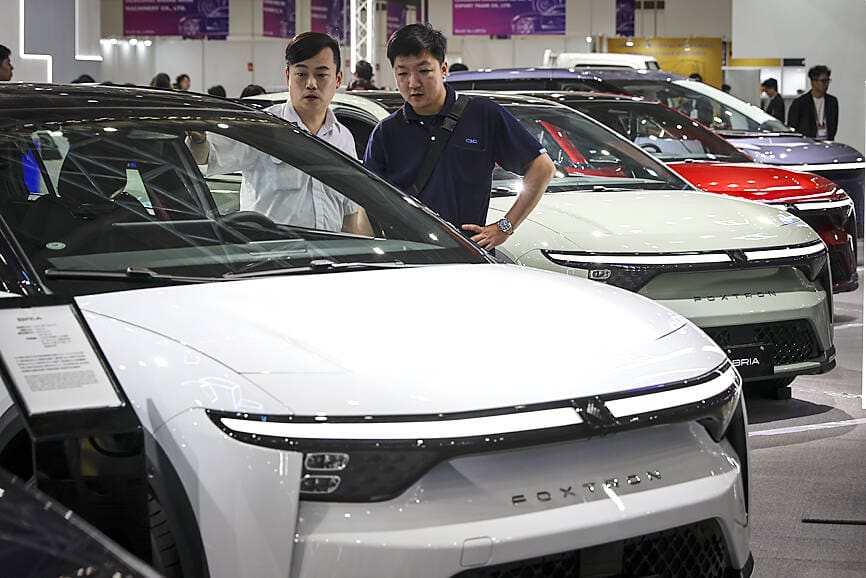
The Model B platform underpins a new battery electric vehicle for Australia and New Zealand, marking another step in Foxconn's pivot toward automotive production
KEY TAKEAWAYS
- ·Foxtron Vehicle Technologies is manufacturing the Mitsubishi ASX VR-e battery electric vehicle at Yulon's Sanyi Township plant in Taiwan for fourth-quarter launch in Australia and New Zealand.
- ·The vehicle uses Foxtron's Model B platform with Pininfarina design and Hon Hai interior components, marking Foxconn's first major automotive production contract with an established automaker.
- ·The partnership leverages Yulon's decades-long relationship with Mitsubishi Motors to enter right-hand-drive Oceania markets where Chinese EV brands have gained share.
A Taiwan Production Line for Oceania's EV Market
Mitsubishi Motors New Zealand announced plans to roll out the ASX VR-e battery electric vehicle in the fourth quarter of this year, a model built on technology from Foxtron Vehicle Technologies and styled by Italian design firm Pininfarina. The vehicle represents a tangible outcome of a June 2025 agreement between Mitsubishi Motors and Foxtron to supply right-hand-drive electric vehicles for Australia and New Zealand.
Foxtron, a joint venture between Hon Hai Precision Industry (Foxconn) and Yulon Motor, is producing the ASX VR-e at Yulon's Sanyi Township facility in Miaoli County. The plant, which has long handled Mitsubishi production under a decades-old partnership with Yulon, now serves as the manufacturing hub for this electric collaboration. Industry sources confirm the ASX VR-e uses Foxtron's Model B platform, a modular architecture the joint venture developed to support multiple vehicle types.
Foxconn's Automotive Ambitions Take Shape
Foxconn's push into electric vehicles reflects a broader strategic shift for the world's largest electronics contract manufacturer. Known internationally for assembling iPhones and consumer electronics, the Taiwanese giant has spent the past three years building automotive capabilities to offset slowing smartphone growth. The Foxtron venture, established with Yulon in 2020, gives Foxconn access to automotive engineering expertise and manufacturing capacity without the capital intensity of building new plants from scratch.
Hon Hai developed portions of the ASX VR-e interior, leveraging its electronics integration skills to handle infotainment systems, connectivity modules, and battery management components. The partnership with Mitsubishi Motors allows Foxconn to demonstrate its automotive credentials to potential clients in a market where legacy automakers remain cautious about outsourcing vehicle assembly to non-traditional suppliers.
Regional Production Strategy
Taiwan's role in electric vehicle manufacturing remains modest compared to its dominance in semiconductors, but partnerships like this one signal growing interest in leveraging the island's electronics supply chain for automotive applications. The Sanyi facility benefits from proximity to component suppliers in northern Taiwan and established logistics networks for vehicle export.
Mitsubishi Motors framed the collaboration as a way to accelerate its electrification timeline for Oceania markets without committing capital to dedicated production lines in Japan or Southeast Asia. Right-hand-drive vehicles require specific tooling and assembly adjustments, and the relatively small size of the Australian and New Zealand markets has historically made dedicated production uneconomical for many automakers.
Yulon highlighted its existing relationship with Mitsubishi Motors as a decisive factor in securing the original equipment manufacturer agreement. The Taiwanese automaker has assembled Mitsubishi vehicles under license for decades, providing local market knowledge and established dealer networks that reduce go-to-market friction for the new electric model.
Model B Platform as a Scalable Foundation
Foxtron's Model B platform is designed to accommodate multiple vehicle formats, from compact crossovers to larger SUVs, using a common battery pack architecture and electric drivetrain layout. The modular approach mirrors strategies employed by Volkswagen's MEB platform and General Motors' Ultium architecture, allowing manufacturers to spread development costs across multiple models and brands.
The ASX VR-e marks the first commercial deployment of the Model B platform for an international automaker. Foxtron has previously showcased concept vehicles built on the platform at industry events in Taipei, but securing a production contract with Mitsubishi Motors validates the technology for potential future clients.
Pininfarina's involvement in exterior design adds brand cachet to a vehicle that must compete with established electric crossovers from Tesla, BYD, and legacy automakers in Australia and New Zealand. The Italian design house has worked on electric vehicle projects for multiple clients, including the Pininfarina Battista hypercar and design consulting for Chinese startups.
Foxconn's Broader EV Ecosystem Play
Foxconn's automotive strategy extends beyond vehicle assembly. The company has invested in battery technology through partnerships with CATL and invested in electric vehicle startups including Fisker and Lordstown Motors. It has also established a software joint venture, MIH Consortium, to develop open-source automotive platforms and attract a network of suppliers and technology partners.
The Foxtron venture represents the manufacturing pillar of this strategy, providing a production base for clients who want to outsource vehicle assembly while retaining control over design and branding. Foxconn executives have compared the model to the company's role in consumer electronics, where it manufactures products for brands ranging from Apple to Sony without building its own consumer brand.
The Sanyi facility's output will test whether Foxconn can replicate its electronics manufacturing playbook in an industry with longer product cycles, stricter safety regulations, and more complex supply chains. Automotive manufacturing involves thousands of parts from hundreds of suppliers, with quality control standards that exceed consumer electronics.
Market Context and Competition
Australia and New Zealand represent a small but growing market for electric vehicles, with government incentives and charging infrastructure expansion driving adoption rates above 10 percent of new vehicle sales in 2025. The right-hand-drive requirement limits import options and creates opportunities for manufacturers willing to invest in localized production or adapt existing platforms.
Chinese automakers including BYD and Geely have gained market share in Oceania by offering competitively priced electric vehicles with features that match or exceed legacy brands. Mitsubishi Motors, which has lost ground in internal combustion engine segments, sees electrification as a way to regain relevance in a market where it once held strong brand loyalty.
The ASX VR-e pricing and specifications have not been disclosed, but the vehicle will need to compete with models in the compact crossover segment where Tesla's Model Y and BYD's Atto 3 have established strong positions. Mitsubishi Motors' dealer network and brand recognition in rural areas could provide an advantage over newer entrants.
Production Timeline and Scale
Fourth-quarter availability suggests Mitsubishi Motors aims to capture year-end sales momentum and position the ASX VR-e for the 2027 model year in Oceania markets. Initial production volumes will likely remain modest as the company gauges market response and works through any manufacturing challenges associated with a new platform and supply chain.
The Sanyi facility has capacity to scale production if demand warrants, though Foxtron and Mitsubishi Motors have not disclosed volume targets. The partnership agreement signed in June 2025 contemplated multiple vehicle models over several years, suggesting the ASX VR-e could be the first of several collaborations using the Model B platform.
Foxconn's ability to deliver quality vehicles on schedule will influence whether other automakers consider similar partnerships. The company faces skepticism from industry observers who question whether electronics manufacturing expertise translates to automotive production, where safety, durability, and regulatory compliance create higher barriers to entry than consumer devices.
RELATED STORIES
Foxconn Plots Four-Phase Strategy for Low Earth Orbit Satellite Operations
Cheng Wei-Lun · 3 min
TSMC Posts Record Monthly Revenue as AI Chip Demand Accelerates
Cheng Wei-Lun · 2 min

Asia's Memory Makers Shift Focus as DRAM Margins Challenge HBM Dominance
Cheng Wei-Lun · 4 min

British Semiconductor Delegation Heads to SEMICON Taiwan Seeking Strategic Partnerships
Cheng Wei-Lun · 2 min
Spot something wrong? Email editor@briefasia.com. We log every correction publicly.