Asia · Trade
Vietnam's Pepper Exports Cross $1 Billion as U.S. and China Demand Surges
Shipments jumped 16% in seven months, but industry leaders warn the growth model built on volume and low prices has reached its limit.
KEY TAKEAWAYS
- ·Vietnam exported $1.08 billion of pepper in seven months, up 10.1% year-on-year, with shipment volumes reaching 168,429 tonnes.
- ·The U.S. purchased 40,712 tonnes, up 31.8%, while China bought 17,110 tonnes, a 55.8% surge, as Asia took 45.6% of total exports.
- ·Industry leaders warn that land scarcity and stricter EU rules force a pivot from volume growth to quality, traceability, and sustainability investments.
Export Value Climbs on Strong Asian and American Demand
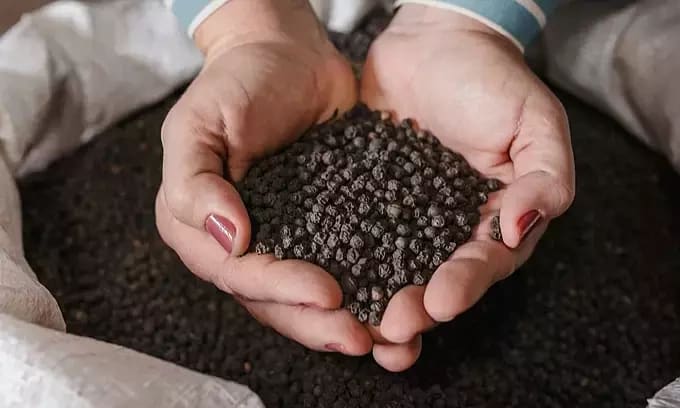
Vietnam exported $1.08 billion worth of pepper in the first seven months of 2026, according to the Vietnam Pepper and Spice Association. The figure represents a 10.1% increase compared to the same period last year, with shipment volumes reaching 168,429 tonnes, up 16.1% year-on-year.
Asia absorbed the largest share of Vietnamese pepper, importing 76,845 tonnes during the period, a 12.3% gain that accounted for 45.6% of total exports. American buyers increased purchases by 34% to 45,470 tonnes, while European markets took in 36,140 tonnes, up 7.5%. African importers bought 9,964 tonnes, marking a 10% rise.
The United States remained the single largest destination, purchasing 40,712 tonnes, a 31.8% jump from the prior year. China followed with 17,110 tonnes, a sharp 55.8% increase. Thailand's imports surged 88.7% to 6,913 tonnes, and the Netherlands bought 6,136 tonnes, up 48.8%. Exports to Germany and India, however, fell 18.1% and 26.4%, respectively.
Reverse Flow: Vietnamese Importers Turn to Cambodia
While Vietnam ships pepper worldwide, its own companies imported 48,812 tonnes valued at $279.3 million during the seven-month window, up 55.1% in volume and 43% in value year-on-year. Cambodia supplied the bulk of those inbound shipments, with 25,413 tonnes arriving from the neighboring country, a 256.9% spike that represented 52.1% of all pepper imports.
The reverse trade highlights tight domestic supply and rising prices that make Cambodian pepper economically attractive for Vietnamese processors and re-exporters.
Spice Siblings Lose Momentum
Other spices in Vietnam's export basket showed weaker performance. Cinnamon shipments totaled 73,085 tonnes worth $186.5 million over January through July, down 1% in volume and 0.6% in value. Star anise exports fell more sharply, declining 9.1% in volume to 8,434 tonnes and 6.2% in value to $33.4 million.
The divergence underscores different demand cycles across global spice markets, with pepper benefiting from sustained consumption growth in major economies while cinnamon and star anise face softer buyer appetite.
Quality Gains Show in Fewer EU Alerts
Regulatory compliance improved measurably during the period. EU warnings tied to Vietnamese pepper and spices dropped from 34 cases in the first half of 2025 to 22 in the corresponding stretch of 2026. Alerts specific to pepper fell from five to three.
Le Viet Anh, chairman of the Vietnam Pepper and Spice Association, noted the decline reflects tangible progress in pesticide residue management, quality control systems, and compliance awareness among farmers and exporters. The improvement comes as European buyers tighten scrutiny under evolving food safety standards.
Land Constraints Force Strategic Pivot
After more than two decades as the world's leading pepper exporter, Vietnam faces a structural ceiling. Anh emphasized that the country has almost no room left to expand planted acreage. Land scarcity intensifies as competing crops vie for the same soil, and new regulatory frameworks, including the European Union Deforestation Regulation, impose stricter sourcing requirements.
The traditional growth levers of higher output and competitive pricing no longer offer a viable path forward. Instead, the industry must reorient around quality, branding, and value addition. The same strategic shift applies to cinnamon, star anise, and other spice categories, Anh said.
Traceability and Green Standards Take Center Stage
The association called on companies to increase investment in certified raw material zones, deepen partnerships with farmers, tighten pesticide residue controls, and build comprehensive traceability systems. Meeting the technical standards demanded by importing markets is no longer optional.
At the same time, exporters need to anticipate the green consumption wave by adopting regenerative agriculture practices, circular economy models, lower carbon footprints, and smarter water management. Those capabilities will determine which Vietnamese exporters retain access to premium markets as sustainability benchmarks become purchasing prerequisites.
Anh expects pepper prices to remain stable in the near term, barring major geopolitical disruptions. U.S.-bound shipments, which drove much of the growth in the first seven months, should hold steady over the medium and long term, providing a revenue anchor as the industry retools its approach.
RELATED STORIES
Sojitz Expands Vietnamese Beef Operations With Japanese Hygiene Standards
Cheng Wei-Lun · 3 min
Vietnam's Loc Troi Exports Rice Seed Technology to Myanmar
Siti Nuraini · 3 min
Vietnam Textile Exports Climb to $27 Billion as Upstream Production Gains Momentum
Priyanka V. Rao · 3 min

Vietnam Pours Capital Into Laos as Vientiane Seeks Relief From Beijing Debt
Priyanka V. Rao · 4 min
Spot something wrong? Email editor@briefasia.com. We log every correction publicly.