Asia · Trade
Vietnam Pours Capital Into Laos as Vientiane Seeks Relief From Beijing Debt
Hanoi's investment in its neighbor jumped more than fourfold in early 2026, offering Vientiane an alternative funding channel amid mounting obligations to Chinese creditors.
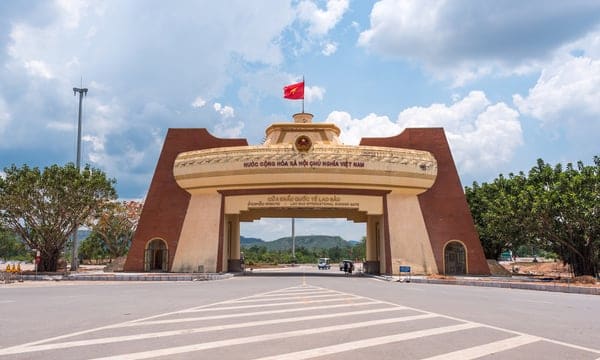
KEY TAKEAWAYS
- ·Vietnamese investment in Laos reached nearly $600 million in the first half of 2026, a 4.2-fold increase from the prior year, concentrated in mining, hydropower, and agriculture.
- ·Laos faces public debt of $16.4 billion, with China holding roughly $12.2 billion, or 65 percent of GDP, and annual debt service set to exceed $700 million by 2028.
- ·Vientiane is using Vietnamese capital as a hedge against Chinese dominance, targeting higher-value processing and diversification ahead of debt restructuring talks later this year.
A Sharp Turn in Cross-Border Capital
Hanoi deployed $582 million into Laos during the first quarter of 2026, a 4.2-fold increase from the same period a year earlier, according to Vietnam's Ministry of Foreign Affairs. By mid-year, Lao officials speaking at the VIETLAO Expo in Vientiane put the half-year total just below $600 million, maintaining the same multiple. Cumulative Vietnamese investment now sits at $6.6 billion spread across 289 registered projects, concentrated in mining, electricity generation, energy infrastructure, and commercial agriculture.
The growth rate is striking, but the context matters more. Laos is managing a debt burden that now exceeds its entire annual economic output, and Beijing holds the majority of that paper.
The Debt Position
Public debt in Laos reached $16.4 billion by the close of 2025, equivalent to 108 percent of GDP under IMF calculations. China accounts for roughly $12.2 billion of that total, or about 65 percent of GDP, making it the single largest bilateral creditor by a wide margin. Annual debt service is projected to exceed $700 million by 2028, a figure that will likely require negotiated relief from Beijing.
Vientiane returned to international bond markets in November 2025, raising $300 million in Singapore at an 11.25 percent coupon. The rate reflects investor caution over prior disputes involving hydropower collateral and limited transparency around Chinese debt deferral arrangements. China has granted partial deferrals, which provide short-term breathing room but leave the underlying obligation unresolved. A broader debt restructuring is expected before the end of 2026.
The new leadership installed after the 12th Party Congress in January formalized diversification and self-reliance as explicit policy objectives. Vientiane is not severing ties with Beijing, which would be structurally impossible given the scale of existing projects including the Laos-China Railway and China Southern Power Grid's controlling stake in the national grid. But the policy shift signals a deliberate effort to reduce single-source dependency.
Where Vietnamese Capital Goes
Vietnamese investment occupies a different part of the capital structure than Chinese financing. Hanoi's firms target mining rights, hydropower generation, energy distribution, and high-value agricultural processing. These are sectors where Vietnamese operators already have regional experience and where capital deployment tends to be faster and smaller in scale than the multi-billion-dollar rail and grid infrastructure that China has built over the past two decades.
China's footprint in Laos remains anchored in long-horizon, capital-intensive infrastructure that defines the physical economy: the national power grid, the railway connecting Vientiane to Kunming, and the associated logistics corridors. Those assets are not going anywhere, and Vietnamese investment is not designed to compete with them. Instead, Hanoi is filling gaps around Chinese infrastructure, providing capital for projects that can scale more quickly and generate revenue streams that do not require decade-long payback periods.
This division of labor serves Vientiane's interests. Lao officials at the July trade fair explicitly encouraged Vietnamese firms to invest in organic agriculture and deep processing, activities that add value before export rather than simply extracting raw commodities for shipment to third markets. That shift, if sustained, would diversify revenue sources and reduce reliance on the low-margin resource extraction that has characterized much of Laos's relationship with Chinese buyers.
Trade and Logistics
Vietnam-Laos trade turnover reached $1.07 billion in the first five months of 2026, with Vietnam exporting $293 million and importing $782 million. Both governments are targeting $4 billion in bilateral trade for the full year, with a stated goal of $10 billion by 2030.
The VIETLAO Expo in Vientiane drew more than 250 booths and 140 companies in July, a larger turnout than in previous years. Vietnamese trade officials used the event to call for stronger direct business links and improvements in cross-border logistics, including road upgrades, faster customs processing, and the removal of intermediaries that extract margins from cross-border flows.
The Hedge Function
Vietnam is not displacing China in Laos. The two economies are not competing for the same assets or occupying the same time horizons. What Vietnam offers instead is a hedge: additional capital sources, additional political cover, and a relationship built on decades of party-to-party trust that no amount of Chinese financing can replicate.
That trust matters. Hanoi and Vientiane share a history of ideological alignment and security cooperation that predates the current wave of Chinese infrastructure investment. For Vientiane, drawing Vietnamese capital into the economy provides legitimacy and balance, particularly as Beijing's dominance in infrastructure creates long-term dependency risks.
Russia has also emerged as a secondary hedge, with seven wide-ranging agreements signed in Moscow since the start of 2026, including a defense cooperation roadmap. Neither Vietnam nor Russia can substitute for China's role in Lao infrastructure, but both offer Vientiane additional room to maneuver.
What Comes Next
The real test of Laos's diversification strategy will come in the debt restructuring talks scheduled for later this year. If Vientiane can renegotiate its Chinese obligations while continuing to scale Vietnamese investment, it may be able to avoid the concession of state assets to Chinese buyers as a stopgap for liquidity gaps. That risk is real, particularly in mining concessions and state-owned enterprises, where asset-for-debt swaps have become a recurring pattern across the region.
Vietnamese investment, if deployed at scale and sustained over time, could provide Vientiane with the leverage it needs to negotiate from a position of greater strength. For Hanoi, the opportunity is straightforward: secure access to natural resources, expand export markets, and maintain influence in a neighbor that sits at the intersection of Chinese, Thai, and Vietnamese interests.
The investment surge is a signal that Vientiane is actively managing its most consequential external relationship by seeking a counterweight. Vietnam, for reasons of history, ideology, and geography, is the most obvious partner for that role.
RELATED STORIES

Thailand Faces Two Decades in Middle-Income Trap Without Workforce Upgrade
Priyanka V. Rao · 3 min
AEON Vietnam Breaks Ground on New Shopping Centre in Phủ Lý
Tran Quoc Bao · 3 min
Shein Retreats From Vietnam Warehouse Bet as China Manufacturing Proves Irreplaceable
Cheng Wei-Lun · 4 min
Sojitz Expands Vietnamese Beef Operations With Japanese Hygiene Standards
Cheng Wei-Lun · 3 min
Spot something wrong? Email editor@briefasia.com. We log every correction publicly.