Finance · Markets
Pop Mart Warns It Will Miss 2026 Sales Target as Labubu Boom Fades
The collectible toy maker faces a sharp reversal after its blockbuster product normalizes, with overseas markets showing persistent weakness and second-quarter revenue down an estimated 10 percent.
KEY TAKEAWAYS
- ·Pop Mart shares dropped 8.9 percent after the company said it will likely miss its 20 percent sales-growth target for 2026, with second-quarter revenue estimated down 10 percent.
- ·Labubu toy sales have normalized after a viral surge in 2025, and overseas markets posted year-on-year declines in the first half with inventory accumulating for over six months.
- ·The company announced a 2 billion to 5 billion yuan share buyback over six months and plans to launch new Labubu products despite analyst forecasts of a 35 to 40 percent third-quarter revenue decline.
Reversal of Fortune
Pop Mart International Group shares dropped 8.9 percent in Hong Kong trading on August 21, the steepest intraday decline since late March, after chief executive Wang Ning told investors the Beijing-based company will likely fail to achieve its 2026 sales-growth target of 20 percent. The warning followed weaker-than-expected revenue and profit figures for the first half, with second-quarter sales estimated to have contracted roughly 10 percent year-on-year.
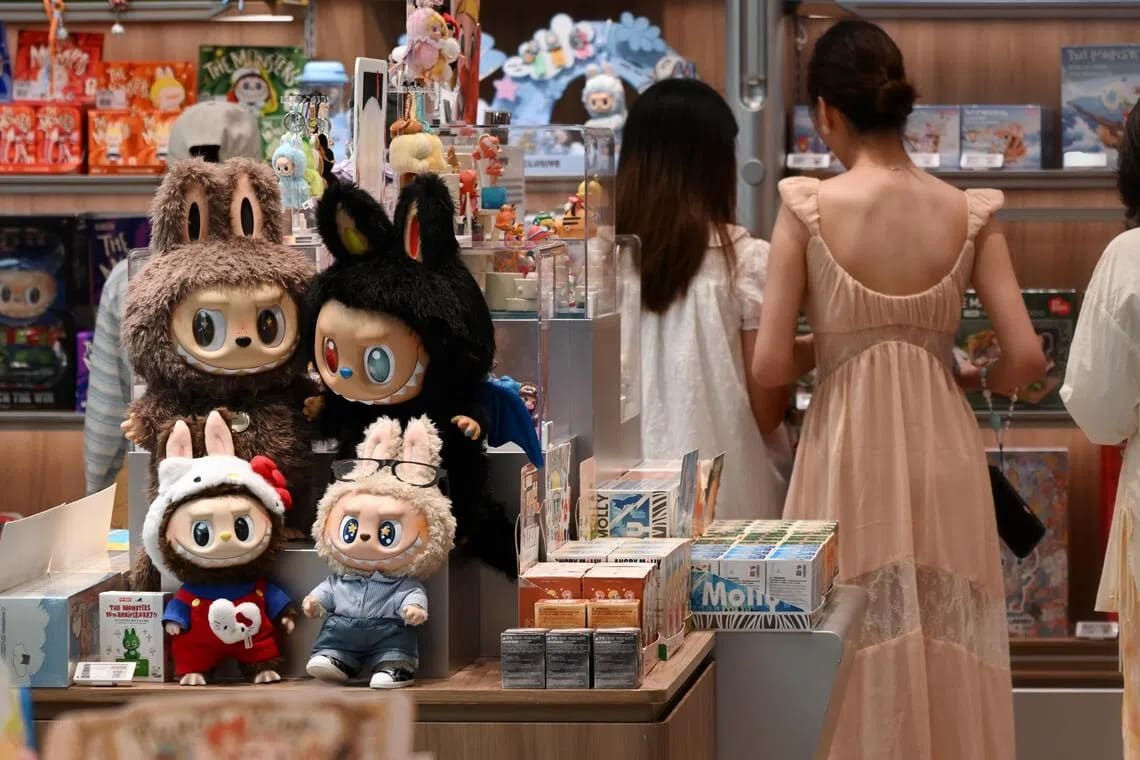
The admission marks a stark shift for the collectible toy maker, which rode a viral wave in 2025 driven by its Labubu character, a furry creature with exaggerated teeth that became a social-media phenomenon across Asia. Sales of the product line have now returned to more typical levels, exposing the company's struggle to replicate that success or build a diversified entertainment franchise.
Overseas Weakness Persists
Wang said overseas markets posted year-on-year declines in the first half, a troubling sign for a company that had positioned international expansion as a core pillar of growth. Chief operating officer Si De noted that inventory has been accumulating for more than six months, suggesting demand has cooled faster than the company anticipated.
Analysts at Jefferies, led by Anne Ling, pointed to continued softness in overseas markets as evidence of a more difficult period ahead. Citigroup analysts, including Lydia Lin, forecast full-year 2026 revenue to decline 8 percent and cautioned that visibility on recovery remains limited.
Morgan Stanley took a more bearish stance, cutting its second-half sales estimate and projecting third-quarter revenue could fall 35 to 40 percent against a tough comparison base from the 2025 Labubu surge. The bank expects a roughly 10 percent decline in the fourth quarter.
New Products and Buyback Signal
Despite the headwinds, Pop Mart said it will continue launching new Labubu products to support the franchise. The company also announced a share buyback program ranging from 2 billion to 5 billion yuan over the next six months, a move interpreted as management's effort to signal confidence in longer-term prospects even as near-term growth stalls.
The buyback, equivalent to approximately 378 million to 944 million Singapore dollars, comes as the Hong Kong-listed stock faces renewed scrutiny over whether the company can sustain momentum beyond a single hit product. Pop Mart has yet to demonstrate it can build the kind of durable intellectual property ecosystem that supports major entertainment companies in Japan, South Korea, and the United States.
Asia's Collectible Toy Market Under Pressure
The reversal at Pop Mart reflects broader challenges in Asia's collectible toy segment, where consumer spending has softened amid economic uncertainty in key markets including China, Southeast Asia, and parts of Northeast Asia. The company's model, which relies on limited-edition drops and blind-box formats to drive repeat purchases, proved highly effective during the pandemic and immediate post-pandemic period but now faces fatigue as discretionary budgets tighten.
For investors and competitors watching the space, Pop Mart's stumble offers a case study in the risks of relying on viral product cycles without underlying franchise strength. The company's ability to stabilize overseas sales and demonstrate product diversification will be closely monitored in the coming quarters as it navigates the September period, when comparisons to last year's peak become most challenging.
RELATED STORIES
Asian Equities Rise as US Treasury Buyback Plan Faces Market Doubt
Priyanka V. Rao · 4 min

Hong Kong Gold Futures Hit Record Delivery as Sanctions Drive Demand
Cheng Wei-Lun · 4 min

Hong Kong Pushes Carried Interest Tax Break as Singapore Exempts Fund Manager Profits
Priyanka V. Rao · 3 min

Asian Stocks Rise Amid Doubts Over US Treasury Bond Buyback Plan
Priyanka V. Rao · 3 min
Spot something wrong? Email editor@briefasia.com. We log every correction publicly.