Asia · Business
Pharmaceutical Companies Deploy Unconventional Marketing Tactics to Reach Chinese Weight-Loss Consumers
From metro stations to food delivery apps, drugmakers are finding creative pathways to connect obesity treatments with China's growing health-conscious market
KEY TAKEAWAYS
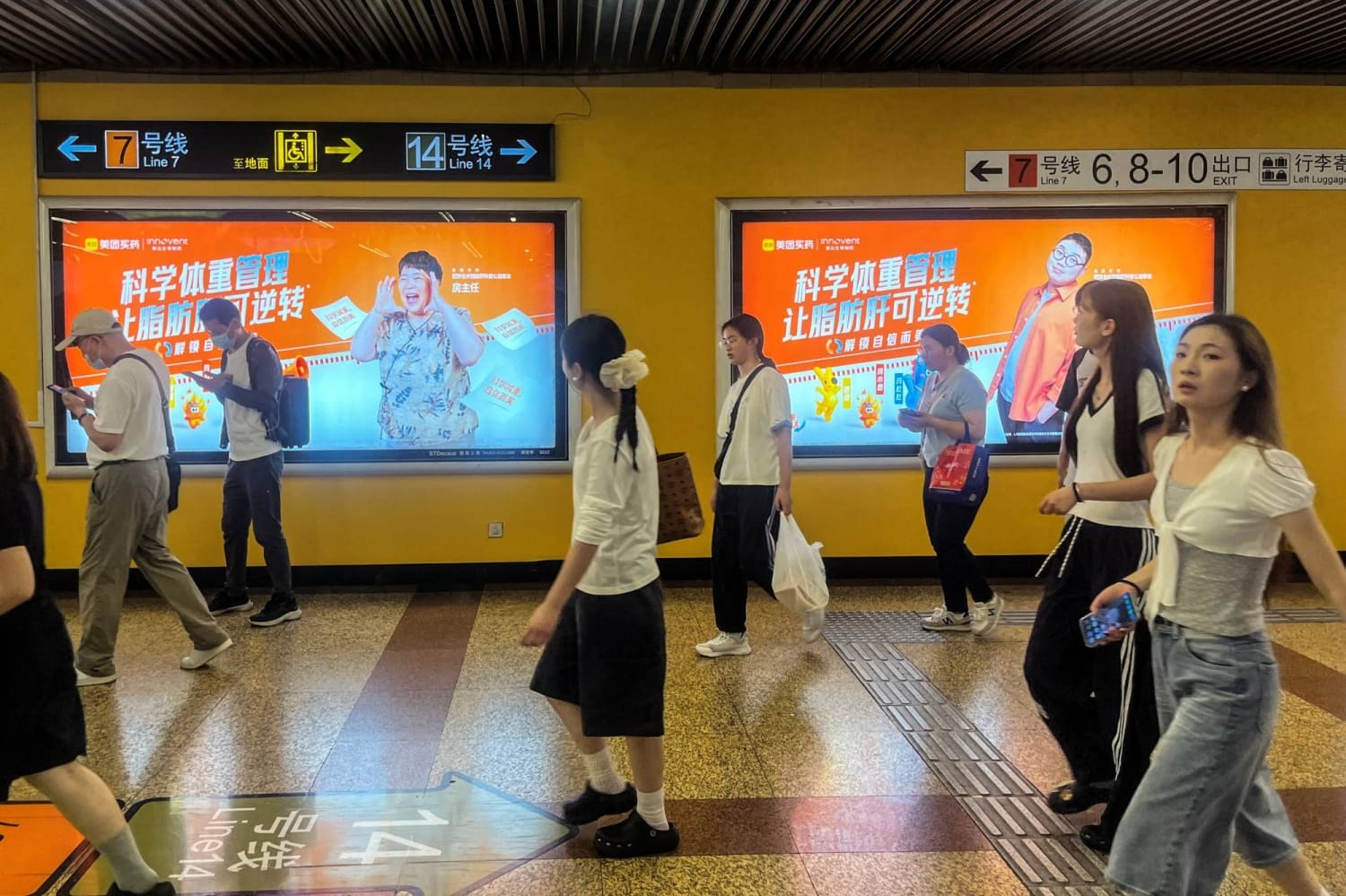
- ·Innovent Biologics and Meituan have placed co-located advertisements in Shanghai metro stations, targeting urban consumers with weight-management messaging.
- ·Pharmaceutical companies are using transit infrastructure and food delivery platforms to build brand familiarity under China's strict drug advertising regulations.
- ·The campaigns reflect rising obesity rates in Chinese cities and growing commercial interest in the country's weight-loss treatment market.
A New Front in China's Weight-Loss Market
Shanghai commuters navigating the city's metro system this summer encountered an unusual pairing: advertisements from Innovent Biologics, a domestic biopharmaceutical company, displayed alongside promotions from Meituan, China's dominant food delivery platform. The juxtaposition reflects a broader shift in how pharmaceutical companies are positioning obesity treatments in the world's second-largest economy.
The marketing push comes as China confronts rising obesity rates that mirror consumption patterns in more developed Asian markets. Urban professionals in Beijing, Shanghai, and Shenzhen represent a demographic increasingly willing to spend on health interventions, creating opportunities for both multinational drugmakers and domestic competitors.
Beyond Traditional Channels
Pharmaceutical advertising in China operates under tighter regulatory constraints than consumer products, pushing companies toward indirect approaches. Transit advertising offers a workaround: high-frequency exposure in environments where health messaging blends into the urban landscape. Metro stations in tier-one cities see daily foot traffic in the millions, making them valuable real estate for brands seeking sustained visibility without the hard sell of television commercials.
Innovent's presence in Shanghai's subway system signals the company's ambition to compete with established Western players in the weight-management space. The Suzhou-based firm has built its portfolio around biologics for metabolic conditions, positioning itself as a domestic alternative as Beijing encourages self-sufficiency in pharmaceutical manufacturing.
The partnership dynamic with Meituan adds another layer. Food delivery platforms have become lifestyle infrastructure in Chinese cities, with Meituan alone processing tens of millions of orders daily. Co-locating pharmaceutical messaging with food service brands creates an implicit narrative loop: consumption, consequence, and remedy, all within the same visual field.
The Obesity Opportunity in Asia
China's weight-management market has grown rapidly over the past five years, driven by rising disposable incomes and changing beauty standards that increasingly favor slimness. The shift presents both public health challenges and commercial opportunities. Pharmaceutical companies entering this space must navigate cultural sensitivities around body image while complying with advertising rules that restrict direct claims about weight loss.
International drugmakers have already established footholds through hospital channels and specialist clinics. Domestic firms like Innovent are now competing by building brand recognition in public spaces, a strategy that builds familiarity before patients ever reach a consultation room.
The stealth aspect of this marketing lies in its indirection. Rather than explicit product pitches, the campaigns establish presence and association. A commuter seeing an Innovent billboard daily for months may not consciously register the brand, but the name becomes familiar when a doctor mentions treatment options.
Regulatory Terrain and Market Access
China's National Medical Products Administration maintains strict oversight of pharmaceutical promotion, particularly for prescription drugs. Companies must thread the needle between building awareness and avoiding claims that trigger regulatory scrutiny. Metro advertising and digital partnerships offer a gray zone where brand visibility does not constitute medical advice.
Meituan's involvement points to the platform economy's growing role in health commerce. The company has expanded beyond food delivery into pharmacy services and wellness products, creating synergies with pharmaceutical partners. For drugmakers, access to Meituan's user data and delivery infrastructure offers distribution advantages that traditional retail cannot match.
The Shanghai metro campaigns represent a test case for how pharmaceutical marketing will evolve in China's largest cities. If successful, similar deployments will likely appear in Guangzhou, Chengdu, and other urban centers where obesity rates are climbing and healthcare spending is rising.
What Comes Next
The convergence of pharmaceutical advertising and consumer platforms reflects broader trends in Asian healthcare markets. As chronic disease prevalence grows across the region, companies are seeking earlier intervention points in the consumer journey. Public transit and food delivery apps offer touchpoints where health messaging can reach people in their daily routines, outside the clinical setting.
For China specifically, the next phase will depend on how regulators respond to these hybrid marketing models. If authorities tighten rules around pharmaceutical promotion in public spaces, companies may shift further toward digital channels and influencer partnerships. If the current approach proves acceptable, expect more drugmakers to follow Innovent's playbook.
The Shanghai metro billboards are more than advertisements. They are signals of a market in transition, where pharmaceutical companies are learning to speak the language of lifestyle brands while selling medical interventions. In a country where obesity was rare a generation ago, the very presence of weight-loss drug advertising marks a significant shift in public health discourse.
RELATED STORIES

Thailand Urged to Tie EV Investment to Local Supply Chain Development
Priyanka V. Rao · 3 min
China's Housing Downturn Enters Sixth Year With No Floor in Sight
Cheng Wei-Lun · 4 min
China's $1.2 Trillion Trade Surplus Threatens Indonesian Rupiah and Industry
Rajesh K. Iyer · 3 min
China Orders Record Auto Recall Over Emergency Door Release Flaws
Cheng Wei-Lun · 3 min
Spot something wrong? Email editor@briefasia.com. We log every correction publicly.