Asia · Politics
China Orders Record Auto Recall Over Emergency Door Release Flaws
Nearly three million vehicles from Tesla, Xiaomi and nine other brands face mandatory safety fixes as Beijing tightens oversight of electric vehicle door systems ahead of 2027 design ban.
KEY TAKEAWAYS
- ·China has ordered 11 automakers including Tesla and Xiaomi to recall vehicles over emergency door-release flaws, with Tesla alone recalling 2.98 million units starting September 25.
- ·The action addresses concealed mechanical handles that may trap occupants after crashes when electrical systems fail, requiring warning labels and software updates across affected fleets.
- ·China will ban hidden door handles from 2027, forcing automakers to redesign vehicles for the world's largest EV market where electrics represent over 35 percent of new sales.
A Safety Mandate Spanning Three Million Vehicles
China's State Administration for Market Regulation has ordered eleven automakers to address critical safety deficiencies in emergency door-release mechanisms, triggering the country's most extensive automotive recall to date. The action, announced Friday, affects millions of electric vehicles and signals Beijing's heightened scrutiny of design choices that prioritize aesthetics over occupant safety during emergencies.
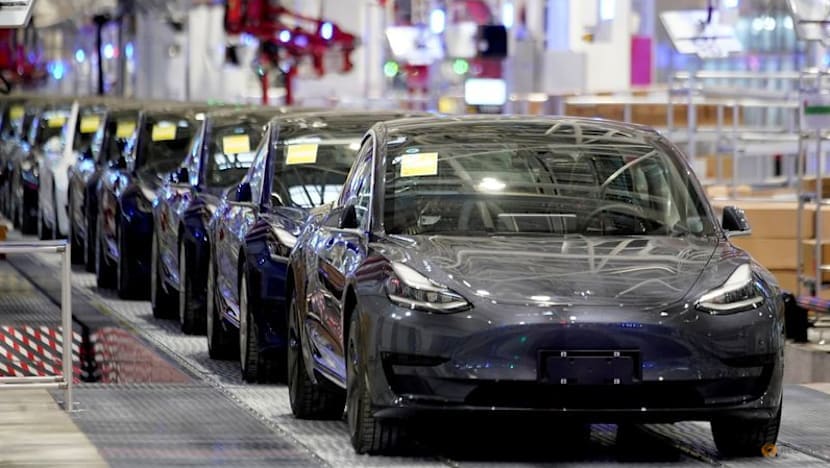
Tesla will recall 2.98 million vehicles across its Model 3, Model Y, Model S and Model X lines beginning September 25, according to the company's filing with the regulator. The affected vehicles include both imported units and those manufactured at the automaker's Shanghai facility. Xiaomi, Leapmotor, Xpeng, Zeekr and Lynk & Co are among the other brands facing their largest recalls on record.
The regulatory action centers on mechanical emergency door-release handles that may be difficult to locate or operate following severe collisions, particularly when electrical systems fail. For at least six brands involved, Friday's filings represent the largest safety interventions they have ever faced in the Chinese market.
Software and Stickers as Remedies
Nine of the eleven manufacturers will install warning labels at no cost to vehicle owners, clearly marking the location of emergency mechanical releases. Most companies are also deploying over-the-air software updates to supplement the physical labels.
Tesla's compliance plan includes both warning stickers and a software patch that automatically lowers vehicle windows after a collision is detected. The window-lowering function is designed to provide an alternative escape route when door mechanisms fail or become inaccessible, according to the regulator's statement.
The recalls are classified as mandatory product actions under Chinese law, requiring manufacturers to notify affected owners and implement fixes within specified timelines. The combination of physical labels and software updates reflects the dual challenge of addressing existing design shortcomings while vehicles remain in service.
The Hidden Handle Reckoning
China will become the first country to ban concealed door handles starting in 2027, a move that directly targets a design feature Tesla popularized and Chinese EV makers widely adopted. The flush-mounted handles, which retract into door panels to reduce aerodynamic drag and enhance vehicle aesthetics, can be opened via key fob, smartphone or touch-sensitive mechanisms under normal operating conditions.
Regulatory scrutiny has intensified in both China and the United States over concerns that these systems create life-threatening delays during emergencies. When electrical power is lost in a crash, occupants must locate and operate backup mechanical releases that are often tucked into door pockets or beneath armrests, positions that may be obscured by debris, darkness or panic.
The 2027 ban will require all new vehicles sold in China to feature externally visible, mechanically operated door handles that function independently of electrical systems. The regulation gives automakers a clear deadline to redesign door systems for the world's largest automotive market, where electric vehicles accounted for more than 35 percent of new passenger car sales in the first half of 2025.
Beijing's Broader EV Safety Push
The recall campaign arrives as Chinese regulators tighten oversight across the electric vehicle sector, where rapid innovation and intense price competition have raised questions about safety trade-offs. Automakers have introduced new battery chemistries, autonomous driving features and connectivity systems at an accelerating pace, prompting authorities to establish clearer standards for emerging technologies.
The door-handle action follows a pattern of targeted interventions on specific design elements that Beijing deems insufficiently protective. Earlier regulatory moves have addressed battery thermal management, autonomous system transparency and data security practices, reflecting a shift from broad industry encouragement to granular safety enforcement.
For global automakers, the recall underscores the operational complexity of serving the Chinese market, where regulatory expectations can diverge sharply from those in Europe or North America. Tesla's 2.98 million affected units represent a substantial portion of its cumulative China production and imports since the Model 3 began Shanghai assembly in late 2019.
Domestic manufacturers face parallel pressures. Xiaomi, which entered the automotive market in 2024 with its SU7 sedan, must now navigate its first major safety action just as it scales production. Leapmotor, Xpeng, Zeekr and Lynk & Co, all vying for share in a brutally competitive home market, are managing recall logistics while defending pricing and delivery commitments.
The regulatory statement did not specify how many vehicles the other nine manufacturers are recalling, but the aggregate scope confirms that concealed door handles have become a near-universal feature among Chinese EVs launched in the past five years. The 2027 design ban will force a visible reversal of that trend, potentially adding weight, cost and drag penalties that automakers have spent years engineering away.
RELATED STORIES
Nissan Streamlines Development to Match Chinese Rivals' Speed
Cheng Wei-Lun · 3 min
Chinese Automakers Pivot to Humanoid Robots as EV Subsidies Fade
Cheng Wei-Lun · 2 min

Malaysian Rubber Prices Climb on China Restocking and Supply Risks
Priyanka V. Rao · 3 min
Taiwan's National Security Council Expands Role in Defense Strategy
Cheng Wei-Lun · 3 min
Spot something wrong? Email editor@briefasia.com. We log every correction publicly.