Asia · Business
Nissan Streamlines Development to Match Chinese Rivals' Speed
Japanese automaker standardizes powertrains and software across models as competitors cut development cycles to two years
KEY TAKEAWAYS
- ·Nissan Motor is standardizing powertrains, chassis, and software across multiple models to accelerate development and improve profitability.
- ·Chinese automakers now bring new vehicles to market in approximately two years, setting a pace legacy manufacturers struggle to match.
- ·The strategy mirrors cost-cutting platform approaches by Volkswagen and Toyota but responds to a different competitive threat from vertically integrated Chinese rivals.
Racing Against the Clock
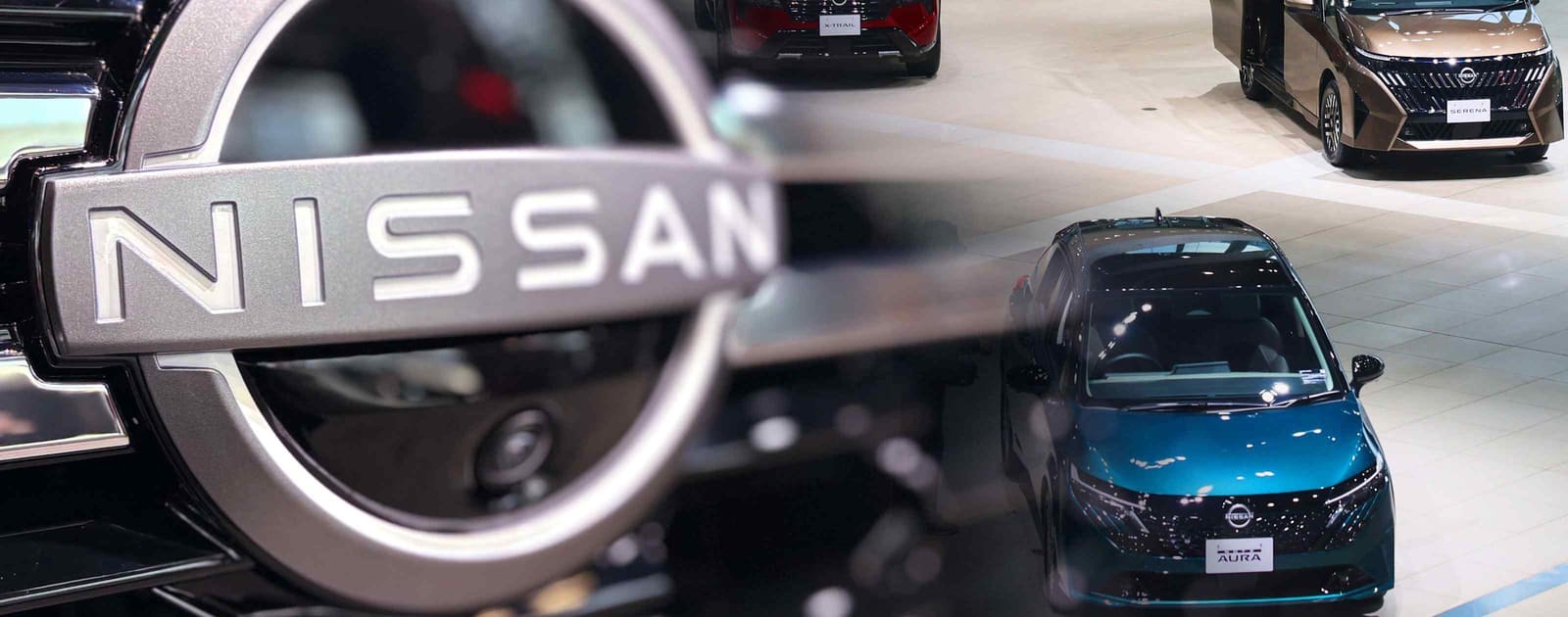
Nissan Motor is overhauling how it builds cars, adopting a shared-platform strategy that standardizes powertrains, chassis architecture, and software across multiple vehicle lines. The move addresses a pressing competitive gap: Chinese automakers now bring fresh models to market in approximately two years, a pace that threatens traditional manufacturers across Asia and beyond.
The Yokohama-based company announced it will apply common development frameworks to reduce duplication and compress timelines. Rather than engineering bespoke components for each nameplate, Nissan plans to use modular building blocks that can be adapted quickly for different market segments and body styles.
The Platform Play
Under the new approach, core technologies will be shared horizontally. A single powertrain family can serve compact sedans, crossovers, and even light commercial vehicles with minimal modification. Software stacks, increasingly critical as vehicles add driver-assistance and connectivity features, will follow the same logic: write once, deploy across the lineup.
This mirrors strategies already deployed by Volkswagen Group with its MQB platform and Toyota with TNGA, but Nissan's urgency reflects a different challenge. Where European and Japanese rivals raced each other, Nissan now contends with Chinese manufacturers who combine vertical integration, rapid iteration cycles, and domestic scale to achieve speeds legacy automakers have struggled to match.
The shift also aims to improve profitability. Standardization cuts engineering hours, reduces tooling costs, and simplifies supply chains. For a company that has faced uneven quarterly results and pressure from investors, tighter cost discipline offers a path to healthier margins even as it invests in electrification and digital features.
China's Two-Year Benchmark
Chinese automakers have rewritten the product-development playbook. BYD, Geely, and newer entrants like Li Auto and NIO launch vehicles on cycles that would have seemed impossible a decade ago. Vertical integration helps: many control battery production, software teams, and even semiconductor design in-house. Digital-native engineering workflows and a willingness to iterate post-launch further compress schedules.
Nissan has taken note. The company previously acknowledged studying Chinese methods to halve its own development time, and the current platform strategy represents the practical application of those lessons. The question is whether a legacy manufacturer, with established supplier relationships and decades of process inertia, can match the agility of firms built for speed from the ground up.
Regional Implications
The broader auto industry across Asia is recalibrating. Honda and Nissan have explored partnerships with autonomous-driving startups to share R&D costs. Toyota has accelerated succession planning to ensure leadership continuity amid rapid technological change. Mitsubishi Motors is refocusing on the US and Australian markets with help from alliance partners.
For Nissan, the stakes are existential. The company secured a net profit in its most recent first quarter but faces a market where product cycles are shrinking and consumer expectations for technology features are rising. A faster cadence of new models could help the brand stay relevant in key Asian markets, where local competitors enjoy home-field advantages in cost, speed, and government support.
The standardized-platform strategy is not without risk. Over-sharing components can blur brand identities and limit differentiation. If every model feels like a variation on the same theme, customers may gravitate toward cheaper alternatives or premium badges. Nissan will need to balance efficiency with the distinct character that keeps buyers loyal.
Still, the company has little choice but to compress its calendar. In an industry where a two-year development cycle is becoming the norm, a four-year timeline is a luxury no one can afford.
RELATED STORIES
Vietnam's National Assembly Closes Extraordinary Session With Nuclear and Renewable Energy Approvals
Tran Quoc Bao · 3 min
Chinese Humanoid Robots Now Jump Higher and Run Faster Than Olympic Athletes
Cheng Wei-Lun · 4 min

Australia's Rare Earth Push Faces Cost Test as Industry Eyes China Alternative
Aiko Nakamura · 4 min
China Orders Record Auto Recall Over Emergency Door Release Flaws
Cheng Wei-Lun · 3 min
Spot something wrong? Email editor@briefasia.com. We log every correction publicly.