Finance · Deals
Singapore Iron Ore Trader Radiant World Faces Multi-Jurisdiction Probe
US and Singapore authorities investigate the commodity firm as global banks freeze credit lines and major mining houses suspend deals
KEY TAKEAWAYS
- ·Radiant World, handling 65 million to 70 million tonnes of iron ore annually, faces US Department of Justice and Singapore police investigations over documentation provided to lenders.
- ·Deutsche Bank and KBC froze Singapore accounts while Rio Tinto, Vale, Glencore, Vitol, and Cargill suspended or ceased trading with the firm over concerns about invalid invoices.
- ·The firm generated $9.6 billion revenue in 2025, tripling from $3 billion in 2021, but has begun laying off staff as trade finance access evaporates.
Regulatory Scrutiny Intensifies
Radiant World, a Singapore-based commodity trader handling one of the world's largest iron ore volumes, is facing concurrent investigations by authorities in the United States and Singapore over concerns about documentation provided to financial institutions.
The US Department of Justice and the Commodity Futures Trading Commission have opened probes into the firm, according to regulatory filings. Singapore police confirmed reports have been lodged and investigations are underway. UK authorities are also examining the company's operations.
The scrutiny centers on invoices and trade documents Radiant World supplied to lenders. Multiple financial institutions have frozen the firm's accounts or suspended credit facilities in Singapore, where the company maintains its headquarters at 6 Battery Road.
Financial Lifeline Severed
Deutsche Bank and KBC Group froze some of Radiant World's Singapore bank accounts in mid-August, while other international lenders pulled credit lines. The firm's access to trade finance, the lifeblood of commodity trading operations, has been sharply curtailed.
Commodity trading houses operate on thin margins and rely on short-term financing to purchase cargoes before receiving payment from end buyers. Without trade credit, even well-capitalized firms struggle to execute deals.
Glencore confirmed it ceased entering into new business with Radiant World and is working to exit existing contracts. The Swiss commodities giant said its exposure sits well below the $500 million materiality threshold. Vitol Group and Cargill also stopped trading with the firm.
Three major trading houses reviewed invoices or documents Radiant World provided to banks that proved invalid, according to people familiar with the matter.
Mining Giants Pull Back
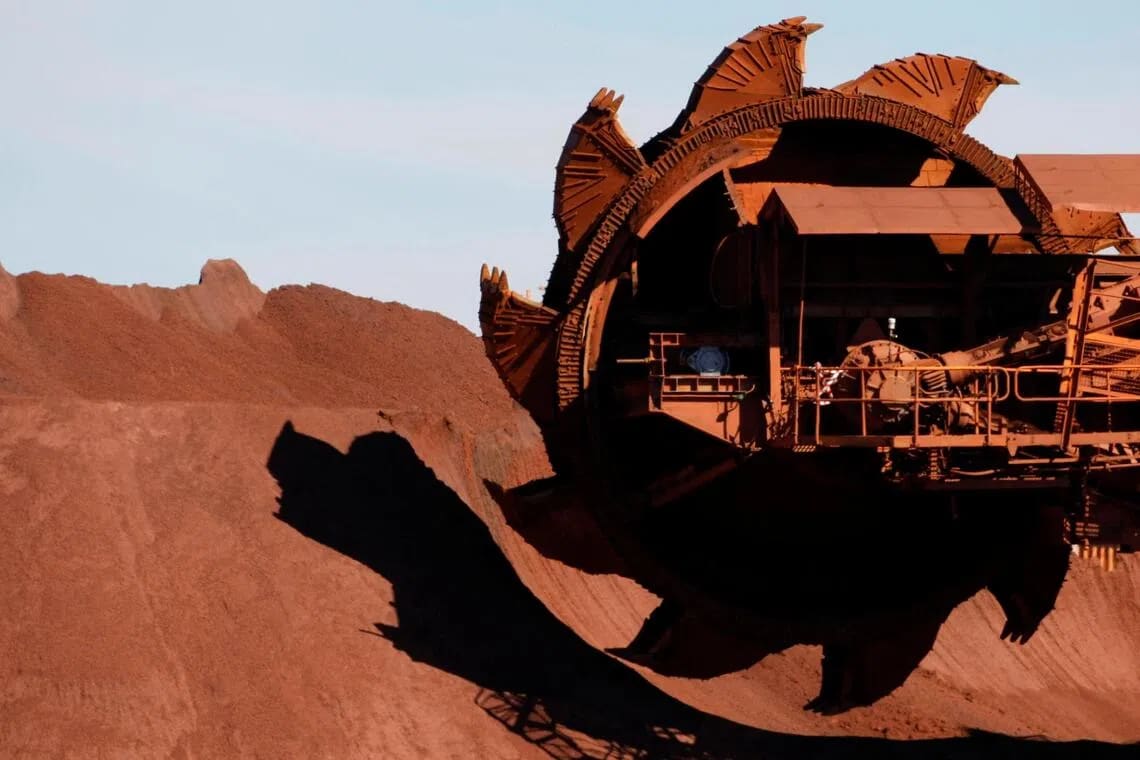
Rio Tinto and Vale, two of the world's three largest iron ore producers, have stopped executing deals with Radiant World. The miners typically sell directly to steelmakers but also offload spot cargoes to trading houses that resell to mills or other intermediaries.
The withdrawal of both miners signals a significant reputational hit. Vale and Rio Tinto together supply roughly 40 percent of global seaborne iron ore, giving their commercial decisions considerable weight in the market.
Radiant World's iron ore trading volume reached an estimated 65 million to 70 million tonnes in 2025, approaching the 75 million tonnes Glencore traded in 2024. The firm's rapid ascent over the past decade made it a major player in a market dominated by a handful of large houses.
Financials and Footprint
Corporate filings show Radiant World generated revenue of $9.6 billion and net profit of $140.9 million in the 2025 financial year. Revenue more than tripled from $3 billion in 2021, surging 65 percent in 2025 alone.
The firm was founded by Pinkesh Nahar in the early 2000s. Now 46, the Indian national started the business at age 23 and has maintained a low public profile. Nahar spoke at the Singapore Exchange's Iron Ore Week in 2019 but has since kept out of the spotlight.
Radiant World lists offices in seven countries, including China, the US, India, and the UK, and claims to employ more than 100 people worldwide. The firm has begun laying off operations staff as financing constraints bite, though the scale and location of cuts remain unclear.
The company holds paid-up capital of approximately $61 million. Radiant World Holding in Hong Kong is listed as its shareholder, with Nahar and two others serving as directors.
Firm Denies Wrongdoing
Radiant World issued a statement denying wrongdoing and asserting it remains well capitalized with healthy liquidity. The company declined to comment on confidential commercial relationships or discussions involving specific counterparties.
"As a longstanding policy, we do not comment publicly on confidential commercial relationships or the business of our counterparties," the firm said on its website.
When reporters visited the corporate address on August 20, security staff confirmed the office remained operational but said no one was present. The company has not responded to email or phone queries.
Regional Implications
The Radiant World case underscores the concentration risk in Asia's commodity trade finance ecosystem. Singapore hosts dozens of trading houses that rely on a relatively small pool of international banks for credit. A single firm's troubles can ripple through counterparty networks, tightening liquidity for other traders.
Commodity finance in Asia has grown more cautious following the 2020 collapse of Hin Leong Trading, a Singapore oil trader that concealed $800 million in losses. Banks tightened due diligence and reduced exposure limits across the sector.
Radiant World's rapid growth, tripling revenue in four years, now faces questions about the sustainability of its business model. The firm received an award from the Swiss-Chinese Chamber of Commerce earlier in 2026 for being a trusted partner of China, and participated in industry forums in Switzerland, China, and Amsterdam through 2026.
The outcome of the multi-jurisdiction investigations will likely shape how banks and trading houses approach credit and counterparty risk in Singapore's commodity trading sector.
RELATED STORIES
Olam Group Reports S$1.9 Billion First-Half Profit After Agribusiness Spin-Off
Priyanka V. Rao · 3 min
Singapore Authorities Open Investigation Into Global Iron Ore Trading House Radiant World
Priyanka V. Rao · 5 min
Singapore Eyes Retail Fund Expansion as Seoul's Leveraged ETF Losses Sound Warning
Priyanka V. Rao · 4 min
Hong Kong Pushes Carried Interest Tax Break as Singapore Exempts Fund Manager Profits
Priyanka V. Rao · 3 min
Spot something wrong? Email editor@briefasia.com. We log every correction publicly.