Technology · AI
Chinese Automakers Pivot to Humanoid Robots as EV Subsidies Fade
Beijing's policy shift toward embodied AI is driving carmakers to repurpose smart vehicle technology for robotics as margins tighten in the electric vehicle sector
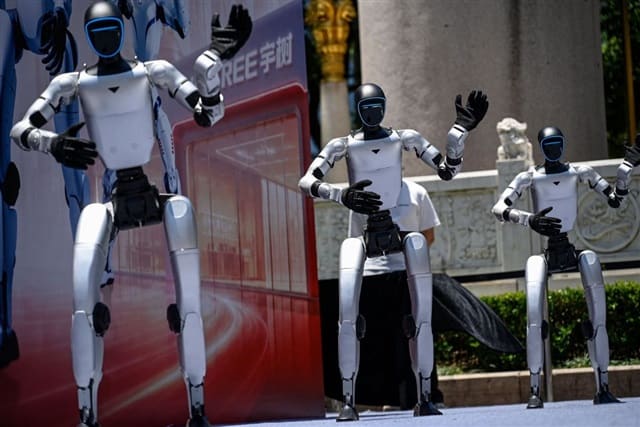
KEY TAKEAWAYS
- ·Chinese automakers are redirecting smart EV technologies into humanoid robotics as government subsidies for new energy vehicles decline and profit margins compress.
- ·Beijing is shifting industrial policy support from electric vehicles toward embodied AI and humanoid robotics, creating new incentives for manufacturers.
- ·Autonomous driving systems, sensors, and battery technologies developed for EVs translate directly to robotic applications, enabling automakers to monetize existing R&D investments.
From EVs to Embodied Intelligence
China's automotive giants are making a strategic bet on humanoid robots, driven by tightening economics in the electric vehicle market and fresh government incentives for embodied artificial intelligence. The pivot comes as Beijing redirects industrial policy away from EV subsidies and toward robotics, creating an opening for carmakers to leverage existing autonomous driving and sensor technologies in a new arena.
The move reflects broader pressures facing Chinese automakers. Years of aggressive expansion in new energy vehicles, fueled by generous state support, have compressed profit margins across the industry. With subsidy programs now winding down, manufacturers are searching for adjacent markets where their accumulated technical capabilities can generate returns.
Transferable Technology
The bridge between smart vehicles and humanoid robots is more direct than it might appear. Autonomous driving systems rely on computer vision, real-time decision-making algorithms, and sensor fusion - capabilities that translate directly to robotic locomotion and manipulation. Electric powertrains share design principles with robotic actuators. Battery management systems developed for EVs can power mobile robots.
Chinese automakers have spent billions developing these technologies for the competitive EV landscape. Rather than writing off those investments as margins shrink, companies are now exploring how to redeploy them. Humanoid robotics offers a pathway to monetize research and development expenditures that might otherwise yield diminishing returns in an increasingly saturated automotive market.
Policy Tailwinds
Beijing's shift in industrial priorities is accelerating the transition. Government support for embodied AI and humanoid robotics is growing as policymakers identify the sector as a strategic frontier. The change mirrors earlier patterns in Chinese industrial policy, where state backing helped build dominant positions in solar panels, batteries, and electric vehicles.
For automakers, the policy environment creates both incentive and opportunity. Subsidies and procurement preferences that once flowed to EV manufacturers are being redirected toward robotics development. Companies that can demonstrate progress in humanoid systems stand to benefit from preferential financing, research grants, and potential government contracts.
Asia's Robot Race
The Chinese automotive industry's move into humanoid robotics intensifies competition across Asia. Japanese manufacturers have long led in industrial automation, while South Korean conglomerates have invested heavily in service robots. China's entry - backed by automotive-scale manufacturing capacity and supply chain depth - adds a new dimension to regional rivalry.
The convergence of automotive and robotics sectors also reshapes supply chains. Component manufacturers that serve Chinese EV makers are now positioning themselves for dual markets. Sensor suppliers, chip designers, and motor manufacturers are adapting products for both vehicles and humanoid platforms, creating efficiencies of scale that could lower costs across both industries.
Commercial Realities
Despite the strategic logic, significant technical and commercial hurdles remain. Humanoid robots face challenges in dexterity, energy efficiency, and cost that differ fundamentally from those in automotive applications. The market for such robots is still nascent, with unclear demand signals and untested business models.
Chinese automakers are nonetheless pressing forward, viewing the pivot as essential to long-term competitiveness. As EV margins continue their downward trajectory and subsidy support evaporates, diversification into high-potential technology sectors offers a hedge against commoditization in core automotive markets. Whether that bet pays off will depend on execution, market development, and the staying power of government support for embodied AI.
RELATED STORIES

China Builds 70 Embodied AI Training Facilities as Robot Industry Scales
Cheng Wei-Lun · 4 min
Nissan Streamlines Development to Match Chinese Rivals' Speed
Cheng Wei-Lun · 3 min
BYD's Fang Cheng Bao Launches Pre-Orders for Formula S Sedan Range
Cheng Wei-Lun · 2 min

Early Unitree Backer Sees Consolidation Ahead in China Robotics
Cheng Wei-Lun · 4 min
Spot something wrong? Email editor@briefasia.com. We log every correction publicly.