Asia · Business
China's Housing Downturn Enters Sixth Year With No Floor in Sight
A life sentence for Evergrande's founder closes one chapter, but the structural damage to the world's second-largest economy deepens as property values crater and state firms take over.
KEY TAKEAWAYS
- ·Hui Ka Yan, founder of Evergrande, received a life sentence last week as China's property sector enters its sixth year of contraction, with second-hand home prices in smaller cities down nearly 25 percent since 2020.
- ·Economic growth slowed to 4.3 percent in the second quarter, the weakest in more than three years, as land sales plunge and construction activity declines, forcing China to rely more heavily on exports.
- ·Private developers have largely defaulted or withdrawn, leaving state-owned enterprises to dominate the sector, while analysts estimate it could take another decade for prices to reach equilibrium.
A Verdict That Won't Fix the Market
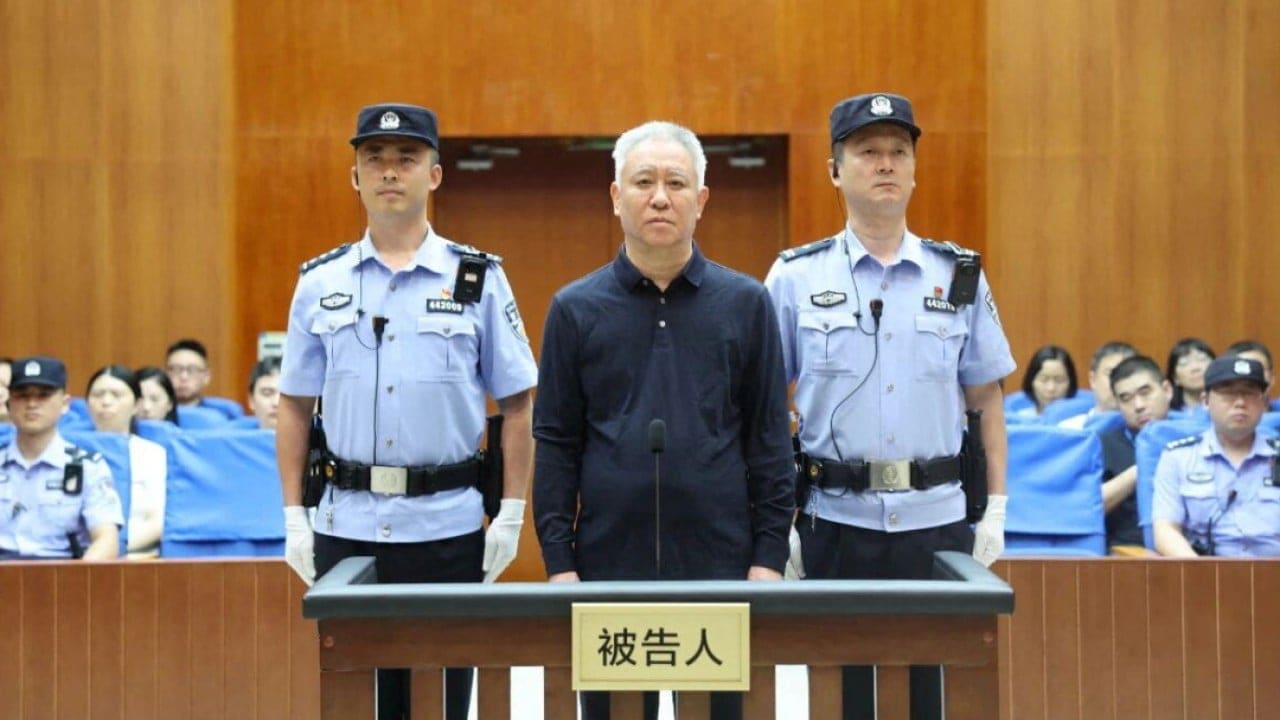
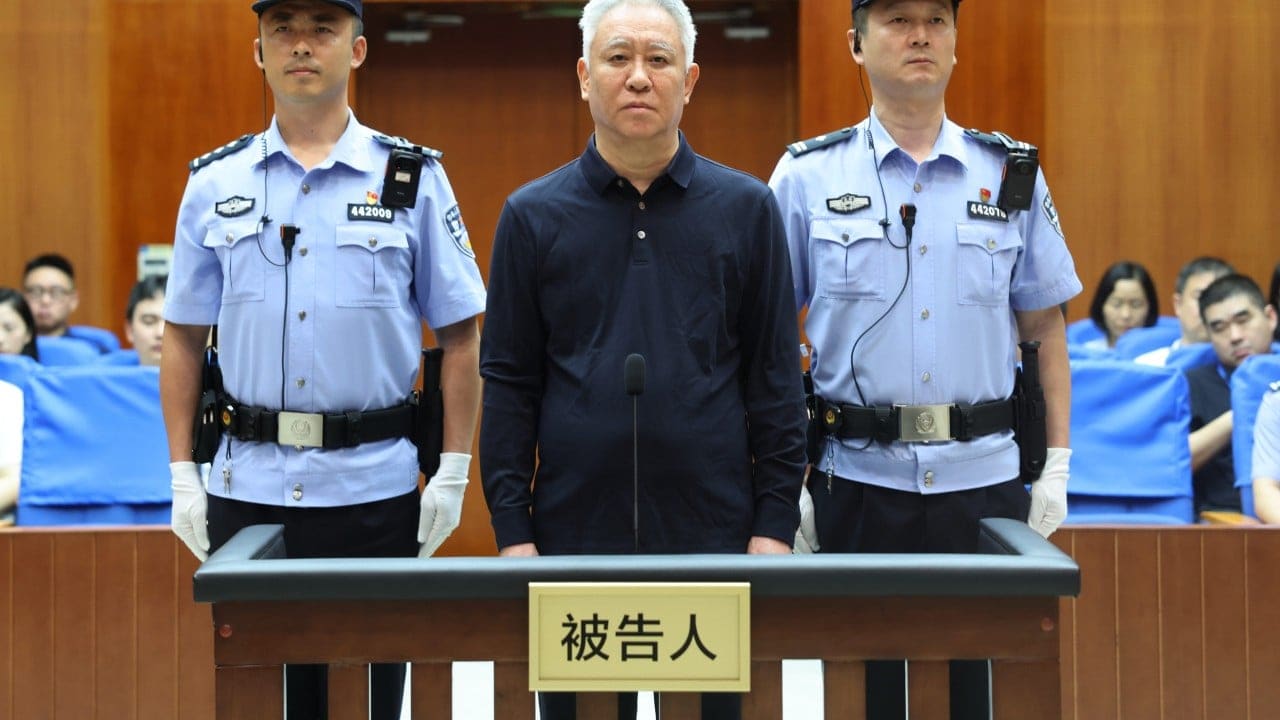
When a Chinese court handed down a life sentence to Hui Ka Yan last week, the man who once sat atop Asia's wealth rankings and built Evergrande into a property colossus, social media erupted. More than 370 million views flooded Weibo, with many commenters asking why authorities had stopped short of the death penalty for crimes that included bribery and misappropriation.
But no courtroom drama will repair the structural fractures now running through China's economy. The real estate sector, which once accounted for roughly a quarter of GDP, has been contracting since regulators tightened leverage rules in 2020. Six years later, the fallout continues to ripple outward, hitting household wealth, local government revenue, and overall consumption.
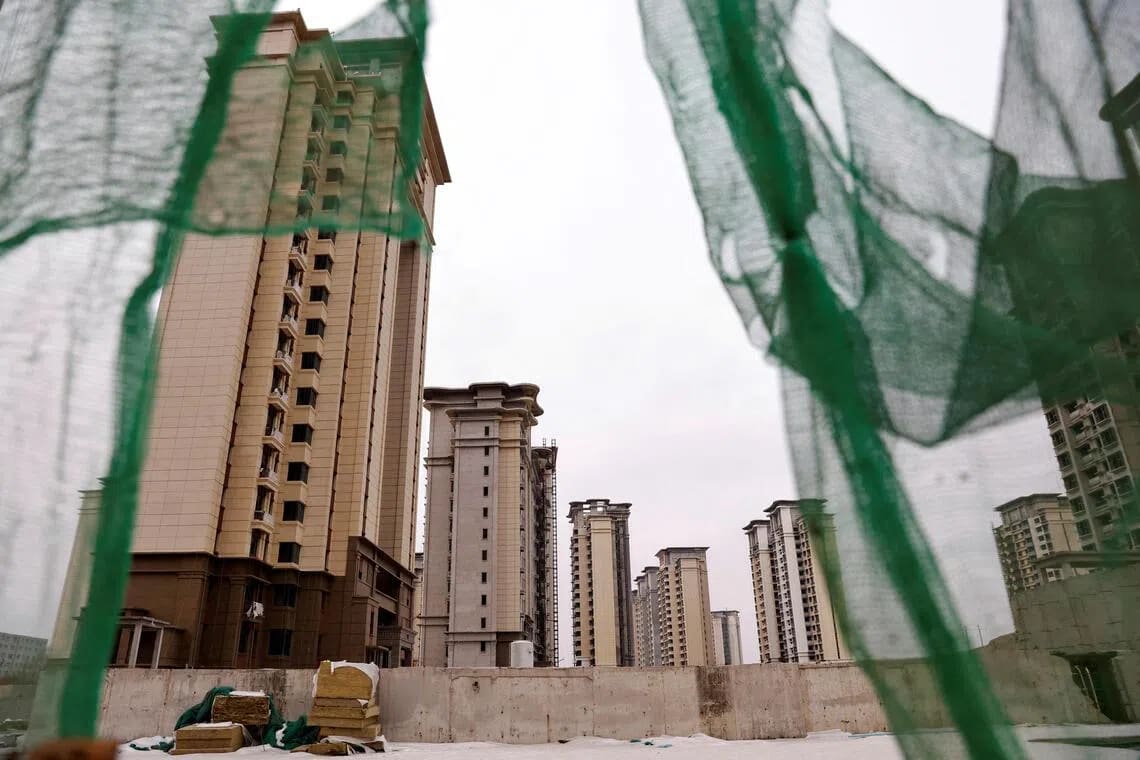
Across the country, unfinished apartment blocks stand empty, their concrete skeletons a daily reminder of unfulfilled promises to millions of buyers who paid deposits years ago. In second- and third-tier cities, second-hand home values have dropped nearly 25 percent since 2020, eroding the primary store of wealth for urban families.
The Numbers Tell a Grim Story
Economic growth slowed to 4.3 percent in the second quarter of this year compared with the same period in 2025, marking the weakest expansion in more than three years. Land sales, a critical revenue stream for municipal governments, continue their slide. Construction activity and property transactions are both accelerating downward.
Even in Beijing and Shanghai, where a brief rebound in new-home prices had sparked hope earlier this year, momentum has stalled. Smaller inland cities face steeper declines, with some markets now a quarter below their 2020 peaks.
Sam Radwan, chief executive of Chicago-based consultancy Enhance International, estimates that clearing current inventory will take at least 18 months. Reaching a sustainable price equilibrium, he argues, requires another 40 percent decline from 2025 levels, a process that could stretch across a decade.
The oversupply is structural. More than a third of Chinese households bought second properties as investment vehicles during the boom years, betting on perpetual appreciation. That demand has evaporated, leaving developers with more units than buyers.
Private Developers Vanish, State Firms Step In
Evergrande defaulted in 2021 and entered liquidation in 2024. Country Garden, once a rival giant, defaulted in 2023 and has not acquired land since. China Vanke, another major player, is now negotiating bond extensions and has replaced senior management with executives drawn from state-owned enterprises.
The pattern is clear: private developers have either collapsed or retreated, and state-owned firms now dominate what remains of the market. A loan officer at a major state bank, speaking on condition of anonymity, confirmed that lending to private developers has effectively ceased. The deciding factor in underwriting decisions is now ownership structure, specifically whether the borrower is a central or local state enterprise.
President Xi Jinping has directed bank credit away from property and toward strategic technology sectors, including robotics and semiconductors. But those emerging industries remain too small to offset the drag from housing. Growth, as a result, has become more concentrated, benefiting a narrower slice of the economy and failing to lift consumer spending.
Export Dependence and Trade Friction
With domestic demand in reverse, China has leaned harder on exports. The trade surplus has more than doubled since 2019, a shift that has intensified friction with the European Union and the United States. Concerns about a second wave of export-driven displacement, analogous to the "China Shock" of the early 2000s, are rising not only in developed markets but also in the Global South, where Chinese manufactured goods are undercutting local producers.
Max Zenglein, senior economist at the Conference Board Asia, argues that the uneven distribution of growth is a key reason consumption has not recovered. Without broad-based income gains, households remain cautious, and property losses reinforce that caution.
No Consensus on When the Bottom Arrives
Christopher Beddor, deputy China research director at Gavekal Dragonomics, suggests the worst may have passed. He does not expect a substantial worsening from current levels, though he anticipates a continued grinding correction in prices before the market clears and conditions improve.
Radwan is less optimistic. Chinese buyers, he notes, are acutely aware that prices have further to fall, but the ultimate floor remains invisible. That uncertainty alone is enough to keep many on the sidelines.
For homeowners like Jason Wang, a 38-year-old in Shandong province, the pain is immediate. The value of his apartment has fallen 25 percent since he bought it in 2019. When basic household budgets are stretched, he asks, who has the means to buy property?
What Comes Next
The shift to a state-dominated property sector suggests that future development will be more closely aligned with government priorities, likely prioritizing stability over profitability. Market-based price discovery, already constrained, may become even less influential.
Clearing inventory, stabilizing prices, and restoring confidence will take years, not quarters. In the meantime, China's economic model is adjusting in real time, with exports filling the gap left by weakened domestic demand. That adjustment carries costs, both for Chinese households and for the country's trading partners, who now face a flood of competitively priced goods.
Hui Ka Yan's sentencing offers a measure of accountability, and perhaps some catharsis for defrauded buyers and creditors. But it does not alter the fundamental imbalance between supply and demand, nor does it restore the wealth that has vanished from household balance sheets. The property crisis, now in its sixth year, remains a defining feature of China's economic landscape, with no clear exit in view.
RELATED STORIES
Evergrande Founder Fined $1.31 Billion as China's Treasury Holdings Decline
Cheng Wei-Lun · 3 min
China's $1.2 Trillion Trade Surplus Threatens Indonesian Rupiah and Industry
Rajesh K. Iyer · 3 min
When a Property Empire Falls: The Evergrande Verdict and China's Private Sector Reckoning
Cheng Wei-Lun · 5 min

Thailand Urged to Tie EV Investment to Local Supply Chain Development
Priyanka V. Rao · 3 min
Spot something wrong? Email editor@briefasia.com. We log every correction publicly.